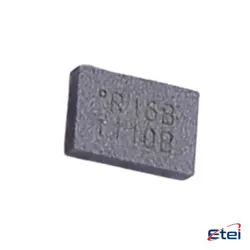
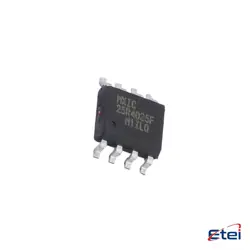
Abbildungen dienen nur als Referenz
24AA08T-I/MNY
+StücklisteIC EEPROM 8KBIT I2C 400KHZ 8TDFN
-
HerstellerMikrochip-Technologie
-
Herstellerteil #24AA08T-I/MNY
-
Datenblatt 24AA08T-I/MNY DataSheet
-
Paket TDFN-8
-
Auf Lager7263
365 Tage Qualitätsgarantie
7*24 Stunden-Servicegarantie
90-Tage Kundendienstgarantie
Originalproduktgarantie
Spezifikationen
| Attribut | Wert |
| Package | Tape & Reel (TR),Cut Tape (CT) |
| ProductStatus | Active |
| MemoryType | Non-Volatile |
| MemoryFormat | EEPROM |
| Technology | EEPROM |
| MemorySize | 8Kb (256 x 8 x 4) |
| MemoryInterface | I²C |
| ClockFrequency | 400 kHz |
| WriteCycleTime-WordPage | 5ms |
| AccessTime | 900 ns |
| Voltage-Supply | 1.7V ~ 5.5V |
| OperatingTemperature | -40°C ~ 85°C (TA) |
| MountingType | Surface Mount |
| Package/Case | 8-WFDFN Exposed Pad |
Übersicht
Description
The 24AA08T-I/MNY offers a 2-wire serial interface and features a low-power CMOS technology, ensuring minimal power consumption. With its page write capability, up to 16 bytes can be programmed at once, enhancing data transfer speeds. The EEPROM is organized as 1,024 words of 8 bits each, providing flexible data management.
Key features include a write protection feature to prevent accidental data loss, a hardware write-protect pin, and up to 1,000,000 erase/write cycles, ensuring durability and longevity. The device is available in different packaging options, including the WDFN package, which is suitable for space-constrained applications. Overall, the 24AA08T-I/MNY is a versatile and reliable memory solution for a variety of electronic projects.
Equivalent
1. Atmel/Microchip AT24C08 - Similar EEPROM with I2C interface.
2. STMicroelectronics M24C08 - Offers similar capacity and interface.
3. ON Semiconductor CAT24C08 - Another EEPROM with the same storage and I2C interface.
4. ROHM BR24G08 - Also provides 8Kb storage with I2C protocol.
These alternatives should have similar voltage, temperature ratings, and functionality. Always verify pin configuration and specifications from the data sheet for compatibility.
Features
1. Memory Capacity: It offers 8 Kbits (1024 x 8) of non-volatile memory.
2. Interface: Utilizes I²C (Inter-Integrated Circuit) serial interface, supporting standard (100 kHz), fast (400 kHz), and fast-plus (1 MHz) modes.
3. Voltage Range: Operates at a supply voltage range of 1.7V to 5.5V.
4. Write Protection: Includes write-protect pin and software write protection for data security.
5. Endurance and Retention: Guarantees a minimum endurance of 1,000,000 write/erase cycles and data retention of over 200 years.
6. Package Type: Comes in a convenient 8-pin package.
7. Temperature Range: Designed to operate in the industrial temperature range of -40°C to +85°C.
8. Low Power Consumption: Features low standby and active currents, making it suitable for battery-powered applications.
These features make it ideal for applications requiring reliable data storage, such as consumer electronics, industrial controls, and automotive systems.
Pinout
The 24AA08T-I/MNY comes in an 8-lead package. The pin configuration and function are as follows:
1. A0, A1, A2: Device address inputs used to select the device address when multiple devices are used on the same bus.
2. VSS: Ground reference for the device.
3. SDA (Serial Data): Bidirectional data line. It is used to transfer data in and out of the device.
4. SCL (Serial Clock): Clock input for clocking data into and out of the device.
5. WP (Write Protect): Input signal that enables or disables write operations to the entire memory array.
6. VCC: Supply voltage for the device.
These pins are crucial for interfacing the EEPROM with a microcontroller or other digital systems via the I2C (Inter-Integrated Circuit) bus.
Manufacturer
Application
1. Consumer Electronics: Used in devices like TVs, remote controls, and cameras for storing settings and calibration data.
2. Automotive Systems: Employed for data logging, configuration settings, and calibration data in ECUs.
3. Industrial Equipment: Utilized for parameter storage, system configuration, and history logging.
4. Medical Devices: Stores critical data such as patient information and device calibration data.
5. Communication Systems: Used for storing network configurations and protocol settings.
6. Computing: Implemented in hardware for storing BIOS settings or other configuration data.
These applications benefit from the EEPROM's reliability, endurance, and ease of integration.