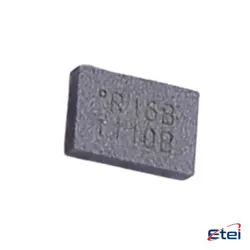
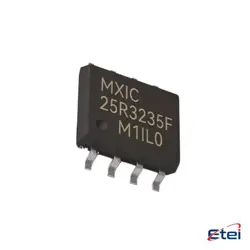
Abbildungen dienen nur als Referenz
24LC64T-I/MS
+StücklisteIC EEPROM 64KBIT I2C 8MSOP
-
HerstellerMikrochip-Technologie
-
Herstellerteil #24LC64T-I/MS
-
Datenblatt 24LC64T-I/MS DataSheet
-
Paket MSOP-8
-
Auf Lager1915
365 Tage Qualitätsgarantie
7*24 Stunden-Servicegarantie
90-Tage Kundendienstgarantie
Originalproduktgarantie
Spezifikationen
| Attribut | Wert |
| Package | Tape & Reel (TR),Cut Tape (CT) |
| ProductStatus | Active |
| MemoryType | Non-Volatile |
| MemoryFormat | EEPROM |
| Technology | EEPROM |
| MemorySize | 64Kb (8K x 8) |
| MemoryInterface | I²C |
| ClockFrequency | 400 kHz |
| WriteCycleTime-WordPage | 5ms |
| AccessTime | 900 ns |
| Voltage-Supply | 2.5V ~ 5.5V |
| OperatingTemperature | -40°C ~ 85°C (TA) |
| MountingType | Surface Mount |
| Package/Case | 8-TSSOP, 8-MSOP (0.118, 3.00mm Width) |
Übersicht
Description
Key features of the 24LC64T-I/MS include:
1. I2C Interface: The chip operates on a two-wire I2C bus, allowing for easy communication with microcontrollers and other I2C devices.
2. Wide Voltage Range: It operates on a supply voltage between 1.7V to 5.5V, making it compatible with a broad range of systems.
3. Low Power Consumption: It draws minimal power, which is ideal for battery-operated devices.
4. Data Retention: The EEPROM offers data retention of over 200 years and is rated for a million write/erase cycles at 25°C, ensuring long-term reliability.
5. Package: It is available in an 8-pin MSOP package.
The 24LC64T-I/MS is commonly used in consumer electronics, automotive, and industrial applications for configuration settings, calibration data, and other critical information storage.
Equivalent
1. Atmel AT24C64 - 64Kb I2C EEPROM.
2. STMicroelectronics M24C64 - 64Kb I2C EEPROM.
3. ON Semiconductor CAT24C64 - 64Kb I2C EEPROM.
4. ROHM BR24G64 - 64Kb I2C EEPROM.
These alternatives offer similar specifications and functionality, compatible with the same I2C interface. Always verify pin configurations and electrical characteristics to ensure compatibility.
Features
1. I2C Interface: Supports I2C bus protocols for serial communication.
2. Operating Voltage: Functions within a range of 1.7V to 5.5V.
3. Low Power Consumption: Features low active read/write current and standby current.
4. Data Retention: Capable of retaining data for over 200 years.
5. Endurance: Supports more than 1 million write cycles.
6. Page Write: Allows up to 32 bytes per page to be written in a single operation.
7. Write Protection: Includes a write-protect pin to safeguard against unintended writes.
8. Temperature Range: Operates efficiently between -40°C to +85°C.
9. Package: Comes in MSOP (Mini Small Outline Package) which is compact and suitable for space-constrained applications.
10. Reliability: Designed for industrial and automotive applications, ensuring robust performance under varying conditions.
These features make it suitable for applications requiring reliable, non-volatile memory with efficient power usage.
Pinout
1. A0, A1, A2: These are address input pins used to select the device address when multiple EEPROMs are connected to the same I2C bus.
2. VSS: Ground pin.
3. SDA (Serial Data): Bidirectional pin for data transfer. It acts as the data line for both input and output in the I2C protocol.
4. SCL (Serial Clock): Serial clock input pin used to synchronize data transfer with the I2C master.
5. WP (Write-Protect): Used to protect the entire memory array. When tied to VCC, write operations are disabled.
6. VCC: Power supply pin.
This EEPROM is designed for use in applications requiring non-volatile storage with low power consumption. It supports standard I2C protocol for communication, making it flexible for use in various embedded systems.
Manufacturer
Application
1. Consumer Electronics: For storing user settings and configurations in devices like TVs and cameras.
2. Automotive: For data logging, calibration settings, and configuration storage in ECUs.
3. Industrial Systems: Used in PLCs and control systems for parameter storage.
4. Medical Devices: Storing calibration data and patient information.
5. IoT Devices: For preserving device states and configurations.
6. Networking Equipment: Configuration and firmware storage.
7. Embedded Systems: General-purpose non-volatile memory for microcontroller-based applications.
These applications benefit from the EEPROM's reliability, endurance, and low power consumption.