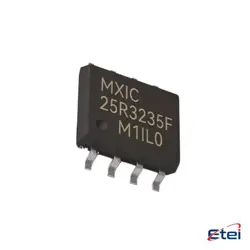
Abbildungen dienen nur als Referenz
AD5248BRMZ2.5
+StücklisteIC DGT POT 2.5KOHM 256TAP 10MSOP
-
HerstellerAnalog Devices Inc.
-
Herstellerteil #AD5248BRMZ2.5
-
Auf Lager2337
365 Tage Qualitätsgarantie
7*24 Stunden-Servicegarantie
90-Tage Kundendienstgarantie
Originalproduktgarantie
Spezifikationen
| Attribut | Wert |
| Part Status | Active |
| Base Product Number | AD5248 |
| DigiKey Programmable | Not Verified |
| Taper | Linear |
| Configuration | Rheostat |
| Number of Circuits | 2 |
| Number of Taps | 256 |
| Resistance (Ohms) | 2.5k |
| Interface | I2C |
| Memory Type | Volatile |
| Voltage - Supply | 2.7V ~ 5.5V |
| Features | Selectable Address |
| Tolerance | -20%, +55% |
| Temperature Coefficient (Typ) | 35ppm/°C |
| Mounting Type | Surface Mount |
| Supplier Device Package | 10-MSOP |
| Package | 10-TFSOP, 10-MSOP (0.118", 3.00mm Width) |
| Operating Temperature | -40°C ~ 125°C |
| Resistance - Wiper (Ohms) (Typ) | 160 |
| Packaging | Tube |
Übersicht
Description
The AD5248BRMZ2.5 is a digital potentiometer from Analog Devices, designed for precision applications. It features a dual-channel structure with a resistance of 2.5 kΩ, allowing for seamless digital control of resistance values. The device utilizes an I²C interface, enabling easy integration into microcontroller systems for applications such as gain control, signal conditioning, and adjustable biasing.
Key features include a wide operating voltage range, low power consumption, and programmable wiper positions, which can be adjusted for fine-tuning in various circuits. The AD5248BRMZ2.5 also offers excellent linearity and low temperature coefficient, ensuring reliable performance in demanding environments.
Applications span multiple fields, including industrial automation, audio equipment, and consumer electronics, where precise and reliable analog control is essential. Its compact package and robust performance make it a versatile choice for designers seeking reliable digital potentiometers.
Key features include a wide operating voltage range, low power consumption, and programmable wiper positions, which can be adjusted for fine-tuning in various circuits. The AD5248BRMZ2.5 also offers excellent linearity and low temperature coefficient, ensuring reliable performance in demanding environments.
Applications span multiple fields, including industrial automation, audio equipment, and consumer electronics, where precise and reliable analog control is essential. Its compact package and robust performance make it a versatile choice for designers seeking reliable digital potentiometers.
Equivalent
The AD5248BRMZ2.5 is a digital potentiometer from Analog Devices. Equivalent products include:
1. MCP4131 (Microchip)
2. DS1803 (Maxim Integrated)
3. PT100 (NVE Corporation)
4. X9C104 (Intersil)
Ensure that the specifications such as resistance value, number of channels, and communications interface match your application needs when selecting an equivalent.
1. MCP4131 (Microchip)
2. DS1803 (Maxim Integrated)
3. PT100 (NVE Corporation)
4. X9C104 (Intersil)
Ensure that the specifications such as resistance value, number of channels, and communications interface match your application needs when selecting an equivalent.
Features
The AD5248BRMZ2.5 is a dual-channel, 256-position digital potentiometer with the following key features:
1. Resolution: 8-bit (256 wiper positions) for precise adjustments.
2. Dual Channel: Two independent potentiometers in a single package, allowing simultaneous control of two signals.
3. Interface: SPI-compatible serial interface for easy integration with microcontrollers.
4. End-to-End Resistance: 2.5 kΩ nominal resistance, suitable for various applications.
5. Low Power Consumption: Designed for energy-efficient operation, making it ideal for battery-powered devices.
6. Non-Volatile Memory: Retains wiper positions after power loss, ensuring settings are preserved.
7. Power Supply Range: Operates with a wide supply voltage range (up to 5.5V).
8. Temperature Range: Suitable for various environmental conditions, with specified performance over a wide temperature range.
These features make the AD5248BRMZ2.5 suitable for applications in audio control, industrial automation, and sensor calibration.
1. Resolution: 8-bit (256 wiper positions) for precise adjustments.
2. Dual Channel: Two independent potentiometers in a single package, allowing simultaneous control of two signals.
3. Interface: SPI-compatible serial interface for easy integration with microcontrollers.
4. End-to-End Resistance: 2.5 kΩ nominal resistance, suitable for various applications.
5. Low Power Consumption: Designed for energy-efficient operation, making it ideal for battery-powered devices.
6. Non-Volatile Memory: Retains wiper positions after power loss, ensuring settings are preserved.
7. Power Supply Range: Operates with a wide supply voltage range (up to 5.5V).
8. Temperature Range: Suitable for various environmental conditions, with specified performance over a wide temperature range.
These features make the AD5248BRMZ2.5 suitable for applications in audio control, industrial automation, and sensor calibration.
Pinout
The AD5248BRMZ2.5 is a digital potentiometer with a pin count of 14. It features a dual-channel, memory programmable architecture suitable for applications requiring precise resistance adjustment. The device operates via a serial interface, enabling easy integration into various digital systems.
Key functions include:
1. Wiper Control: Adjusts the resistance value at the wiper terminal.
2. Memory Storage: Retains settings in non-volatile memory.
3. Power Supply: Operates with a voltage range of 2.5V to 5.5V.
4. Interface: SPI compatible interface for communication.
5. Resistor Configuration: Available in different resistance values (e.g., 10kΩ) with a temperature coefficient for stability.
6. Applications: Ideal for calibration, gain control, and volume adjustment in electronic circuits.
The compact design and functionality make it well-suited for various industrial and consumer applications.
Key functions include:
1. Wiper Control: Adjusts the resistance value at the wiper terminal.
2. Memory Storage: Retains settings in non-volatile memory.
3. Power Supply: Operates with a voltage range of 2.5V to 5.5V.
4. Interface: SPI compatible interface for communication.
5. Resistor Configuration: Available in different resistance values (e.g., 10kΩ) with a temperature coefficient for stability.
6. Applications: Ideal for calibration, gain control, and volume adjustment in electronic circuits.
The compact design and functionality make it well-suited for various industrial and consumer applications.
Manufacturer
The AD5248BRMZ2.5 is manufactured by Analog Devices, Inc. (ADI), a prominent global company specializing in high-performance analog, mixed-signal, and digital signal processing (DSP) integrated circuits. Founded in 1965 and headquartered in Norwood, Massachusetts, Analog Devices designs and manufactures a wide range of semiconductor products used in various applications, including communications, industrial automation, automotive, healthcare, and consumer electronics.
The AD5248 is a digital potentiometer, specifically designed for applications requiring adjustable resistance. It features a non-volatile memory, enabling it to retain its settings without continuous power. Analog Devices is known for its innovative solutions and high-quality products, catering to engineers and businesses seeking advanced electronic components to enhance performance and reliability in their systems.
In summary, Analog Devices is a leading manufacturer in the semiconductor industry, focusing on high-performance components, with AD5248BRMZ2.5 being one of their electronic solutions.
The AD5248 is a digital potentiometer, specifically designed for applications requiring adjustable resistance. It features a non-volatile memory, enabling it to retain its settings without continuous power. Analog Devices is known for its innovative solutions and high-quality products, catering to engineers and businesses seeking advanced electronic components to enhance performance and reliability in their systems.
In summary, Analog Devices is a leading manufacturer in the semiconductor industry, focusing on high-performance components, with AD5248BRMZ2.5 being one of their electronic solutions.
Application
The AD5248BRMZ2.5 is a digital potentiometer used in various applications including:
1. Signal Processing: Fine-tuning gain and offset in audio and signal conditioning circuits.
2. Calibration: Adjusting system parameters in sensors and transducer applications.
3. Volume Control: Providing adjustable volume levels in audio equipment.
4. Biasing: Setting bias points in RF and communication systems.
5. Data Acquisition: Facilitating variable resistance in ADC inputs for improved measurement accuracy.
6. Automated Testing: Enabling programmable resistance in test setups for electronic devices.
Its integration simplifies design and enhances functionality across these applications.
1. Signal Processing: Fine-tuning gain and offset in audio and signal conditioning circuits.
2. Calibration: Adjusting system parameters in sensors and transducer applications.
3. Volume Control: Providing adjustable volume levels in audio equipment.
4. Biasing: Setting bias points in RF and communication systems.
5. Data Acquisition: Facilitating variable resistance in ADC inputs for improved measurement accuracy.
6. Automated Testing: Enabling programmable resistance in test setups for electronic devices.
Its integration simplifies design and enhances functionality across these applications.
Package
The AD5248BRMZ2.5 comes in a 16-lead LFCSP (Lead Frame Chip Scale Package) package. This package type is designed for compactness and thermal efficiency, making it suitable for integrated circuit applications.