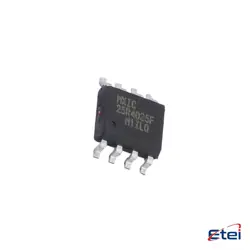
Abbildungen dienen nur als Referenz
AD713JNZ
+StücklisteIC OPAMP JFET 4 CIRCUIT 14DIP
-
HerstellerAnalog Devices Inc.
-
Herstellerteil #AD713JNZ
-
Datenblatt AD713JNZ DataSheet
-
Paket PDIP-14
-
Auf Lager5365
365 Tage Qualitätsgarantie
7*24 Stunden-Servicegarantie
90-Tage Kundendienstgarantie
Originalproduktgarantie
Spezifikationen
| Attribut | Wert |
| Package / Case | Bulk,Tube |
| Part Status | Active |
| Amplifier Type | J-FET |
| Number of Circuits | 4 |
| Slew Rate | 20V/µs |
| -3 dB Bandwidth | 4 MHz |
| Current - Input Bias | 10 pA |
| Voltage - Input Offset | 300 µV |
| Supply Current | 10mA |
| Current - Output / Channel | 25 mA |
| Voltage - Supply Span(Min) | 9 V |
| Voltage - Supply Span(Max) | 36 V |
| Operating Temperature | 0°C ~ 70°C |
| Mounting Type | Through Hole |
Übersicht
Description
1. Objective: Outlining the main goals and learning outcomes associated with AD713JNZ.
2. Content Overview: A brief description of the topics or themes covered in the course or module.
3. Structure: Explanation of how the content is organized, such as lectures, seminars, or workshops.
4. Prerequisites: Any prior knowledge or courses required before engaging with AD713JNZ.
5. Target Audience: The intended participants, such as students, professionals, or specific interest groups.
6. Assessment Methods: How participants’ understanding and proficiency will be evaluated, like exams, projects, or presentations.
7. Resources: Recommended materials or tools for success, including textbooks, software, or online platforms.
If AD713JNZ is a unique identifier for a course or program, consulting the syllabus or official description would provide more tailored insights.
Equivalent
1. LM324 series by Texas Instruments.
2. TL084 series by Texas Instruments.
3. MC3403 by ON Semiconductor.
4. LT1014 by Analog Devices.
5. OPA4134 by Texas Instruments.
The equivalents vary in specifications, so it's essential to compare specific parameters like bandwidth, slew rate, and power supply requirements to ensure compatibility with your application.
Features
1. Quad Configuration: It contains four independent op-amps in a single package, making it suitable for complex analog signal processing tasks.
2. Low Noise: The AD713JNZ boasts low noise performance, which is essential for precision applications requiring clear and accurate signal amplification.
3. High Slew Rate: This op-amp has a high slew rate, enabling it to handle rapidly changing signals efficiently, which is beneficial in high-speed applications.
4. Low Distortion: The device offers low total harmonic distortion, making it ideal for audio and other precision analog applications.
5. Wide Bandwidth: It supports a wide bandwidth, allowing it to amplify signals with minimal loss, suitable for a variety of high-frequency applications.
6. Low Input Bias Current: This feature minimizes errors due to input offset voltage, ensuring accurate signal processing.
7. Versatile Applications: Due to its robust features, it is used in applications such as active filters, audio pre-amplifiers, and data acquisition systems.
These features make the AD713JNZ a versatile choice for engineers seeking reliable and precise operational amplifiers.
Pinout
The pins on the AD713JNZ package are typically designated as follows:
1. Offset Null (Channel A)
2. Inverting Input (Channel A)
3. Non-Inverting Input (Channel A)
4. V+
5. Non-Inverting Input (Channel B)
6. Inverting Input (Channel B)
7. Offset Null (Channel B)
8. Offset Null (Channel C)
9. Inverting Input (Channel C)
10. Non-Inverting Input (Channel C)
11. V-
12. Non-Inverting Input (Channel D)
13. Inverting Input (Channel D)
14. Offset Null (Channel D)
This configuration allows each amplifier to be easily integrated into a wide variety of analog circuits.
Manufacturer
Application
1. Instrumentation Amplifiers: Used for precise sensor data amplification and signal processing.
2. Active Filters: Ideal for creating high-stability active filter circuits.
3. Data Acquisition Systems: Enhances accuracy and stability in acquiring and converting analog signals to digital data.
4. Medical Equipment: Used in sensitive medical devices due to its low noise and high precision.
5. Audio Processing: Suitable for high-fidelity audio applications requiring low distortion.
6. Control Systems: Ensures stable and precise feedback in industrial control systems.
These applications benefit from the AD713JNZ's low noise, high slew rate, and excellent DC precision.