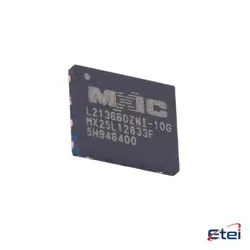
Abbildungen dienen nur als Referenz
AD8221ARMZ-R7
+StücklisteIC INST AMP 1 CIRCUIT 8MSOP
-
HerstellerAnalog Devices Inc.
-
Herstellerteil #AD8221ARMZ-R7
-
Paket MSOP-8
-
Auf Lager5835
365 Tage Qualitätsgarantie
7*24 Stunden-Servicegarantie
90-Tage Kundendienstgarantie
Originalproduktgarantie
Spezifikationen
| Attribut | Wert |
| Package / Case | Tape & Reel (TR),Cut Tape (CT) |
| Part Status | Active |
| Amplifier Type | Instrumentation |
| Number of Circuits | 1 |
| Slew Rate | 2V/µs |
| -3 dB Bandwidth | 825 kHz |
| Current - Input Bias | 500 pA |
| Voltage - Input Offset | 60 µV |
| Supply Current | 900µA |
| Current - Output / Channel | 18 mA |
| Voltage - Supply Span(Min) | 4.6 V |
| Voltage - Supply Span(Max) | 36 V |
| Operating Temperature | -40°C ~ 85°C |
| Mounting Type | Surface Mount |
Übersicht
Description
Key specifications include:
- Gain Range: The gain can be set from 1 to 1000 using a single external resistor.
- Bandwidth: It maintains a high bandwidth of 825 kHz at a gain of 1.
- Low Offset Voltage: The device offers low offset voltage, typically around 50 µV.
- Low Noise: The input noise is around 8 nV/√Hz, ensuring minimal signal distortion.
- Rail-to-Rail Output: It operates on a single or dual power supply ranging from ±2.3 V to ±18 V.
- Package: The AD8221ARMZ-R7 comes in a compact 8-lead MSOP package.
Its robust design makes it ideal for applications requiring precise signal amplification and high reliability in challenging environments.
Equivalent
1. INA118 by Texas Instruments
2. MAX4198 by Maxim Integrated
3. LT1167 by Analog Devices (formerly by Linear Technology)
These alternatives share similar functionalities but may differ in specifications, so it's important to verify their suitability based on the specific application requirements.
Features
1. High Accuracy: Offers excellent precision with a gain accuracy of 0.1% and gain drift of 1 ppm/°C, ensuring reliable performance across temperature variations.
2. Wide Gain Range: Programmable gain from 1 to 1000, allowing flexibility in various applications.
3. Low Noise: Features low input voltage noise of 8 nV/√Hz and low current noise, which is ideal for sensitive measurements.
4. Common-Mode Rejection: Provides a high common-mode rejection ratio (CMRR) of 80 dB at G=1, which improves signal integrity by reducing noise from common-mode signals.
5. Power Supply: Operates with dual supplies ranging from ±2.3 V to ±18 V, ensuring compatibility with various power configurations.
6. Temperature Range: Specified for operation from -40°C to +85°C, suitable for diverse environmental conditions.
7. Small Package: Available in a space-saving MSOP-8 package, beneficial for compact and portable device designs.
These features make the AD8221ARMZ-R7 ideal for medical instrumentation, data acquisition, and other precision measurement applications.
Pinout
1. Pin 1 (RG) - Gain Resistor: Connection for gain-setting resistor.
2. Pin 2 (–IN) - Inverting Input: Connects to the inverting input terminal.
3. Pin 3 (+IN) - Non-Inverting Input: Connects to the non-inverting input terminal.
4. Pin 4 (V-) - Negative Power Supply: Connects to the negative power supply voltage.
5. Pin 5 (REF) - Reference Input: Sets the output reference level, often tied to ground or another reference voltage.
6. Pin 6 (OUT) - Output: Provides the amplified output signal.
7. Pin 7 (V+) - Positive Power Supply: Connects to the positive power supply voltage.
8. Pin 8 (RG) - Gain Resistor: Another connection for gain-setting resistor.
The AD8221 is used for amplifying small differential voltages in the presence of large common-mode voltages, providing high input impedance, low noise, and excellent DC precision, making it suitable for various precision measurement applications.
Manufacturer
Application
1. Medical Instrumentation: For amplifying low-level physiological signals.
2. Industrial Process Controls: In systems requiring accurate measurements and robust performance.
3. Strain Gauge and Pressure Sensor Interfaces: For enhancing sensor output.
4. Data Acquisition Systems: For precise signal amplification.
5. Weigh Scales: Ensuring accurate weight measurements.
6. Transducer Interfaces: Amplifying signals for further processing.
7. Automotive Sensor Interfaces: Enhancing signal integrity in vehicles.
Its low noise, high accuracy, and ability to reject common-mode signals make it suitable for these precision-demanding applications.