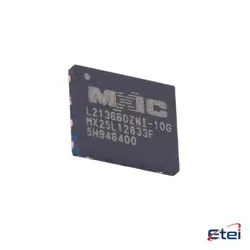
Abbildungen dienen nur als Referenz
ADG452BRUZ
+StücklisteIC SWITCH QUAD SPST 16TSSOP
-
HerstellerAnalog Devices Inc.
-
Herstellerteil #ADG452BRUZ
-
Datenblatt ADG452BRUZ DataSheet
-
Paket TSSOP-16
-
Auf Lager4347
365 Tage Qualitätsgarantie
7*24 Stunden-Servicegarantie
90-Tage Kundendienstgarantie
Originalproduktgarantie
Spezifikationen
| Attribut | Wert |
| Package | Bulk,Tube |
| ProductStatus | Active |
| SwitchCircuit | SPST - NO |
| Multiplexer/DemultiplexerCircuit | 1:1 |
| NumberofCircuits | 4 |
| On-StateResistance(Max) | 5Ohm |
| Channel-to-ChannelMatching(ΔRon) | 100mOhm |
| Voltage-SupplySingle(V+) | 12V |
| Voltage-SupplyDual(V±) | ±4.5V ~ 20V |
| SwitchTime(TonToff)(Max) | 180ns, 140ns |
| ChargeInjection | 20pC |
| ChannelCapacitance(CS(off)CD(off)) | 37pF, 37pF |
| Current-Leakage(IS(off))(Max) | 500pA |
| Crosstalk | -90dB @ 1MHz |
| OperatingTemperature | -40°C ~ 85°C (TA) |
| MountingType | Surface Mount |
| Package/Case | 16-TSSOP (0.173, 4.40mm Width) |
Übersicht
Description
The device typically comes in a small package, such as the TSSOP (Thin Shrink Small Outline Package), which ensures space efficiency in design applications. It also features low charge injection, which minimizes signal distortion during switching operations. The ADG452BRUZ is often used in precision analog systems due to its capability to handle both single and dual supply operations, enhancing flexibility. Its robust design makes it a reliable choice for industrial, automotive, and consumer electronics where efficient and accurate signal switching is critical.
Equivalent
1. MAX313 by Maxim Integrated: A low-voltage, low-power analog switch.
2. DG411DY by Vishay: A monolithic quad SPST switch.
3. 74HC4066 by Nexperia: A quad bilateral switch.
4. TS3A5018 by Texas Instruments: A low-voltage, dual single-pole double-throw analog switch.
These products serve similar switching functions and can be considered when searching for replacements or alternatives. Always verify specifications to ensure compatibility with your application.
Features
1. Low On-Resistance: The switch boasts a low on-resistance of approximately 50 ohms, which minimizes signal loss and distortion.
2. Wide Supply Range: It operates over a dual supply range of ±5 V to ±15 V or a single supply range of 12 V to 30 V, offering versatility in various applications.
3. Low Power Consumption: The device is designed for low power consumption, which is critical for battery-operated and portable systems.
4. Fast Switching Times: It features fast switching speeds, with a typical switch time of 120 ns, suitable for high-speed applications.
5. High Signal Integrity: The ADG452BRUZ has low charge injection (approximately 10 pC), maintaining signal integrity during switching.
6. TTL/CMOS Compatible: The digital inputs are compatible with both TTL and CMOS logic levels, enhancing its integration flexibility.
7. Low Off Leakage: It exhibits low off-leakage currents, aiding in maintaining precision in high-impedance applications.
8. Package: Available in a 16-lead TSSOP package, providing a compact solution for space-constrained applications.
These features make the ADG452BRUZ suitable for data acquisition systems, communication systems, and instrumentation applications.
Pinout
The ADG452BRUZ is housed in a TSSOP (Thin Shrink Small Outline Package) with a pin count of 8. The functions of the pins generally include:
1. VDD: Positive supply voltage.
2. GND: Ground reference.
3. IN: Digital control input; controls the connection between the source and the drain.
4. S: Source terminal.
5. D: Drain terminal.
6. NC: Not connected or no internal connection (may vary in functionality depending on manufacturer pinout specifics).
7. NC: Another not connected or no internal connection pin.
8. VSS: Negative supply voltage (if the design supports dual-supply operation).
These switches are commonly used in applications requiring low power dissipation and high precision, like data acquisition systems and analog signal switching applications.
Manufacturer
Application
1. Data Acquisition Systems: Switches multiple input channels to a single output for processing.
2. Communication Systems: Used for signal routing and modulation.
3. Audio/Video Switching: Routes audio or video signals without distortion.
4. Instrumentation and Measurement: Switches signals from sensors or transducers.
5. Automated Test Equipment: Manages multiple test signals and channels.
6. Industrial Control Systems: Controls signal paths in automation setups.
Its low on-resistance and high off-isolation make it suitable for precision tasks.