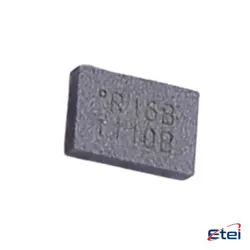
Abbildungen dienen nur als Referenz
AT24C08C-SSPD-T
+StücklisteIC EEPROM 8KBIT I2C 1MHZ 8SOIC
-
HerstellerMikrochip-Technologie
-
Herstellerteil #AT24C08C-SSPD-T
-
Auf Lager4756
365 Tage Qualitätsgarantie
7*24 Stunden-Servicegarantie
90-Tage Kundendienstgarantie
Originalproduktgarantie
Spezifikationen
| Attribut | Wert |
| PartStatus | Active |
| DigiKeyProgrammable | Not Verified |
| MemoryType | Non-Volatile |
| MemoryFormat | EEPROM |
| Technology | EEPROM |
| MemorySize | 8Kbit |
| MemoryOrganization | 1K x 8 |
| MemoryInterface | I2C |
| WriteCycleTime-Word,Page | 5ms |
| Voltage-Supply | 2.5V ~ 5.5V |
| OperatingTemperature | -40°C ~ 125°C (TA) |
| MountingType | Surface Mount |
| Package/Case | 8-SOIC (0.154", 3.90mm Width) |
| SupplierDevicePackage | 8-SOIC |
| BaseProductNumber | AT24C08 |
| ClockFrequency | 1 MHz |
| AccessTime | 900 ns |
| Grade | Automotive |
| Qualification | AEC-Q100 |
Übersicht
Description
The AT24C08C-SSPD-T is an 8Kb (1024 x 8-bit) I2C EEPROM (Electrically Erasable Programmable Read-Only Memory) designed for applications requiring non-volatile memory storage. It operates at a supply voltage range of 1.8V to 5.5V and interfaces using the I2C communication protocol, allowing multiple devices to be connected on the same bus.
Key features include:
- Memory Organization: 1024 bytes, with each byte individually addressable.
- Data Retention: Typically up to 40 years, with a write endurance of about 1 million cycles.
- Low Power Consumption: Suitable for battery-operated devices.
- Temperature Range: Designed for operation in industrial environments.
Applications include configuration storage, calibration data, and firmware storage in consumer electronics, automotive systems, and industrial controls. Its small footprint and ability to retain data without power make it ideal for compact, low-power designs.
Key features include:
- Memory Organization: 1024 bytes, with each byte individually addressable.
- Data Retention: Typically up to 40 years, with a write endurance of about 1 million cycles.
- Low Power Consumption: Suitable for battery-operated devices.
- Temperature Range: Designed for operation in industrial environments.
Applications include configuration storage, calibration data, and firmware storage in consumer electronics, automotive systems, and industrial controls. Its small footprint and ability to retain data without power make it ideal for compact, low-power designs.
Equivalent
The AT24C08C-SSPD-T is an 8Kb EEPROM from Microchip Technology. Equivalent products include:
1. CAT24C08 - ON Semiconductor
2. M24C08 - STMicroelectronics
3. X24C08 - Xicor (now part of Intersil)
4. 24C08 - Winbond
Ensure to check specifications like voltage, memory size, and packaging for compatibility.
1. CAT24C08 - ON Semiconductor
2. M24C08 - STMicroelectronics
3. X24C08 - Xicor (now part of Intersil)
4. 24C08 - Winbond
Ensure to check specifications like voltage, memory size, and packaging for compatibility.
Features
The AT24C08C-SSPD-T is an EEPROM (Electrically Erasable Programmable Read-Only Memory) chip with the following features:
1. Memory Size: 8 Kbit (1 Kbyte) of EEPROM.
2. Interface: I2C compatible, supporting standard and fast modes (up to 400 kHz).
3. Voltage Range: Operates typically at 1.7V to 5.5V, allowing for low-power applications.
4. Page Write: Supports page write operations, allowing up to 16 bytes at a time.
5. Endurance: Rated for 1 million write/erase cycles per memory cell.
6. Retention: Data retention of up to 100 years.
7. Temperature Range: Available in commercial and industrial temperature ranges.
8. Package Type: Available in various packages, including SOIC and TSSOP.
9. Addressing: Supports up to 8 devices on the same I2C bus with unique addresses.
These features make the AT24C08C-SSPD-T suitable for various applications, including consumer electronics, automotive, and industrial devices.
1. Memory Size: 8 Kbit (1 Kbyte) of EEPROM.
2. Interface: I2C compatible, supporting standard and fast modes (up to 400 kHz).
3. Voltage Range: Operates typically at 1.7V to 5.5V, allowing for low-power applications.
4. Page Write: Supports page write operations, allowing up to 16 bytes at a time.
5. Endurance: Rated for 1 million write/erase cycles per memory cell.
6. Retention: Data retention of up to 100 years.
7. Temperature Range: Available in commercial and industrial temperature ranges.
8. Package Type: Available in various packages, including SOIC and TSSOP.
9. Addressing: Supports up to 8 devices on the same I2C bus with unique addresses.
These features make the AT24C08C-SSPD-T suitable for various applications, including consumer electronics, automotive, and industrial devices.
Pinout
The AT24C08C-SSPD-T is an I2C-compatible EEPROM (Electrically Erasable Programmable Read-Only Memory) device with a pin count of 8.
Pin Functions:
1. VCC (Pin 1): Power supply voltage (typically 2.5V to 5.5V).
2. GND (Pin 2): Ground reference.
3. SDA (Pin 3): Serial Data Line for data transfer to and from the EEPROM.
4. SCL (Pin 4): Serial Clock Line for synchronizing data transfers.
5. WP (Pin 5): Write Protect pin; active low. When asserted, it prevents write operations.
6. A0 (Pin 6): Address pin for device selection, allowing multiple devices on the same I2C bus.
7. A1 (Pin 7): Another address pin for additional device selection.
8. NC (Pin 8): No Connection; not used.
The AT24C08C-SSPD-T provides 1 Kbit of memory, organized as 1024 bits, with the ability to perform byte or page writes.
Pin Functions:
1. VCC (Pin 1): Power supply voltage (typically 2.5V to 5.5V).
2. GND (Pin 2): Ground reference.
3. SDA (Pin 3): Serial Data Line for data transfer to and from the EEPROM.
4. SCL (Pin 4): Serial Clock Line for synchronizing data transfers.
5. WP (Pin 5): Write Protect pin; active low. When asserted, it prevents write operations.
6. A0 (Pin 6): Address pin for device selection, allowing multiple devices on the same I2C bus.
7. A1 (Pin 7): Another address pin for additional device selection.
8. NC (Pin 8): No Connection; not used.
The AT24C08C-SSPD-T provides 1 Kbit of memory, organized as 1024 bits, with the ability to perform byte or page writes.
Manufacturer
The AT24C08C-SSPD-T is manufactured by Microchip Technology Inc., a prominent American company that specializes in microcontroller and analog semiconductors. Founded in 1989, Microchip is known for its innovative solutions in embedded control applications, catering to a wide range of industries including automotive, industrial, consumer electronics, and communications.
Microchip's product portfolio includes microcontrollers, digital signal controllers, memory devices, and various development tools, making it a key player in the semiconductor industry. The AT24C08C-SSPD-T is an EEPROM (Electrically Erasable Programmable Read-Only Memory) device, specifically designed for data storage applications, highlighting Microchip's focus on providing reliable, efficient, and cost-effective memory solutions.
In addition to its extensive product offerings, Microchip is recognized for its strong commitment to customer support and innovation, ensuring that it meets the evolving needs of its diverse client base. Overall, Microchip Technology Inc. stands out as a significant contributor to technological advancements in the electronics sector.
Microchip's product portfolio includes microcontrollers, digital signal controllers, memory devices, and various development tools, making it a key player in the semiconductor industry. The AT24C08C-SSPD-T is an EEPROM (Electrically Erasable Programmable Read-Only Memory) device, specifically designed for data storage applications, highlighting Microchip's focus on providing reliable, efficient, and cost-effective memory solutions.
In addition to its extensive product offerings, Microchip is recognized for its strong commitment to customer support and innovation, ensuring that it meets the evolving needs of its diverse client base. Overall, Microchip Technology Inc. stands out as a significant contributor to technological advancements in the electronics sector.
Application
The AT24C08C-SSPD-T is an EEPROM (Electrically Erasable Programmable Read-Only Memory) chip used in various applications for non-volatile data storage. Common application areas include:
1. Consumer Electronics: Storing configuration settings and user preferences in devices like TVs and audio systems.
2. Automotive: Keeping calibration data and configuration settings for control units.
3. Industrial Automation: Saving process variables and calibration data in machinery.
4. Telecommunications: Maintaining network configurations and firmware settings.
5. Medical Devices: Storing patient data and device parameters securely.
Its I2C interface makes it suitable for easy integration into various systems.
1. Consumer Electronics: Storing configuration settings and user preferences in devices like TVs and audio systems.
2. Automotive: Keeping calibration data and configuration settings for control units.
3. Industrial Automation: Saving process variables and calibration data in machinery.
4. Telecommunications: Maintaining network configurations and firmware settings.
5. Medical Devices: Storing patient data and device parameters securely.
Its I2C interface makes it suitable for easy integration into various systems.
Package
The AT24C08C-SSPD-T is packaged in an 8-lead SOIC (Small Outline Integrated Circuit) format. It features a surface-mount design suitable for various electronic applications.