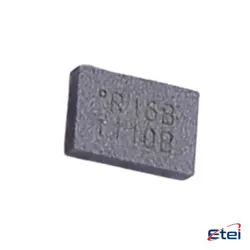
Abbildungen dienen nur als Referenz
AT29C512-90JI
+StücklisteIC FLASH 512KBIT PARALLEL 32PLCC
-
HerstellerMikrochip-Technologie
-
Herstellerteil #AT29C512-90JI
-
Paket LCC-32
-
Auf Lager3062
365 Tage Qualitätsgarantie
7*24 Stunden-Servicegarantie
90-Tage Kundendienstgarantie
Originalproduktgarantie
Spezifikationen
| Attribut | Wert |
| Package | Tube |
| ProductStatus | Obsolete |
| MemoryType | Non-Volatile |
| MemoryFormat | FLASH |
| Technology | FLASH |
| MemorySize | 512Kb (64K x 8) |
| MemoryInterface | Parallel |
| WriteCycleTime-WordPage | 10ms |
| AccessTime | 90 ns |
| Voltage-Supply | 4.5V ~ 5.5V |
| OperatingTemperature | -40°C ~ 85°C (TC) |
| MountingType | Surface Mount |
| Package/Case | 32-LCC (J-Lead) |
Übersicht
Description
Key features include a parallel interface for fast data access, byte-by-byte or page write capabilities, and a built-in hardware and software data protection mechanism to safeguard against inadvertent writes. The AT29C512-90JI also offers a high endurance of write/erase cycles, making it reliable for frequent updates. It is commonly used in embedded systems, where it serves as a storage element for firmware or data that needs to be retained after power-off.
The chip is available in a 32-pin dual in-line package (DIP) and operates over an industrial temperature range, making it versatile for various environmental conditions.
Equivalent
1. SST39SF512-90-4C-NHE by Microchip Technology
2. AM29F512-70PC by AMD
3. M27C512-90B6 by STMicroelectronics (EEPROM alternative)
4. W29C512AP-90 by Winbond
Always verify the specifications, such as voltage, package, and access time, to ensure compatibility with your specific application.
Features
1. Fast Access Time: It offers a 90 ns access time, ensuring quick read operations.
2. Low Power Consumption: The device is designed for low power operations, making it suitable for battery-operated systems.
3. Endurance: It supports up to 10,000 write/erase cycles per sector, providing reliable reusability.
4. Data Retention: The memory retains data for over 10 years, ensuring long-term stability.
5. Sector Architecture: It allows for individual sector erase, simplifying data updates.
6. Automatic Programming: The device features built-in programming algorithms that automatically manage write operations.
7. Hardware and Software Data Protection: It includes features to prevent accidental writes and erasure, enhancing data security.
8. Package Options: The AT29C512-90JI comes in a PLCC (Plastic Leaded Chip Carrier) package, suitable for various applications.
9. In-System and Stand-Alone Programming: This flexibility allows for both development and production environments.
These features make the AT29C512-90JI ideal for applications requiring non-volatile storage with reliable performance.
Pinout
1. A0-A15 (16 pins): Address inputs used to specify the memory location for data access.
2. DQ0-DQ7 (8 pins): Data input/output pins used for transferring data to and from the device.
3. CE (Chip Enable): Activates the chip when low, allowing for read/write operations.
4. OE (Output Enable): Enables the data output buffers when low, allowing the data to be read from the chip.
5. WE (Write Enable): Controls the writing to the memory when low.
6. RESET: Resets the internal state machine and may be used to stop a write cycle.
7. VCC: Power supply voltage (5V).
8. GND: Ground reference for the power supply.
These pins allow for in-system reprogrammability and interfacing with a microcontroller or other digital systems.
Manufacturer
Application
1. Embedded Systems: For firmware storage in microcontroller-based systems.
2. Industrial Automation: Used in programmable logic controllers (PLCs) for storing configuration settings and program code.
3. Telecommunications: In switches and routers for configuration data.
4. Consumer Electronics: For storing calibration data and user settings.
5. Automotive Systems: In engine control units (ECUs) for software updates and data logging.
6. Medical Devices: For reliable storage of critical software and data that require frequent updates.
Its advantages include high endurance, data retention, and in-circuit reprogrammability.