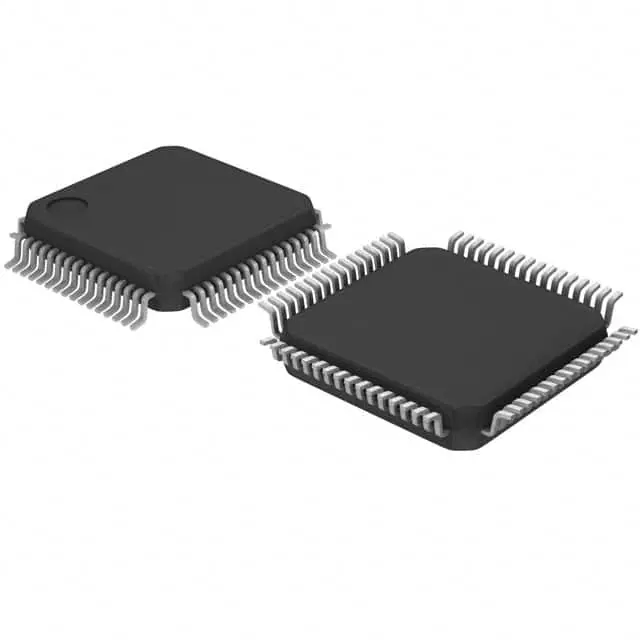
Abbildungen dienen nur als Referenz
AT90USB1287-AU
+StücklisteIC MCU 8BIT 128KB FLASH 64TQFP
-
HerstellerMikrochip-Technologie
-
Herstellerteil #AT90USB1287-AU
-
Datenblatt AT90USB1287-AU DataSheet
-
Paket TQFP-64
-
Auf Lager5763
365 Tage Qualitätsgarantie
7*24 Stunden-Servicegarantie
90-Tage Kundendienstgarantie
Originalproduktgarantie
Spezifikationen
| Attribut | Wert |
| Package | Tray |
| Series | AVR® 90USB |
| ProductStatus | Active |
| CoreProcessor | AVR |
| CoreSize | 8-Bit |
| Speed | 16MHz |
| Connectivity | EBI/EMI, I²C, SPI, UART/USART, USB OTG |
| Peripherals | Brown-out Detect/Reset, POR, PWM, WDT |
| NumberofI/O | 48 |
| ProgramMemorySize | 128KB (128K x 8) |
| ProgramMemoryType | FLASH |
| EEPROMSize | 4K x 8 |
| RAMSize | 8K x 8 |
| Voltage-Supply(Vcc/Vdd) | 2.7V ~ 5.5V |
| DataConverters | A/D 8x10b |
| OscillatorType | Internal |
| OperatingTemperature | -40°C ~ 85°C (TA) |
| MountingType | Surface Mount |
| Package/Case | 64-TQFP |
Übersicht
Equivalent
- ATmega16U4/ATmega32U4 (smaller flash but similar USB features)
- AT90USB646/AT90USB1286 (same family, slightly different specs)
- ATmega128U4 (similar but with more flash)
- PIC18F4550 (Microchip alternative with USB)
- STM32F103 (ARM-based, more powerful but different architecture)
Check pin compatibility and feature requirements when substituting.
Features
- CPU: 8-bit AVR, up to 16 MIPS at 16 MHz
- Flash: 128 KB
- SRAM: 8 KB
- EEPROM: 4 KB
- USB 2.0 Full-Speed (12 Mbps) with embedded PHY
- I/O Pins: 48
- Timers: Four 8-bit, two 16-bit
- ADC: 8-channel, 10-bit
- Communication: USART, SPI, I²C
- Operating Voltage: 2.7V–5.5V
- Packaging: 64-pin TQFP
Ideal for USB-enabled embedded applications.
Pinout
- 64-pin TQFP package
- 16MHz 8-bit AVR core with 128KB Flash, 8KB SRAM, and 4KB EEPROM
- USB 2.0 Full-Speed (12Mbps) with embedded transceiver
- 48 programmable I/O pins (multiplexed with peripherals)
- Peripherals:
- 4x UART, SPI, I²C
- 8x 10-bit ADC channels
- 4x PWM channels
- JTAG & debugWIRE for programming
Commonly used in USB-enabled embedded systems like keyboards and HID devices.
Application
1. USB Devices: HID (keyboards, mice), mass storage, and communication interfaces.
2. Embedded Systems: Industrial control, automation, and IoT applications.
3. Consumer Electronics: Gaming peripherals, smart home devices.
4. Medical Devices: Portable diagnostic tools and monitoring systems.
5. Automotive: Infotainment and auxiliary control modules.
Its USB 2.0 support, 128KB flash, and 8-bit AVR architecture make it ideal for cost-sensitive, connectivity-driven designs.