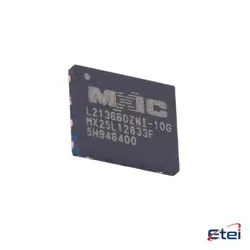
Abbildungen dienen nur als Referenz
ATF16V8BQL-15XU
+StücklisteIC PLD 8MC 15NS 20TSSOP
-
HerstellerMikrochip-Technologie
-
Herstellerteil #ATF16V8BQL-15XU
-
Paket TSSOP-20
-
Auf Lager4398
365 Tage Qualitätsgarantie
7*24 Stunden-Servicegarantie
90-Tage Kundendienstgarantie
Originalproduktgarantie
Spezifikationen
| Attribut | Wert |
| Supplier | Microchip Technology |
| Package / Case | Tube |
| Series | 16V8 |
| Part Status | Active |
| Programmable Type | EE PLD |
| Number of Macrocells | 8 |
| Voltage - Input | 5V |
| Speed | 15 ns |
| Mounting Type | Surface Mount |
Übersicht
Description
Equivalent
Features
- 16 macrocells for glue logic, simple state machines, and basic combinational/sequential circuits
- Flash/non-volatile configuration memory (no external PROM required); instant-on
- In-system programming via SPI-compatible interface (and boundary-scan/test options in some packages)
- 5V-tolerant user I/O with CMOS logic levels (up to ~16 I/O pins, depending on package)
- Static operation (no clock needed) with programmable interconnect
- -15XU speed grade (feature suited for moderate-speed glue logic)
- Small package option (BQL family) suitable for compact designs
- Industrial temperature range and RoHS-compliant
Note: exact I/O count and package details vary by specific part variant; consult the datasheet for the precise pin count, I/O wiring, and timing.
Pinout
Function: ATF16V8B is a 16V8 complex programmable logic device (EPLD/GLD) providing programmable glue logic — up to eight macrocells (outputs, each configurable as registered or combinatorial) with the remaining package pins used as inputs/I/O, plus VCC and GND. It implements PAL/GAL-style sum-of-products logic for decoders, state machines and general combinational/sequential functions.
Manufacturer
- What kind of company: AMD is an American multinational semiconductor company that designs and manufactures integrated circuits, including CPUs, GPUs, and other semiconductor products.
Application
- Glue logic for microcontrollers/memories: address decoding, chip selects, control signals
- State machines and timing/control sequencing
- I/O expansion and interface bridging to peripherals
- Clock domain crossing and simple clock/timing generation
- Look-up tables, small ROMs, and combinational/sequential logic
- Debouncing, keypad scanning, LED drivers, simple sensor interfaces
- Lightweight protocol interfaces (UART, SPI, I2C or other custom buses)
In short: use it to replace multiple small TTL gates with compact, programmable logic for simple digital control.