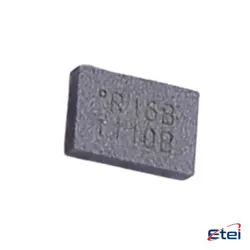
Abbildungen dienen nur als Referenz
ATMEGA128-16MU
+StücklisteIC MCU 8BIT 128KB FLASH 64QFN
-
HerstellerMikrochip-Technologie
-
Herstellerteil #ATMEGA128-16MU
-
Datenblatt ATMEGA128-16MU DataSheet
-
Auf Lager9273
365 Tage Qualitätsgarantie
7*24 Stunden-Servicegarantie
90-Tage Kundendienstgarantie
Originalproduktgarantie
Spezifikationen
| Attribut | Wert |
| Series | AVR® ATmega |
| Part Status | Active |
| Digi Key Programmable | Verified |
| Core Processor | AVR |
| Core Size | 8-Bit |
| Speed | 16MHz |
| Connectivity | EBI/EMI, I2C, SPI, UART/USART |
| Peripherals | Brown-out Detect/Reset, POR, PWM, WDT |
| Number of I/O | 53 |
| Program Memory Size | 128KB (64K x 16) |
| Program Memory Type | FLASH |
| EEPROM Size | 4K x 8 |
| RAM Size | 4K x 8 |
| Voltage - Supply (Vcc/Vdd) | 4.5V ~ 5.5V |
| Data Converters | A/D 8x10b |
| Oscillator Type | Internal |
| Operating Temperature | -40°C ~ 85°C (TA) |
| Mounting Type | Surface Mount |
| Supplier Device Package | 64-QFN (9x9) |
| Package / Case | 64-VFQFN Exposed Pad |
| Base Product Number | ATMEGA128 |
Übersicht
Description
Key features include a rich set of peripherals such as timers, counters, PWM channels, USART, SPI, I2C, and a 10-bit ADC. It supports up to 53 programmable I/O lines, offering versatility in interfacing with other devices. The device is designed for low power consumption, with multiple power-saving modes available.
The ATMEGA128-16MU is available in various packages, including TQFP and MLF, which suit different application needs. Its robust feature set makes it suitable for use in industrial control, consumer electronics, and other demanding environments where reliability and performance are critical.
Equivalent
1. ATmega128A-AU: A similar variant with minor differences in electrical characteristics.
2. ATmega128L: A low-voltage version of the ATmega128.
3. ATmega2560: Offers more memory but similar architecture for larger applications.
4. ATmega1284P: Provides similar functionality with more I/O pins.
5. ATmega64: A smaller memory option with similar features.
Always verify pin compatibility and specific application needs before substituting.
Features
1. Core: 8-bit AVR RISC architecture.
2. Speed: Operates at up to 16 MHz.
3. Flash Memory: 128 KB of in-system self-programmable Flash.
4. SRAM: 4 KB.
5. EEPROM: 4 KB.
6. Operating Voltage: 2.7V to 5.5V.
7. I/O Pins: 53 programmable I/O lines.
8. Timers/Counters: Two 8-bit and two 16-bit timers/counters.
9. Communication Interfaces:
- Dual USARTs.
- SPI.
- TWI (I2C-compatible).
10. ADC: 10-bit ADC with 8 channels.
11. PWM: Six PWM channels.
12. Watchdog Timer: Programmable with internal oscillator.
13. Interrupts: 35 interrupt sources.
14. Power-Saving Modes: Idle, Power-Down, Power-Save, and Standby.
15. Package: Available in various packages, including QFN.
16. Temperature Range: -40°C to +85°C (extended industrial range).
These features make it suitable for applications requiring efficient processing, ample memory, and varied peripheral interfacing.
Pinout
1. Core: AVR 8-bit RISC architecture, capable of executing powerful instructions in a single clock cycle.
2. Memory: 128KB of programmable Flash memory, 4KB of EEPROM, and 4KB of internal SRAM.
3. Timers/Counters: Includes two 8-bit and two 16-bit timers/counters with separate pre-scalers, PWM, and capture modes.
4. Communication Interfaces:
- Two USARTs for serial communication.
- One SPI interface.
- One TWI (I2C compatible) interface.
5. Analog Features:
- 8-channel, 10-bit ADC.
- Analog comparator.
6. Interrupts: 53 interrupt vectors, with 35 external interrupts.
7. Power Management: Various sleep modes to conserve power.
8. Operating Voltage: 4.5V to 5.5V.
This microcontroller is suitable for applications requiring a mix of digital and analog input/output, communication interfaces, and efficient power management.
Manufacturer
Application
1. Embedded Systems: Ideal for developing embedded systems thanks to its rich set of peripherals.
2. Robotics: Used in robotics for motor control, sensor integration, and communication tasks.
3. Industrial Automation: Applicable in control systems, data acquisition, and process monitoring.
4. Consumer Electronics: Utilized in devices like home appliances and personal gadgets.
5. Automotive: Employed in vehicle control systems and infotainment.
6. IoT Devices: Suitable for IoT applications due to its low power consumption and connectivity options.
These applications leverage the microcontroller's capabilities in processing, I/O control, and communication.