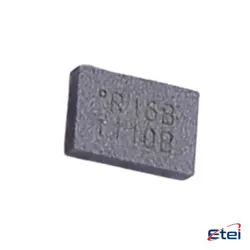
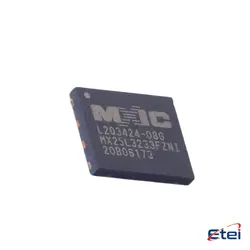
Abbildungen dienen nur als Referenz
ATMEGA48PA-15MZ
+StücklisteIC MCU 8BIT 4KB FLASH 32QFN
-
HerstellerMikrochip-Technologie
-
Herstellerteil #ATMEGA48PA-15MZ
-
Datenblatt ATMEGA48PA-15MZ DataSheet
-
Auf Lager3339
365 Tage Qualitätsgarantie
7*24 Stunden-Servicegarantie
90-Tage Kundendienstgarantie
Originalproduktgarantie
Spezifikationen
| Attribut | Wert |
| Series | AVR® ATmega |
| PartStatus | Active |
| DigiKeyProgrammable | Not Verified |
| CoreProcessor | AVR |
| CoreSize | 8-Bit |
| Speed | 16MHz |
| Connectivity | I2C, SPI, UART/USART |
| Peripherals | Brown-out Detect/Reset, POR, PWM, WDT |
| NumberofI/O | 23 |
| ProgramMemorySize | 4KB (2K x 16) |
| ProgramMemoryType | FLASH |
| EEPROMSize | 256 x 8 |
| RAMSize | 512 x 8 |
| Voltage-Supply(Vcc/Vdd) | 1.8V ~ 5.5V |
| DataConverters | A/D 8x10b |
| OscillatorType | Internal |
| OperatingTemperature | -40°C ~ 125°C (TA) |
| MountingType | Surface Mount |
| SupplierDevicePackage | 32-QFN (5x5) |
| Package/Case | 32-VFQFN Exposed Pad |
| BaseProductNumber | ATMEGA48 |
| Grade | Automotive |
| Qualification | AEC-Q100 |
Übersicht
Description
Operating at a clock speed of up to 15 MHz, the ATmega48PA-15MZ is capable of executing instructions quickly while maintaining low power consumption, which is ideal for battery-operated devices. It supports multiple communication protocols, such as SPI, I2C, and USART, enhancing its versatility in system designs.
The microcontroller also includes built-in features like watchdog timers and various sleep modes to optimize power usage. It is commonly used in applications such as automation, robotics, and sensor monitoring, making it a popular choice for hobbyists and professionals alike.
Equivalent
Features
1. Memory: 4 KB of Flash memory, 512 bytes of SRAM, and 256 bytes of EEPROM.
2. Clock Speed: Operates at up to 15 MHz.
3. I/O Ports: 23 general-purpose I/O pins.
4. Timers: Three timers/counters (two 8-bit and one 16-bit) for various timing applications.
5. ADC: 10-bit Analog-to-Digital Converter with up to 8 input channels.
6. Communication: Supports SPI, I2C (TWI), and USART interfaces for serial communication.
7. Power Management: Operates at a wide voltage range (1.8V to 5.5V) with low power consumption modes.
8. Interrupts: External and internal interrupts for responsive applications.
9. Programming: Supports In-System Programming (ISP) and has a bootloader feature.
This microcontroller is ideal for a variety of embedded applications, including consumer electronics and industrial control systems.
Pinout
- Digital I/O Ports: 23 pins (Port A, Port B, Port C) used for general-purpose input/output.
- Analog Inputs: 6 pins (A0 to A5) for the 10-bit ADC (Analog-to-Digital Converter).
- PWM Outputs: Several pins can be used for Pulse Width Modulation.
- USART: 2 pins (TXD, RXD) for serial communication.
- SPI: Dedicated pins for SPI interface (MISO, MOSI, SCK).
- External Interrupts: Several pins support external interrupts.
- Reset Pin: 1 pin for resetting the microcontroller.
The ATmega48PA operates at a maximum clock frequency of 15 MHz and is available in various packages, including the 32-pin MLF package.
Manufacturer
Microchip provides a range of products and solutions for various industries, including automotive, industrial, consumer, and communications. Their offerings encompass not only MCUs but also analog and interface products, digital signal controllers (DSCs), and development tools. This diverse product portfolio makes Microchip a key player in the semiconductor industry, catering to both large enterprises and smaller companies involved in electronics design and development. The ATmega48PA series, a part of their AVR family, is particularly popular for its low power consumption and versatility, making it suitable for a variety of applications, from simple sensors to complex control systems.
Application
1. Embedded Systems: Ideal for small-scale embedded projects.
2. Consumer Electronics: Used in remote controls, toys, and appliances.
3. Automotive: Employed in dashboards and sensor interfaces.
4. Home Automation: Controls lighting, HVAC, and security systems.
5. IoT Devices: Functions in smart sensors and connected devices.
6. Industrial Automation: Monitors and controls machinery.
7. Robotics: Serves as the brain for small robots and drones.
Its versatility and low power consumption make it suitable for a wide range of applications.