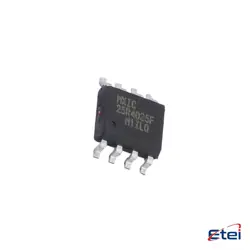
Abbildungen dienen nur als Referenz
ATMEGA8A-MU
+StücklisteIC MCU 8BIT 8KB FLASH 32VQFN
-
HerstellerAtmelCity in Germany
-
Herstellerteil #ATMEGA8A-MU
-
Datenblatt ATMEGA8A-MU DataSheet
-
Paket VQFN-32
-
Auf Lager7690
365 Tage Qualitätsgarantie
7*24 Stunden-Servicegarantie
90-Tage Kundendienstgarantie
Originalproduktgarantie
Spezifikationen
| Attribut | Wert |
| Package / Case | Bulk |
| Series | AVR® ATmega |
| Part Status | Active |
| Core Processor | AVR |
| Core Size | 8-Bit |
| Speed | 16MHz |
| Connectivity | I²C, SPI, UART/USART |
| Peripherals | Brown-out Detect/Reset, POR, PWM, WDT |
| Number of I/O | 23 |
| Program Memory Size | 8KB (4K x 16) |
| Program Memory Type | FLASH |
| EEPROM Size | 512 x 8 |
| RAM Size | 1K x 8 |
| Voltage - Supply (Vcc/Vdd) | 2.7V ~ 5.5V |
| Data Converters | A/D 8x10b |
| Oscillator Type | Internal |
| Operating Temperature | -40°C ~ 85°C (TA) |
| Mounting Type | Surface Mount |
Übersicht
Description
Key peripherals include 23 general-purpose I/O lines, a 6-channel 10-bit ADC, a programmable watchdog timer with an internal oscillator, and three timer/counters (two 8-bit and one 16-bit). It also supports serial communication interfaces such as USART, SPI, and I2C (TWI).
The ATMEGA8A-MU is designed for compact applications, housed in a 32-lead Quad Flat No-leads (QFN) package, making it suitable for space-constrained designs. Its low-power consumption and wide operating voltage range (2.7V to 5.5V) make it ideal for battery-powered devices. The microcontroller is commonly used in consumer electronics, automotive systems, and industrial applications due to its reliability and versatility.
Equivalent
1. ATMEGA8A-AU: Offers similar features in a different package.
2. ATMEGA328P Offers more memory and additional features, often used in Arduino boards.
3. PIC16F877A: A Microchip alternative with similar capabilities.
4. STM8S103F3: A STMicroelectronics option with comparable functionality.
5. NXP LPC800 series: ARM-based alternatives with similar performance.
These alternatives may differ in pin configuration, memory size, or additional peripherals, so review specifications carefully for compatibility with specific applications.
Features
1. Core: 8-bit AVR with 130 powerful instructions.
2. Operating Voltage: 2.7V to 5.5V.
3. Flash Memory: 8KB of in-system programmable flash.
4. EEPROM: 512 bytes.
5. SRAM: 1KB.
6. Clock Speed: Up to 16 MHz.
7. I/O Pins: 23 general-purpose I/O lines.
8. Timers/Counters: Two 8-bit and one 16-bit timer/counters.
9. ADC: 6-channel, 10-bit ADC.
10. PWM: PWM support for signal modulation.
11. Interfaces: Supports USART, SPI, and TWI (I2C).
12. Watchdog Timer: Programmable with a separate on-chip oscillator.
13. Power-Saving Modes: Multiple modes for power efficiency.
14. Package: Available in QFN (32-lead) package.
15. Temperature Range: -40°C to 85°C.
The ATMEGA8A-MU is ideal for applications requiring efficiency, reliability, and low power consumption, including embedded systems, consumer electronics, and industrial automation.
Pinout
- CPU: 8-bit AVR RISC architecture with 130 instructions.
- Memory: 8KB Flash, 1KB SRAM, and 512Bytes EEPROM.
- Clock: Up to 16 MHz.
- I/O Ports: 23 programmable I/O lines.
- Timers: Two 8-bit and one 16-bit timer/counter.
- ADC: 6-channel 10-bit ADC.
- Communication: Supports USART, SPI, and I2C (TWI).
- Other: Watchdog timer, programmable serial USART, internal/external interrupts, power-on reset, programmable brown-out detection, and an internal calibrated oscillator.
These features offer versatile applications in embedded systems, home automation, and consumer electronics.
Manufacturer
Application
1. Embedded Systems: Used in consumer electronics, automotive systems, and industrial automation due to its reliable performance.
2. IoT Devices: Acts as a core processor for IoT applications, facilitating communication between devices.
3. Robotics: Controls sensors and actuators in robotic applications.
4. Home Automation: Powers devices like smart thermostats and lighting systems.
5. Educational Projects: Popular in teaching environments for learning microcontroller programming.
6. Prototyping: Used by hobbyists and developers for rapid prototyping of electronic devices.
Its ease of programming and robust feature set make it suitable for a wide range of applications.