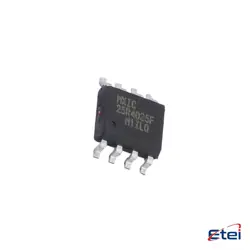
Abbildungen dienen nur als Referenz
CJ3401
+Stückliste-
HerstellerJiangsu Changjing Electronics Technology Co., Ltd.
-
Herstellerteil #CJ3401
-
Datenblatt CJ3401 DataSheet
-
Auf Lager15120
365 Tage Qualitätsgarantie
7*24 Stunden-Servicegarantie
90-Tage Kundendienstgarantie
Originalproduktgarantie
Spezifikationen
| Attribut | Wert |
| Manufacturer | Jiangsu Changjing Electronics Technology Co., Ltd. |
| Package / Case | SOT-23 |
| Operating Temperature | -55℃~+150℃ |
| Current - Continuous Drain(Id) | 4.2A |
| Pd - Power Dissipation | 350mW |
| Drain to Source Voltage (Vdss) | 30V |
| Rds(on) | 75mΩ@4.5V,4A |
| Gate Threshold Voltage (Vgs(th) @ Id) | 1.3V |
| Type | 1 piece P-channel |
| Input Capacitance(Ciss @ Vds) | 954pF |
| Reverse Transfer Capacitance (Crss @ Vds) | 77pF |
Übersicht
Description
The curriculum may also delve into contemporary issues in criminal justice, such as ethical considerations, criminal justice policy, and reform initiatives. Students learn about the interrelationship between various agencies and how they work together to uphold the law and ensure public safety.
This course sets the groundwork for further study in specialized areas of criminal justice and aims to provide students with a comprehensive understanding of how the system functions, its challenges, and its impact on society. Practical case studies and discussions may be incorporated to enhance understanding and engage students in critical thinking about real-world applications of the criminal justice system.
Equivalent
Features
1. Introduction to Criminal Justice: Covering the fundamentals of the criminal justice system, including its history, structure, and function.
2. Criminology Theories: Examining various theories that explain criminal behavior and the social factors influencing crime.
3. Law Enforcement: Understanding policing, its challenges, and its role within the justice system.
4. Judiciary Process: Insights into the court system, legal procedures, and the roles of key participants like judges and lawyers.
5. Corrections: Exploring correctional systems, including prisons, probation, and rehabilitation programs.
6. Ethical Considerations: Discussing ethical dilemmas and professional responsibilities in criminal justice.
7. Current Issues: Analyzing contemporary challenges and developments in the field, such as technology’s impact on crime and justice.
8. Research Methods: Learning basic research techniques relevant to criminal justice studies.
Students might also engage in case studies, discussions, and possibly fieldwork or projects relevant to these topics.
Pinout
1. Gate (G): This pin is used to control the MOSFET. By applying a voltage to the gate, you can turn the transistor on or off.
2. Source (S): This is the pin through which the current enters the transistor. For a P-channel MOSFET, the source is typically connected to a positive voltage.
3. Drain (D): This is the pin through which the current exits the transistor. The drain is connected to the load in a circuit.
The CJ3401 is used primarily for switching applications and power management in electronic circuits. It is favored for its low on-resistance and fast switching capabilities.