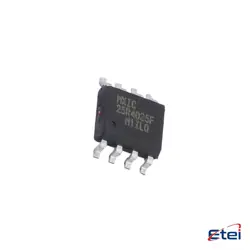
Abbildungen dienen nur als Referenz
CY7C65631-56LTXC
+StücklisteIC USB CTLR 2.0 4PORT AEC 56QFN
-
HerstellerCypress Semiconductor Corp.
-
Herstellerteil #CY7C65631-56LTXC
-
Datenblatt CY7C65631-56LTXC DataSheet
-
Paket PG-VQFN-56
-
Auf Lager5017
365 Tage Qualitätsgarantie
7*24 Stunden-Servicegarantie
90-Tage Kundendienstgarantie
Originalproduktgarantie
Spezifikationen
| Attribut | Wert |
| Package | Bulk,Tray |
| Series | EZ-USB HX2LP Lite™ |
| ProductStatus | Active |
| Protocol | USB |
| Function | Hub Controller |
| Interface | USB |
| Standards | USB 2.0 |
| Voltage-Supply | 3.15V ~ 3.45V |
| OperatingTemperature | 0°C ~ 70°C |
| Package/Case | 56-VFQFN Exposed Pad |
Übersicht
Description
The CY7C65631-56LTXC features a compact design, often packaged in a 56-lead thin shrink small outline package (TSSOP), making it suitable for space-constrained applications. It supports low power consumption, aiding in energy-efficient designs. Additionally, the chip includes integrated voltage regulators and a reduced component count, simplifying the design process and lowering overall system cost.
It also provides backward compatibility with USB 1.1 devices and supports hot-swapping, allowing devices to be connected or disconnected without needing to power down the system. Overall, the CY7C65631-56LTXC is a versatile and efficient solution for expanding USB connectivity in various electronic devices.
Equivalent
1. Microchip's USB2514B, a USB 2.0 hub controller.
2. Texas Instruments' TUSB2046B, another USB 2.0 hub controller.
3. Renesas Electronics' uPD720113, a USB 2.0 hub controller.
These alternatives provide similar functionality in terms of USB connectivity and hub control. Always verify compatibility with specific design requirements before making a substitution.
Features
1. USB Compatibility: It complies with the USB 2.0 specification and supports high-speed (480 Mbps), full-speed (12 Mbps), and low-speed (1.5 Mbps) USB data transfers.
2. Ports: The controller typically supports four USB downstream ports, allowing for expanded connectivity.
3. Integrated Components: It has an integrated USB 2.0 transceiver, voltage regulator, and pull-up/pull-down resistors, which reduces the need for external components.
4. Low Power Consumption: The device is designed for low power consumption, making it suitable for portable and battery-powered applications.
5. Overcurrent Protection: Each downstream port includes individual overcurrent protection to prevent damage to connected devices.
6. LED Indicators: The controller supports LED indicators for power and port status, enhancing user feedback and device management.
7. Package: It is available in a 56-pin QFN package, which is compact for space-constrained applications.
These features make the CY7C65631-56LTXC suitable for integrating USB hub functionality into various consumer electronics, computers, and peripherals.
Pinout
Key features and functions of the CY7C65631-56LTXC include:
1. USB 2.0 Compliance: Supports high-speed (480 Mbps), full-speed (12 Mbps), and low-speed (1.5 Mbps) USB data transfers.
2. Multiple Ports: Typically supports four downstream ports, allowing for the connection of multiple USB devices.
3. Low Power Consumption: Features low-power operation modes and supports USB suspend modes to conserve energy.
4. Built-in Hub Repeater and Transaction Translator: Ensures efficient data handling and communication between USB devices.
5. Embedded USB Hub Controller: Simplifies design implementation by integrating necessary USB hub functions.
These features make the CY7C65631-56LTXC suitable for applications requiring USB connectivity expansion, such as in PCs, docking stations, and consumer electronics.
Manufacturer
Application
1. Consumer Electronics: Enhancing connectivity in devices like set-top boxes, gaming consoles, and smart TVs.
2. Computing: Expanding USB ports on personal computers, laptops, and docking stations.
3. Industrial: Connecting various peripherals in industrial control systems and equipment.
4. Networking Equipment: Used in routers and switches to provide additional USB connections.
5. Automotive: Facilitating USB connections for infotainment systems.
Its primary function is to manage the communication between a host device and multiple USB peripherals efficiently.