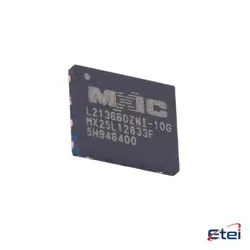
Abbildungen dienen nur als Referenz
DS1077U-125+
+StücklisteIC OSC DUAL FX FREQ PROG 8-USOP
-
HerstellerAnalog Devices Inc./Maxim Integrated
-
Herstellerteil #DS1077U-125+
-
Datenblatt DS1077U-125+ DataSheet
-
Auf Lager3520
365 Tage Qualitätsgarantie
7*24 Stunden-Servicegarantie
90-Tage Kundendienstgarantie
Originalproduktgarantie
Spezifikationen
| Attribut | Wert |
| Supplier | Analog Devices Inc./Maxim Integrated |
| Package | Tube |
| Series | EconOscillator™ |
| ProductStatus | Obsolete |
| Type | Oscillator, Fixed Frequency (Dual) |
| Frequency | 15.2kHz ~ 125MHz |
| Voltage-Supply | 4.75V ~ 5.25V |
| Current-Supply | 50 mA |
| OperatingTemperature | -40°C ~ 85°C |
| Package/Case | 8-TSSOP, 8-MSOP (0.118, 3.00mm Width) |
| SupplierDevicePackage | 8-uMAX/uSOP |
Übersicht
Description
Key attributes include its low jitter performance, which ensures precision in timing applications, and its wide operating voltage range, typically from 2.7V to 3.6V. The DS1077U-125+ is designed for easy integration, often requiring minimal external components. It can be programmed via an I²C interface, allowing users to adjust output frequencies on-the-fly to accommodate different system requirements.
This oscillator is commonly used in telecommunications, networking, and consumer electronics where reliable and precise clock signals are essential. Its compact size and programmable nature make it suitable for embedded systems and applications where space and flexibility are critical.
Equivalent
1. Silicon Labs Si5351 series - Configurable clock generator.
2. Microchip (formerly Micrel) MIC50251 - Programmable oscillator.
3. IDT (Renesas) VersaClock series - Offers flexible clock generation solutions.
4. Maxim Integrated DS1085L - Another programmable oscillator option.
It's important to compare specific features and compatibility with your application requirements.
Features
1. Frequency Range: Offers a wide programmable frequency range from 1kHz to 133MHz, providing flexibility for various applications.
2. Programming: Users can program frequencies via an I²C interface, allowing for easy customization and adjustments.
3. Output: It provides dual output options, with both a primary and a secondary output that can be independently programmed, supporting multiple system needs.
4. Power Supply: Operates at a low supply voltage of 2.7V to 3.6V, making it suitable for battery-powered devices.
5. Power Consumption: Designed for low-power operation, conserving energy in portable or remote applications.
6. Temperature Range: Functions efficiently over an extended temperature range of -40°C to +85°C, suitable for industrial environments.
7. Package: Available in a compact 8-pin µMAX package, facilitating space-saving in design layouts.
These features make the DS1077U-125+ a versatile solution for clock generation in various electronics applications.
Pinout
1. VCC: Power supply input for the oscillator.
2. GND: Ground connection.
3. OUT1: Primary clock output, which can be programmed for different frequencies.
4. OUT0: Secondary clock output, often used for lower frequency outputs or additional system needs.
5. SDA: Serial data line for I²C communication, used to program the device.
6. SCL: Serial clock line for I²C communication.
7. ADDR: I²C address select pin, used to set different I²C device addresses.
8. NC: No connection or not used in some applications, providing flexibility in layout.
The DS1077U-125+ is used in applications requiring precision clock generation, with programmable output frequencies via I²C interface, making it versatile for various timing requirements.
Manufacturer
Application
1. Telecommunications: For clock generation in networking equipment and communication devices.
2. Consumer Electronics: Used in devices like set-top boxes, gaming consoles, and audio/video equipment for timing purposes.
3. Industrial Automation: Provides timing solutions for control systems and automation equipment.
4. Computing: Used in servers, desktops, and laptops for motherboard clock requirements.
5. Test and Measurement: Essential in providing accurate timing in oscilloscopes and signal analyzers.
Its versatility in frequency adjustment makes it suitable for various digital systems requiring exact timing control.