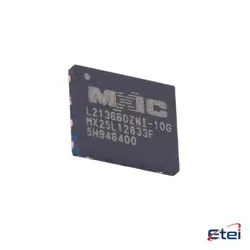
Abbildungen dienen nur als Referenz
EP4CE115F23I7N
+StücklisteIC FPGA 280 I/O 484FBGA
-
HerstellerIntel
-
Herstellerteil #EP4CE115F23I7N
-
Paket FBGA-484
-
Auf Lager6446
365 Tage Qualitätsgarantie
7*24 Stunden-Servicegarantie
90-Tage Kundendienstgarantie
Originalproduktgarantie
Spezifikationen
| Attribut | Wert |
| Package | Tray |
| Series | Cyclone® IV E |
| ProductStatus | Active |
| NumberofLABs/CLBs | 7155 |
| NumberofLogicElements/Cells | 114480 |
| TotalRAMBits | 3981312 |
| NumberofI/O | 280 |
| Voltage-Supply | 1.15V ~ 1.25V |
| MountingType | Surface Mount |
| OperatingTemperature | -40°C ~ 100°C (TJ) |
| Package/Case | 484-BGA |
Übersicht
Description
Key features include embedded memory blocks, DSP blocks for high-speed digital signal processing, and flexible I/O support, suitable for various interfaces and protocols. This FPGA is built on a 60 nm process technology, optimizing power consumption while delivering adequate performance for medium to large-scale applications.
The EP4CE115F23I7N supports numerous development and debugging tools, such as the Quartus Prime software, which allows for efficient design entry, synthesis, and implementation. It’s ideal for applications in automotive, industrial, and consumer electronics, where cost efficiency and reliability are crucial. Moreover, its robust design and extensive support make it a popular choice for engineers looking to develop advanced digital solutions.
Equivalent
1. Xilinx Spartan-6 series, particularly the XC6SLX150.
2. Lattice ECP3 series, like the LFE3-150EA.
3. Microsemi SmartFusion2 series, such as the M2S150.
These alternatives offer similar logic elements and performance. Always check pin compatibility and specific features before substituting.
Features
1. Logic Elements: It contains 114,480 logic elements, suitable for medium to large-scale digital designs.
2. Memory: The device offers 3,888 Kbits of embedded RAM for data storage and processing.
3. I/O Pins: It provides 528 user I/O pins, which support various I/O standards for interfacing with external components.
4. PLL: The FPGA includes 8 phase-locked loops (PLLs) for clock management and signal conditioning.
5. Package: The device is housed in a 484-pin FineLine BGA package.
6. Temperature Range: The 'I7' designation indicates an industrial temperature range of -40°C to +100°C.
7. Voltage: Operates at a core voltage of 1.2V, with I/O voltages ranging from 1.2V to 3.3V.
8. Power Efficiency: Cyclone IV FPGAs are designed for low power consumption, making them ideal for cost-sensitive applications.
These features make the EP4CE115F23I7N suitable for applications requiring moderate to high levels of integration and functionality.
Pinout
In terms of functionality, the EP4CE115F23I7N provides a range of features suitable for various applications:
1. Logic Elements: 115,000 logic elements for implementing complex designs.
2. Embedded Memory: Includes embedded memory blocks (M9K blocks) for efficient data storage and access.
3. Phase-Locked Loops (PLLs): Supports multiple PLLs for clock management and signal conditioning.
4. Digital Signal Processing (DSP): Equipped with DSP blocks to handle signal processing tasks.
5. I/O Options: Supports multiple I/O standards and configurations for interfacing with external components.
6. Power and Performance: Optimized for low power consumption while maintaining performance.
These features make the EP4CE115F23I7N suitable for a variety of applications including consumer electronics, industrial automation, and communications systems.
Manufacturer
Intel Corporation is a multinational corporation and technology company headquartered in Santa Clara, California. It is renowned for being one of the world's largest and highest valued semiconductor chip manufacturers. Intel designs and builds essential technologies that serve as the foundation for the world's computing devices. The company is involved in various sectors, including the design and manufacturing of microprocessors, integrated graphics, and other semiconductor products. Beyond its traditional chip manufacturing business, Intel has expanded its presence into areas such as artificial intelligence, autonomous vehicles, and cloud computing technologies.
Application
1. Telecommunications: Used for signal processing and protocol bridging.
2. Industrial Automation: Facilitates control systems and machine vision.
3. Consumer Electronics: Powers video and image processing tasks.
4. Medical Devices: Supports imaging and diagnostic equipment.
5. Aerospace and Defense: Implemented in communication and data processing systems.
6. Data Acquisition: Utilized in real-time data collection and processing.
These applications leverage the FPGA's flexibility, low power consumption, and high logic density.