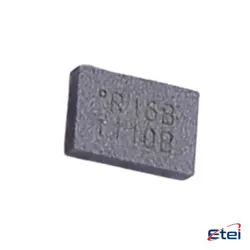
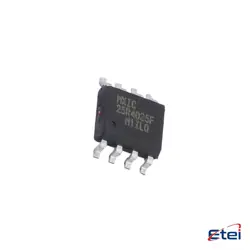
Abbildungen dienen nur als Referenz
EPM7032SLC44-10
+StücklisteIC CPLD 32MC 10NS 44PLCC
-
HerstellerIntel
-
Herstellerteil #EPM7032SLC44-10
-
Paket PLCC-44
-
Auf Lager2778
365 Tage Qualitätsgarantie
7*24 Stunden-Servicegarantie
90-Tage Kundendienstgarantie
Originalproduktgarantie
Spezifikationen
| Attribut | Wert |
| Package | Tube |
| Series | MAX® 7000S |
| ProductStatus | Obsolete |
| ProgrammableType | In System Programmable |
| DelayTimetpd(1)Max | 10 ns |
| VoltageSupply-Internal | 4.75V ~ 5.25V |
| NumberofLogicElements/Blocks | 2 |
| NumberofMacrocells | 32 |
| NumberofGates | 600 |
| NumberofI/O | 36 |
| OperatingTemperature | 0°C ~ 70°C (TA) |
| MountingType | Surface Mount |
| Package/Case | 44-LCC (J-Lead) |
Übersicht
Description
1. Logic Elements (LEs): The EPM7032SLC44-10 contains 32 macrocells, which are the building blocks used for implementing logic functions.
2. Speed: The "-10" in its name indicates a speed grade, which refers to the device's maximum clock frequency or propagation delay.
3. Package: The "SLC44" specifies a specific package type – a 44-pin Small Outline Integrated Circuit (SOIC), which is compact and suitable for surface mounting on PCBs.
4. Programmability: It can be programmed using industry-standard hardware description languages (HDLs) and supported by Altera's design software.
5. Applications: Ideal for controlling, interfacing, and data processing applications in consumer electronics, telecommunications, and industrial automation.
The EPM7032SLC44-10 is appreciated for its balance of performance, power efficiency, and cost-effectiveness in implementing complex logic designs.
Equivalent
1. Lattice ispLSI 2032 series
2. Xilinx XC9500XL series (e.g., XC9536XL)
3. Atmel ATF1502 series
Ensure compatibility in terms of package type, voltage requirements, and logic resources when considering replacements.
Features
1. Logic Elements: The device contains 32 macrocells, which are the building blocks for implementing digital logic.
2. Operating Speed: The "-10" suffix indicates a maximum speed grade of 10 nanoseconds for the programmable logic functions.
3. Package: It is available in a 44-pin Small Outline Integrated Circuit (SOIC) package.
4. Flexibility: Supports in-system programmability (ISP) and reconfigurability, making it suitable for prototyping and production.
5. Power Supply: Operates with a single 5V power supply, which simplifies power design.
6. Non-Volatile: The device retains its configuration even when powered down, ensuring reliability in various applications.
7. I/O Pins: Offers a number of user-configurable input/output pins, which can be used for interfacing with other components.
8. Applications: Ideal for a wide range of applications including control logic, state machines, and custom combinatorial logic.
These features make the EPM7032SLC44-10 a versatile choice for designers needing a balance of complexity, speed, and power efficiency.
Pinout
The EPM7032SLC44-10 is designed for applications requiring complex digital logic circuits and offers 600 usable gates. It supports a variety of logic functions, including combinational and sequential logic. The device is reprogrammable, allowing for design changes and updates without needing to replace hardware.
In summary, the EPM7032SLC44-10 has:
- 44 pins in a PLCC package
- 32 macrocells for logic implementation
- Reprogrammability for design flexibility
This concise explanation covers the pin count and primary functions of the EPM7032SLC44-10.
Manufacturer
In 2015, Altera was acquired by Intel Corporation, which is a leading technology company known for its semiconductor and microprocessor products. Following the acquisition, Altera's products became part of Intel's Programmable Solutions Group, allowing Intel to expand its product offerings in the field of programmable logic devices. The acquisition enhanced Intel's capabilities in providing solutions that combine the flexibility of FPGAs with the performance of Intel's processors.
Application
1. Glue Logic: Integrating disparate digital systems by providing necessary interface logic.
2. State Machine Implementation: Designing and implementing state machines for control applications.
3. Bus Control: Managing data flow and protocol adherence between different bus systems.
4. I/O Expansion: Extending the input/output capabilities of microcontrollers or processors.
5. Prototyping: Rapid prototyping and testing of logic designs before committing to ASICs.
6. Signal Processing: Implementing simple digital signal processing tasks.
Its flexibility, re-programmability, and moderate density make it suitable for these tasks.