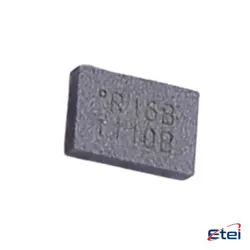
Abbildungen dienen nur als Referenz
FDMA86251
+StücklisteMOSFET N-CH 150V 2.4A 6MICROFET
-
HerstellerOnsemi
-
Herstellerteil #FDMA86251
-
Auf Lager4563
365 Tage Qualitätsgarantie
7*24 Stunden-Servicegarantie
90-Tage Kundendienstgarantie
Originalproduktgarantie
Spezifikationen
| Attribut | Wert |
| Series | PowerTrench® |
| Part Status | Active |
| FET Type | N-Channel |
| Technology | MOSFET (Metal Oxide) |
| Drain to Source Voltage (Vdss) | 150 V |
| Current - Continuous Drain (Id) @ 25°C | 2.4A (Ta) |
| Drive Voltage (Max Rds On, Min Rds On) | 6V, 10V |
| Rds On (Max) @ Id, Vgs | 175mOhm @ 2.4A, 10V |
| Vgs(th) (Max) @ Id | 4V @ 250µA |
| Gate Charge (Qg) (Max) @ Vgs | 5.8 nC @ 10 V |
| Vgs (Max) | ±20V |
| Input Capacitance (Ciss) (Max) @ Vds | 363 pF @ 75 V |
| Power Dissipation (Max) | 2.4W (Ta) |
| Operating Temperature | -55°C ~ 150°C (TJ) |
| Mounting Type | Surface Mount |
| Supplier Device Package | 6-MicroFET (2x2) |
| Package / Case | 6-WDFN Exposed Pad |
| Base Product Number | FDMA86 |
Übersicht
Description
FDMA86251 refers to a frequency division multiple access (FDMA) protocol, typically used in telecommunications and networking systems. FDMA allows multiple users to share the same transmission medium by assigning distinct frequency bands to each user, enabling simultaneous communication without interference.
In the context of FDMA86251, the "86251" could represent a specific standard or a model number associated with a particular application or system utilizing this FDMA protocol. This method is particularly effective in scenarios where continuous data transmission is required, such as satellite communications, radio broadcasting, and mobile networks.
Key advantages of FDMA include efficient bandwidth utilization, reduced signal interference among users, and simplicity in implementation. However, it may be less flexible compared to other multiple access techniques like TDMA (time division multiple access) or CDMA (code division multiple access), especially in dynamic environments where user demand fluctuates.
Overall, FDMA86251 provides a structured approach to managing multiple communication channels, ensuring reliable and organized data transfer among users.
In the context of FDMA86251, the "86251" could represent a specific standard or a model number associated with a particular application or system utilizing this FDMA protocol. This method is particularly effective in scenarios where continuous data transmission is required, such as satellite communications, radio broadcasting, and mobile networks.
Key advantages of FDMA include efficient bandwidth utilization, reduced signal interference among users, and simplicity in implementation. However, it may be less flexible compared to other multiple access techniques like TDMA (time division multiple access) or CDMA (code division multiple access), especially in dynamic environments where user demand fluctuates.
Overall, FDMA86251 provides a structured approach to managing multiple communication channels, ensuring reliable and organized data transfer among users.
Equivalent
The FDMA86251 chip is a frequency modulator commonly used in RF applications. Equivalent products include the ADF7021 from Analog Devices, the MAX1471 from Maxim Integrated, and the Si4455 from Silicon Labs. These alternatives provide similar functionalities in terms of frequency modulation and can be used in various wireless communication systems. Always check the specifications for compatibility with your specific application requirements.
Features
The FDMA86251 is a highly integrated, low-power RF transceiver designed for wireless communication applications. Key features include:
1. Frequency Range: Operates in the 860-960 MHz band, suitable for various wireless protocols.
2. Low Power Consumption: Optimized for battery-operated devices, enhancing energy efficiency.
3. High Sensitivity: Ensures reliable communication even at low signal levels.
4. Integrated Modulation Schemes: Supports multiple modulation formats, including FSK and OOK.
5. On-chip Voltage Regulator: Provides stable operation across varying input voltages.
6. Data Rate Flexibility: Capable of handling various data rates, accommodating different application needs.
7. Compact Package: Designed for space-constrained applications, facilitating easy integration into devices.
8. Built-in Antenna Matching: Simplifies design and improves performance by reducing external components.
Overall, the FDMA86251 is ideal for applications in IoT, smart metering, and industrial automation.
1. Frequency Range: Operates in the 860-960 MHz band, suitable for various wireless protocols.
2. Low Power Consumption: Optimized for battery-operated devices, enhancing energy efficiency.
3. High Sensitivity: Ensures reliable communication even at low signal levels.
4. Integrated Modulation Schemes: Supports multiple modulation formats, including FSK and OOK.
5. On-chip Voltage Regulator: Provides stable operation across varying input voltages.
6. Data Rate Flexibility: Capable of handling various data rates, accommodating different application needs.
7. Compact Package: Designed for space-constrained applications, facilitating easy integration into devices.
8. Built-in Antenna Matching: Simplifies design and improves performance by reducing external components.
Overall, the FDMA86251 is ideal for applications in IoT, smart metering, and industrial automation.
Pinout
The FDMA86251 is a frequency synthesizer and modulator designed for use in various RF applications. It typically features a 32-pin package (e.g., LQFP or TQFP), which includes a range of pins for power supply, ground, digital control, and RF output.
Key functions of the pins include:
1. Power Supply (VDD, GND): Provide power to the device.
2. RF Output: Outputs the modulated RF signal.
3. Control Pins: Digital input pins for programming frequency and modulation parameters.
4. Clock Input (CLK): Provides a reference frequency for the synthesizer.
5. Status Pins: Indicate the operational status or configuration of the device.
The FDMA86251 is used in applications like wireless communication systems, where precise frequency generation and modulation are essential. For specific pin configurations and detailed functionality, refer to the manufacturer's datasheet.
Key functions of the pins include:
1. Power Supply (VDD, GND): Provide power to the device.
2. RF Output: Outputs the modulated RF signal.
3. Control Pins: Digital input pins for programming frequency and modulation parameters.
4. Clock Input (CLK): Provides a reference frequency for the synthesizer.
5. Status Pins: Indicate the operational status or configuration of the device.
The FDMA86251 is used in applications like wireless communication systems, where precise frequency generation and modulation are essential. For specific pin configurations and detailed functionality, refer to the manufacturer's datasheet.
Manufacturer
The FDMA86251 is manufactured by Fujitsu Limited, a multinational information and communication technology company based in Japan. Founded in 1935, Fujitsu offers a wide range of technology products and services, including computing products, network solutions, and software development. The company is known for its innovations in the IT sector and plays a significant role in the global technology landscape, providing solutions for various industries including telecommunications, finance, and healthcare.
Fujitsu operates in several areas, including hardware manufacturing (servers, storage systems, and personal computers), software development, and IT services, making it a comprehensive IT service provider. The company's focus on research and development has established it as a leader in many technological advancements, contributing to its reputation as a reliable and forward-thinking company in the rapidly evolving tech industry.
Fujitsu operates in several areas, including hardware manufacturing (servers, storage systems, and personal computers), software development, and IT services, making it a comprehensive IT service provider. The company's focus on research and development has established it as a leader in many technological advancements, contributing to its reputation as a reliable and forward-thinking company in the rapidly evolving tech industry.
Application
The FDMA86251 is commonly used in various applications related to wireless communication systems. Key areas include:
1. Mobile Communications: Providing efficient frequency division multiple access for cellular networks.
2. Satellite Communications: Supporting data transmission for satellites in different frequency bands.
3. Data Gathering Networks: Enabling reliable data collection in IoT and sensor networks.
4. Broadcasting: Facilitating efficient frequency management in radio and television broadcasting.
5. Telemetry Systems: Allowing remote monitoring and control in industrial and scientific applications.
Its versatility makes it suitable for both commercial and specialized communication needs.
1. Mobile Communications: Providing efficient frequency division multiple access for cellular networks.
2. Satellite Communications: Supporting data transmission for satellites in different frequency bands.
3. Data Gathering Networks: Enabling reliable data collection in IoT and sensor networks.
4. Broadcasting: Facilitating efficient frequency management in radio and television broadcasting.
5. Telemetry Systems: Allowing remote monitoring and control in industrial and scientific applications.
Its versatility makes it suitable for both commercial and specialized communication needs.
Package
The FDMA86251 is typically offered in a compact, surface-mount package type, often in a QFN (Quad Flat No-lead) format. This allows for efficient thermal management and reduced footprint on PCB designs, making it suitable for various RF and communication applications.