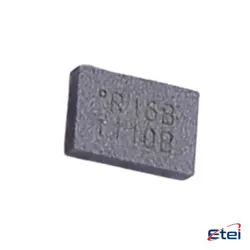
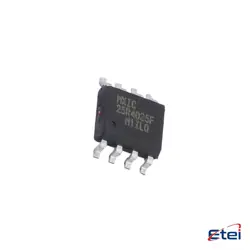
Abbildungen dienen nur als Referenz
FS32K144UFT0VLLT
+StücklisteIC MCU 32BIT 512KB FLASH 100LQFP
-
HerstellerNXP USA Inc.
-
Herstellerteil #FS32K144UFT0VLLT
-
Datenblatt FS32K144UFT0VLLT DataSheet
-
Auf Lager4478
365 Tage Qualitätsgarantie
7*24 Stunden-Servicegarantie
90-Tage Kundendienstgarantie
Originalproduktgarantie
Spezifikationen
| Attribut | Wert |
| Series | S32K |
| Part Status | Active |
| Digi Key Programmable | Not Verified |
| Core Processor | ARM® Cortex®-M4F |
| Core Size | 32-Bit Single-Core |
| Speed | 112MHz |
| Connectivity | CANbus, FlexIO, I2C, LINbus, SPI, UART/USART |
| Peripherals | POR, PWM, WDT |
| Number of I/O | 89 |
| Program Memory Size | 512KB (512K x 8) |
| Program Memory Type | FLASH |
| EEPROM Size | 4K x 8 |
| RAM Size | 64K x 8 |
| Voltage - Supply (Vcc/Vdd) | 2.7V ~ 5.5V |
| Data Converters | A/D 16x12b SAR; D/A1x8b |
| Oscillator Type | Internal |
| Operating Temperature | -40°C ~ 105°C (TA) |
| Mounting Type | Surface Mount |
| Supplier Device Package | 100-LQFP (14x14) |
| Package / Case | 100-LQFP |
| Base Product Number | FS32K144 |
Übersicht
Description
Key attributes include a rich set of peripherals such as multiple UARTs, SPI, I2C, ADCs, and timers, enabling versatile interfacing options. The device also supports advanced security features, including hardware cryptography and secure boot capabilities, making it suitable for safety-critical applications.
The FS32K144UFT0VLLT is noted for its low power consumption, making it ideal for battery-operated devices. It is designed to meet automotive standards, ensuring reliability in demanding environments. Overall, this microcontroller offers a robust solution for developers working on sophisticated embedded systems in the automotive and industrial sectors.
Equivalent
Features
- ARM Cortex-M4 Core: Operates at up to 120 MHz, providing high performance for complex calculations and real-time processing.
- Flash Memory: Offers up to 1 MB of flash memory for firmware storage.
- RAM: Includes 128 KB of SRAM for data handling.
- Integrated Peripherals: Features multiple communication interfaces, such as CAN, LIN, SPI, I2C, and UART.
- Analog Functions: Contains a 12-bit ADC, DAC, and comparators for sensor interfacing.
- Safety Features: Supports functional safety standards (ASIL) with hardware safety mechanisms.
- Low Power Consumption: Designed for energy efficiency, suitable for battery-operated devices.
- Software Support: Compatibility with various development environments and tools, including NXP's S32 Design Studio.
Overall, the FS32K144UFT0VLLT is suitable for applications like motor control, body electronics, and advanced driver-assistance systems (ADAS).
Pinout
Key functions of the pins include:
- Digital I/O: Configurable as inputs or outputs for interfacing with other digital devices.
- Analog Input: Multiple pins support analog-to-digital conversion (ADC).
- Timer/Counter: Pins used for timer functions and PWM output.
- Communication Interfaces: UART, SPI, I2C, and CAN interfaces for serial communication.
- Debugging: SWD (Serial Wire Debug) pins for programming and debugging.
- Power Management: Dedicated pins for power supply and ground connections.
The versatile pin configuration allows for extensive peripheral connectivity and application flexibility.
Manufacturer
NXP is known for its expertise in secure connectivity and processing solutions, offering products that enable smart devices and systems. The FS32K144UFT0VLLT specifically belongs to the NXP's S32K family of microcontrollers, which are designed for automotive and industrial applications, featuring a robust architecture suitable for real-time control, safety, and connectivity.
Overall, NXP Semiconductors is recognized as a leader in the semiconductor industry, providing innovative solutions that drive advancements in technology across numerous sectors.
Application
1. Automotive Control Systems: Used in engine control units (ECUs), body control modules, and advanced driver-assistance systems (ADAS).
2. Industrial Automation: Suitable for motor control, robotics, and sensor applications.
3. Internet of Things (IoT): Supports connected devices with enhanced processing capabilities for data handling and communication.
4. Safety Systems: Designed for safety-critical applications, complying with functional safety standards.
Its robust performance, low power consumption, and integrated features make it versatile for various embedded systems.