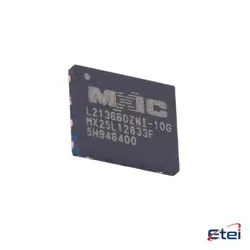
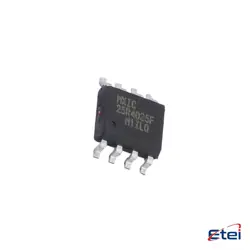
Abbildungen dienen nur als Referenz
FT24C02A-KSR-T
+StücklisteIC EEPROM 2KBIT I2C 1MHZ 8SOP
-
HerstellerFremont Micro Devices Ltd.
-
Herstellerteil #FT24C02A-KSR-T
-
Auf Lager4673
365 Tage Qualitätsgarantie
7*24 Stunden-Servicegarantie
90-Tage Kundendienstgarantie
Originalproduktgarantie
Spezifikationen
| Attribut | Wert |
| Part Status | Active |
| Base Product Number | FT24C02 |
| Digi Key Programmable | Not Verified |
| Memory Type | Non-Volatile |
| Memory Format | EEPROM |
| Technology | EEPROM |
| Memory Size | 2Kbit |
| Memory Organization | 256 x 8 |
| Memory Interface | I2C |
| Clock Frequency | 1 MHz |
| Write Cycle Time - Word, Page | 5ms |
| Voltage - Supply | 1.8V ~ 5.5V |
| Operating Temperature | -40°C ~ 85°C |
| Mounting Type | Surface Mount |
| Package / Case | 8-SOIC (0.154", 3.90mm Width) |
| Supplier Device Package | 8-SOP |
| Packaging | Tape & Reel (TR) |
| Access Time | 550 ns |
Übersicht
Description
The FT24C02A-KSR-T is a type of electrically erasable programmable read-only memory (EEPROM) integrated circuit (IC) designed for use in various electronic applications. It features a 2-kilobit (256 x 8 bits) memory capacity, organized into 32 pages of 8 bytes each. This IC is commonly used for storing small amounts of non-volatile data, such as configuration settings or calibration data, which must be retained even when the device is powered off.
The FT24C02A-KSR-T operates over a voltage range, typically from 1.8V to 5.5V, making it suitable for both battery-powered and general-purpose applications. It communicates via an I2C bus interface, allowing for easy integration with microcontrollers and other digital devices. The device also includes features such as write protection, low-power consumption, and a high endurance for write/erase cycles, ensuring data reliability and longevity.
Its compact form factor and robust performance make it an ideal choice for embedded systems, consumer electronics, and industrial applications where reliable and efficient data storage is required.
The FT24C02A-KSR-T operates over a voltage range, typically from 1.8V to 5.5V, making it suitable for both battery-powered and general-purpose applications. It communicates via an I2C bus interface, allowing for easy integration with microcontrollers and other digital devices. The device also includes features such as write protection, low-power consumption, and a high endurance for write/erase cycles, ensuring data reliability and longevity.
Its compact form factor and robust performance make it an ideal choice for embedded systems, consumer electronics, and industrial applications where reliable and efficient data storage is required.
Equivalent
Equivalent products to the FT24C02A-KSR-T, which is a 2Kb I2C EEPROM, include:
1. AT24C02 from Microchip Technology (formerly Atmel)
2. 24LC02B from Microchip Technology
3. M24C02 from STMicroelectronics
4. CAT24C02 from ON Semiconductor
5. BR24C02F from ROHM Semiconductor
These chips generally share similar specifications such as storage capacity, voltage range, and I2C interface compatibility, making them suitable substitutes. Always check the datasheets for specific compatibility details.
1. AT24C02 from Microchip Technology (formerly Atmel)
2. 24LC02B from Microchip Technology
3. M24C02 from STMicroelectronics
4. CAT24C02 from ON Semiconductor
5. BR24C02F from ROHM Semiconductor
These chips generally share similar specifications such as storage capacity, voltage range, and I2C interface compatibility, making them suitable substitutes. Always check the datasheets for specific compatibility details.
Features
The FT24C02A-KSR-T is a 2-kilobit Electrically Erasable Programmable Read-Only Memory (EEPROM) device, organized as 256 x 8 bits. It supports I²C (Inter-Integrated Circuit) serial communication, making it suitable for a variety of applications requiring non-volatile memory storage. Key features include:
1. I²C Interface: It supports standard, fast, and fast-plus I²C protocols, providing flexibility in communication speeds.
2. Low Voltage Operation: Operates at a wide voltage range of 1.7V to 5.5V, allowing for compatibility with various systems.
3. Write Protection: Includes a hardware data protection feature via a write protection pin, safeguarding against unintended writes.
4. Low Power Consumption: Optimized for low power, with active current and standby current consumption kept minimal.
5. High Reliability: Offers endurance of 1 million write cycles per byte and a data retention period of over 100 years, ensuring long-term reliability.
6. Small Size: Comes in compact packaging options suitable for space-constrained applications.
These features make the FT24C02A-KSR-T ideal for use in consumer electronics, automotive, industrial, and computing applications.
1. I²C Interface: It supports standard, fast, and fast-plus I²C protocols, providing flexibility in communication speeds.
2. Low Voltage Operation: Operates at a wide voltage range of 1.7V to 5.5V, allowing for compatibility with various systems.
3. Write Protection: Includes a hardware data protection feature via a write protection pin, safeguarding against unintended writes.
4. Low Power Consumption: Optimized for low power, with active current and standby current consumption kept minimal.
5. High Reliability: Offers endurance of 1 million write cycles per byte and a data retention period of over 100 years, ensuring long-term reliability.
6. Small Size: Comes in compact packaging options suitable for space-constrained applications.
These features make the FT24C02A-KSR-T ideal for use in consumer electronics, automotive, industrial, and computing applications.
Pinout
The FT24C02A-KSR-T is a 2Kb (256 x 8) serial EEPROM with an I²C interface. It typically comes in an 8-pin package. Here is a concise overview of its pin functions:
1. A0, A1, A2: These are address pins used for hardware addressing, allowing up to 8 devices on the same I²C bus.
2. VSS: Ground pin, connected to 0V.
3. SDA (Serial Data): Bi-directional data line for I²C communication. It transfers data between the EEPROM and the microcontroller.
4. SCL (Serial Clock): Input for the I²C clock signal, synchronizes the data transfer.
5. WP (Write Protect): This pin is used to enable or disable write protection. When tied to VCC, the write protection is active, preventing any write operations.
6. VCC: Power supply pin, typically connected to a voltage range of 1.7V to 3.6V.
This configuration allows the FT24C02A-KSR-T to interface efficiently with microcontrollers for tasks that require non-volatile memory storage.
1. A0, A1, A2: These are address pins used for hardware addressing, allowing up to 8 devices on the same I²C bus.
2. VSS: Ground pin, connected to 0V.
3. SDA (Serial Data): Bi-directional data line for I²C communication. It transfers data between the EEPROM and the microcontroller.
4. SCL (Serial Clock): Input for the I²C clock signal, synchronizes the data transfer.
5. WP (Write Protect): This pin is used to enable or disable write protection. When tied to VCC, the write protection is active, preventing any write operations.
6. VCC: Power supply pin, typically connected to a voltage range of 1.7V to 3.6V.
This configuration allows the FT24C02A-KSR-T to interface efficiently with microcontrollers for tasks that require non-volatile memory storage.
Manufacturer
The FT24C02A-KSR-T is manufactured by Fremont Micro Devices, a company that specializes in the design and development of non-volatile memory products, particularly EEPROMs (Electrically Erasable Programmable Read-Only Memory). Fremont Micro Devices focuses on producing integrated circuits for a wide range of applications, providing solutions for data storage needs in consumer electronics, automotive, industrial, and communication sectors. The company is known for its expertise in delivering high-performance, cost-effective semiconductor solutions.
Application
The FT24C02A-KSR-T is an EEPROM memory chip with a 2K-bit capacity, commonly used for non-volatile data storage. Application areas include:
1. Consumer Electronics: Storing user settings and configuration data in devices like TVs and audio systems.
2. Industrial Automation: Retaining calibration data and parameters for sensors and controllers.
3. Communication Equipment: Used in network routers and modems for configuration data.
4. Medical Devices: Storing calibration and patient-related data in diagnostic equipment.
5. Automotive Systems: Maintaining settings and data logs in infotainment and control modules.
6. Computing: Used in computers and peripherals for BIOS and firmware storage.
These applications leverage the chip's ability to retain data without power, ensuring reliability across various sectors.
1. Consumer Electronics: Storing user settings and configuration data in devices like TVs and audio systems.
2. Industrial Automation: Retaining calibration data and parameters for sensors and controllers.
3. Communication Equipment: Used in network routers and modems for configuration data.
4. Medical Devices: Storing calibration and patient-related data in diagnostic equipment.
5. Automotive Systems: Maintaining settings and data logs in infotainment and control modules.
6. Computing: Used in computers and peripherals for BIOS and firmware storage.
These applications leverage the chip's ability to retain data without power, ensuring reliability across various sectors.
Package
The FT24C02A-KSR-T is packaged in a SOP-8 (Small Outline Package with 8 pins) configuration. It's a standard package type for integrated circuits, offering a compact and surface-mountable design suitable for various electronic applications.