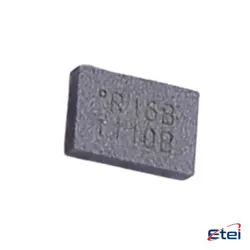
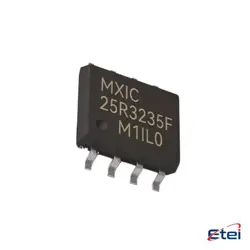
Abbildungen dienen nur als Referenz
GD25LB512MEYIGR
+StücklisteIC FLASH 512MBIT SPI/QUAD 8WSON
-
HerstellerGigaDevice Semiconductor (HK) Limited
-
Herstellerteil #GD25LB512MEYIGR
-
Auf Lager7286
365 Tage Qualitätsgarantie
7*24 Stunden-Servicegarantie
90-Tage Kundendienstgarantie
Originalproduktgarantie
Spezifikationen
| Attribut | Wert |
| Series | GD25LB |
| Part Status | Active |
| Memory Type | Non-Volatile |
| Memory Format | FLASH |
| Technology | FLASH - NOR (SLC) |
| Memory Size | 512Mbit |
| Memory Organization | 64M x 8 |
| Memory Interface | SPI - Quad I/O, QPI, DTR |
| Voltage - Supply | 1.65V ~ 2V |
| Operating Temperature | -40°C ~ 85°C (TA) |
| Mounting Type | Surface Mount |
| Package / Case | 8-WDFN Exposed Pad |
| Supplier Device Package | 8-WSON (6x8) |
| Base Product Number | GD25LB512 |
| Clock Frequency | 133 MHz |
Übersicht
Description
The GD25LB512MEYIGR is a serial NOR Flash memory chip designed for embedded systems requiring reliable and efficient data storage. Manufactured by GigaDevice, this specific model offers 512 kilobits of storage capacity. It employs a low-power consumption architecture, making it suitable for battery-operated devices. The chip supports a wide range of operating voltages, enhancing its versatility in different applications.
This memory chip utilizes a Serial Peripheral Interface (SPI), which allows for fast data transfer rates and simplifies connectivity with microcontrollers and other digital devices. It features uniform 4KB sectors for ease of data management and supports various data protection schemes to safeguard against accidental writes.
The GD25LB512MEYIGR also boasts a high endurance of erase/write cycles, ensuring durability and longevity in repetitive usage scenarios. Its compact package makes it suitable for space-constrained designs, and it operates efficiently over a broad temperature range, which is ideal for industrial and consumer electronics. Overall, this flash memory chip is a robust solution for applications needing reliable non-volatile storage.
This memory chip utilizes a Serial Peripheral Interface (SPI), which allows for fast data transfer rates and simplifies connectivity with microcontrollers and other digital devices. It features uniform 4KB sectors for ease of data management and supports various data protection schemes to safeguard against accidental writes.
The GD25LB512MEYIGR also boasts a high endurance of erase/write cycles, ensuring durability and longevity in repetitive usage scenarios. Its compact package makes it suitable for space-constrained designs, and it operates efficiently over a broad temperature range, which is ideal for industrial and consumer electronics. Overall, this flash memory chip is a robust solution for applications needing reliable non-volatile storage.
Equivalent
The GD25LB512MEYIGR is a 512Kb serial NOR Flash memory chip from GigaDevice. Equivalent products from other manufacturers could include:
1. Winbond W25X512JVEIQ
2. Microchip AT25F512B
3. Macronix MX25L5121E
It's important to compare specific features such as the memory size, interface, voltage range, and package to ensure compatibility with your application.
1. Winbond W25X512JVEIQ
2. Microchip AT25F512B
3. Macronix MX25L5121E
It's important to compare specific features such as the memory size, interface, voltage range, and package to ensure compatibility with your application.
Features
The GD25LB512MEYIGR is a NOR Flash memory chip designed for high-performance and reliability in electronic applications. Key features include:
1. Memory Size: 512 Kbit (64KB).
2. Interface: Supports standard SPI (Serial Peripheral Interface) for communication, ensuring compatibility with a wide range of microcontrollers and processors.
3. Operating Voltage: Operates at a low voltage range of 1.65V to 3.6V, offering flexibility in power-sensitive applications.
4. Speed: High-speed read capability at frequencies up to 104 MHz, allowing for fast data access and improved system performance.
5. Endurance and Data Retention: Provides an endurance of up to 100,000 program/erase cycles and a data retention period of 20 years, ensuring long-term reliability.
6. Sector Erase Capability: Supports sector erase, enabling selective reprogramming without affecting the entire memory block.
7. Package Type: Available in a compact and space-efficient package suitable for small form-factor designs.
These features make the GD25LB512MEYIGR a suitable choice for applications requiring reliable, high-speed, and low-power flash memory.
1. Memory Size: 512 Kbit (64KB).
2. Interface: Supports standard SPI (Serial Peripheral Interface) for communication, ensuring compatibility with a wide range of microcontrollers and processors.
3. Operating Voltage: Operates at a low voltage range of 1.65V to 3.6V, offering flexibility in power-sensitive applications.
4. Speed: High-speed read capability at frequencies up to 104 MHz, allowing for fast data access and improved system performance.
5. Endurance and Data Retention: Provides an endurance of up to 100,000 program/erase cycles and a data retention period of 20 years, ensuring long-term reliability.
6. Sector Erase Capability: Supports sector erase, enabling selective reprogramming without affecting the entire memory block.
7. Package Type: Available in a compact and space-efficient package suitable for small form-factor designs.
These features make the GD25LB512MEYIGR a suitable choice for applications requiring reliable, high-speed, and low-power flash memory.
Pinout
The GD25LB512MEYIGR is a serial NOR Flash memory device manufactured by GigaDevice. It typically comes in an 8-pin configuration. The functions of these pins generally include:
1. CS# (Chip Select): Activates the device when low.
2. SO/SIO1 (Serial Output/IO): Outputs data during read operations; can also be used for input/output in dual/quad modes.
3. WP# (Write Protect): Can be used to protect the memory contents from inadvertent write operations.
4. VSS (Ground): Ground reference for power supply.
5. SI/SIO0 (Serial Input/IO): Inputs data during write operations; can also be used for input/output in dual/quad modes.
6. SCLK (Serial Clock): Provides the timing for the serial interface.
7. HOLD#/SIO3: Pauses the device without deselecting it; also used for input/output in quad mode.
8. VCC (Power Supply): Power supply pin for the device.
These pins support various operations including read, program, and erase functions typical for SPI Flash memory devices. Always refer to the manufacturer's datasheet for detailed specifications and functionalities.
1. CS# (Chip Select): Activates the device when low.
2. SO/SIO1 (Serial Output/IO): Outputs data during read operations; can also be used for input/output in dual/quad modes.
3. WP# (Write Protect): Can be used to protect the memory contents from inadvertent write operations.
4. VSS (Ground): Ground reference for power supply.
5. SI/SIO0 (Serial Input/IO): Inputs data during write operations; can also be used for input/output in dual/quad modes.
6. SCLK (Serial Clock): Provides the timing for the serial interface.
7. HOLD#/SIO3: Pauses the device without deselecting it; also used for input/output in quad mode.
8. VCC (Power Supply): Power supply pin for the device.
These pins support various operations including read, program, and erase functions typical for SPI Flash memory devices. Always refer to the manufacturer's datasheet for detailed specifications and functionalities.
Manufacturer
The GD25LB512MEYIGR is manufactured by GigaDevice Semiconductor Inc. GigaDevice is a Chinese company that specializes in creating advanced memory solutions and microcontrollers. They are a prominent player in the semiconductor industry, known for their production of flash memory products, such as NOR Flash and NAND Flash, as well as microcontroller units (MCUs). Their offerings are used in a wide range of applications, including consumer electronics, industrial devices, and automotive systems. GigaDevice is recognized for its innovation and commitment to providing high-quality, reliable semiconductor solutions to its global clientele.
Application
The GD25LB512MEYIGR is a 512Kb SPI NOR Flash memory device, and its typical application areas include:
1. Consumer Electronics: Used for firmware storage in devices like TVs, set-top boxes, and gaming consoles.
2. Industrial Automation: Employed in control systems and data logging devices for storing configuration data and firmware.
3. Internet of Things (IoT): Ideal for IoT devices requiring reliable non-volatile storage for software updates and data storage.
4. Automotive Electronics: Used in infotainment systems and other electronic control units (ECUs) for firmware storage.
5. Networking Equipment: Utilized in routers and switches for storing configuration settings and firmware.
These applications benefit from the device's small size, low power consumption, and fast read/write capabilities.
1. Consumer Electronics: Used for firmware storage in devices like TVs, set-top boxes, and gaming consoles.
2. Industrial Automation: Employed in control systems and data logging devices for storing configuration data and firmware.
3. Internet of Things (IoT): Ideal for IoT devices requiring reliable non-volatile storage for software updates and data storage.
4. Automotive Electronics: Used in infotainment systems and other electronic control units (ECUs) for firmware storage.
5. Networking Equipment: Utilized in routers and switches for storing configuration settings and firmware.
These applications benefit from the device's small size, low power consumption, and fast read/write capabilities.
Package
The GD25LB512MEYIGR is a NOR Flash memory chip by GigaDevice. It typically comes in a compact 8-pin package, specifically the SOP8 (Small Outline Package) or USON8 (Ultra Small Outline No-Lead) for efficient space utilization in electronic designs.