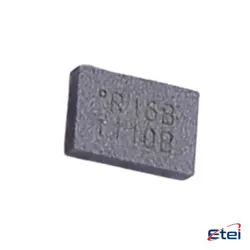
Abbildungen dienen nur als Referenz
HEF4104BT,653
+StücklisteIC TRNSLTR UNIDIRECTIONAL 16SO
-
HerstellerNexperia USA Inc.
-
Herstellerteil #HEF4104BT,653
-
Datenblatt HEF4104BT,653 DataSheet
-
Paket SOIC-16
-
Auf Lager5788
365 Tage Qualitätsgarantie
7*24 Stunden-Servicegarantie
90-Tage Kundendienstgarantie
Originalproduktgarantie
Spezifikationen
| Attribut | Wert |
| Supplier | Nexperia USA Inc. |
| Package | Tape & Reel (TR),Cut Tape (CT) |
| Series | 4000B |
| ProductStatus | Active |
| TranslatorType | Voltage Level |
| ChannelType | Unidirectional |
| NumberofCircuits | 1 |
| ChannelsperCircuit | 4 |
| Voltage-VCCA | 3 V ~ 15 V |
| Voltage-VCCB | 3 V ~ 15 V |
| OutputType | Tri-State, Non-Inverted |
| OperatingTemperature | -40°C ~ 85°C (TA) |
| MountingType | Surface Mount |
| Package/Case | 16-SOIC (0.154, 3.90mm Width) |
Übersicht
Description
Common uses include buffering signals, level shifting, or implementing simple logic in 5 V systems with low power. Remember to add a decoupling capacitor (e.g., 0.1 µF) near Vcc and respect input/output current limits.
If you can share a datasheet link or confirm the intended function of your specific 4104 (buffer, counter, etc.), I can give a precise summary with pinout and example circuits.
Features
- Hex non-inverting buffer/driver: six buffers in one package
- 3-state outputs with a common enable input (G) to disable all outputs
- Outputs go to high-impedance when disabled
- CMOS technology for low static power
- Wide supply voltage range (typical 3–15 V; compatible with 5 V logic)
- Suitable for buffering/driving CMOS loads and bus lines
- Available in DIP16 and SO16 (BT) packages
- Industrial temperature range (typ. -40 °C to 85 °C)
Use: data buffering, line driving, bus interfacing and fan-out isolation in CMOS systems.
Pinout
Function: HEF4104B is an 8-bit shift/register device (a CMOS shift/load register with parallel/serial I/O and output enables), used to store and transfer data.
Manufacturer
Application
Typical application areas:
- Address decoding and memory mapping in microprocessors
- Demultiplexing a single data/address line to one of 16 outputs
- Driving display selectors (LED/7-segment, multiplexed displays)
- Keyboard scanning and peripheral selection
- Generating one-hot outputs for timing/state-machine control
It’s useful for any digital routing task where a 4-bit input selects 1 of 16 outputs.