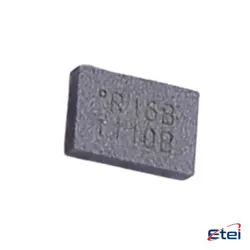
Abbildungen dienen nur als Referenz
LMT87QDCKRQ1
+StücklisteSENSOR ANALOG -50C-150C SC70
-
HerstellerTexas Instruments
-
Herstellerteil #LMT87QDCKRQ1
-
Paket SOT-5
-
Auf Lager1909
365 Tage Qualitätsgarantie
7*24 Stunden-Servicegarantie
90-Tage Kundendienstgarantie
Originalproduktgarantie
Spezifikationen
| Attribut | Wert |
| Package | Tape & Reel (TR),Cut Tape (CT) |
| Series | Automotive, AEC-Q100 |
| ProductStatus | Active |
| SensorType | Analog, Local |
| SensingTemperature-Local | -50°C ~ 150°C |
| OutputType | Analog Voltage |
| Voltage-Supply | 2.7V ~ 5.5V |
| Resolution | 13.6mV/°C |
| Accuracy-Highest(Lowest) | ±2.7°C |
| TestCondition | 70°C ~ 150°C |
| OperatingTemperature | -50°C ~ 150°C |
| MountingType | Surface Mount |
| Package/Case | 6-TSSOP, SC-88, SOT-363 |
Übersicht
Description
The sensor operates over a wide temperature range, typically from -50°C to 150°C, and outputs a voltage that corresponds linearly to the temperature, with a nominal sensitivity of about -11.77 mV/°C. It operates with a low quiescent current, which makes it energy-efficient and suitable for battery-powered devices. The LMT87QDCKRQ1 is known for its high accuracy and reliability, which are essential for applications like consumer electronics, industrial controls, and environmental monitoring.
This sensor is easy to interface with microcontrollers and other analog input devices, thanks to its straightforward voltage output. Its small size, combined with robust performance, ensures it is a versatile solution for many temperature-sensing needs.
Equivalent
1. LM35 - Also from Texas Instruments, with similar functionality but different specifications.
2. TMP36 - An analog temperature sensor from Analog Devices.
3. MCP9700 - A low-power, linear active thermistor from Microchip Technology.
4. ADT7410 - A digital temperature sensor from Analog Devices.
5. NTC Thermistors - From various manufacturers, offering similar temperature-sensing capabilities but with different characteristics.
Always verify the specifications to ensure compatibility with your application.
Features
1. Temperature Range: The sensor operates effectively over a wide temperature range from -50°C to 150°C, making it suitable for various environments.
2. Accuracy: It offers high accuracy with a typical error of ±0.4°C at 30°C, ensuring precise temperature measurements.
3. Output: The sensor provides an analog voltage output that is inversely proportional to the temperature, facilitating easy integration with microcontrollers and other devices.
4. Supply Voltage: It operates with a supply voltage range of 2.7V to 5.5V, accommodating various power supply conditions.
5. Low Power Consumption: With a typical current consumption of 5.4 µA, it is energy-efficient, which is critical for battery-operated devices.
6. Package: It is available in a small SC70 package, offering a compact solution for space-constrained applications.
These features make the LMT87QDCKRQ1 an ideal choice for automotive and industrial temperature sensing applications.
Pinout
1. VOUT (Pin 1): This is the output pin of the sensor, which provides a voltage output that is linearly proportional to the temperature. The output voltage decreases as the temperature increases, with a typical negative temperature coefficient.
2. GND (Pin 2): This is the ground pin, which should be connected to the system ground.
3. V+ (Pin 3): This is the supply voltage pin, where a DC voltage is applied to power the sensor. The typical operating voltage range is from 2.7V to 5.5V.
The LMT87QDCKRQ1 is used in various applications requiring accurate temperature measurements, and its small size makes it suitable for compact designs.
Manufacturer
Application
1. Consumer Electronics: For temperature monitoring and control in devices like smartphones, laptops, and gaming consoles.
2. Automotive: Used in engine management systems, battery management, and climate control systems.
3. Industrial: Suitable for process control, HVAC systems, and thermal management.
4. Medical Devices: For patient monitoring equipment and other medical instrumentation.
5. IoT Devices: To enable temperature sensing in smart home devices and other connected applications.
Its compact size and ease of integration make it versatile for a wide range of temperature-sensing needs.