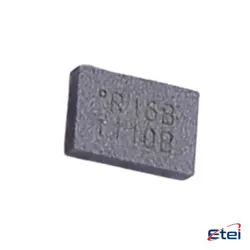
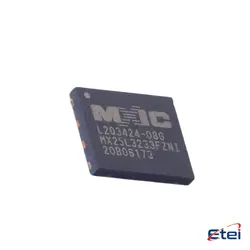
Abbildungen dienen nur als Referenz
LPC54113J256BD64QL
+StücklisteIC MCU 32BIT 256KB FLASH 64LQFP
-
HerstellerNXP USA Inc.
-
Herstellerteil #LPC54113J256BD64QL
-
Auf Lager9518
365 Tage Qualitätsgarantie
7*24 Stunden-Servicegarantie
90-Tage Kundendienstgarantie
Originalproduktgarantie
Spezifikationen
| Attribut | Wert |
| Series | LPC54100 |
| Part Status | Active |
| Digi Key Programmable | Not Verified |
| Core Processor | ARM® Cortex®-M4 |
| Core Size | 32-Bit Single-Core |
| Speed | 100MHz |
| Connectivity | I2C, SPI, UART/USART, USB |
| Peripherals | Brown-out Detect/Reset, DMA, I2S, POR, PWM, WDT |
| Number of I/O | 48 |
| Program Memory Size | 256KB (256K x 8) |
| Program Memory Type | FLASH |
| RAM Size | 192K x 8 |
| Voltage - Supply (Vcc/Vdd) | 1.62V ~ 3.6V |
| Data Converters | A/D 12x12b |
| Oscillator Type | Internal |
| Operating Temperature | -40°C ~ 105°C (TA) |
| Mounting Type | Surface Mount |
| Supplier Device Package | 64-LQFP (10x10) |
| Package / Case | 64-LQFP |
| Base Product Number | LPC54113 |
Übersicht
Description
The LPC54113J256BD64QL is a microcontroller from NXP Semiconductors, part of the LPC54000 series. It is designed for efficient performance in power-sensitive applications, featuring an ARM Cortex-M4 core operating at speeds up to 100 MHz and a secondary Cortex-M0+ core for additional processing capabilities. The device is equipped with 256 KB of flash memory and 192 KB of SRAM, providing ample storage for code and data.
Key features include a comprehensive set of peripherals such as multiple USARTs, SPIs, and I2C interfaces, making it suitable for communication-intensive applications. It also includes a 16-bit ADC, a temperature sensor, and various timers, enhancing its versatility for different use cases. The LPC54113 supports low-power modes, making it ideal for battery-powered devices and IoT applications.
Its compact 64-pin LQFP package facilitates integration into various designs, and its robust development ecosystem, including software libraries and development tools, supports rapid development and deployment. Overall, the LPC54113J256BD64QL offers a balanced combination of performance, power efficiency, and peripheral integration.
Key features include a comprehensive set of peripherals such as multiple USARTs, SPIs, and I2C interfaces, making it suitable for communication-intensive applications. It also includes a 16-bit ADC, a temperature sensor, and various timers, enhancing its versatility for different use cases. The LPC54113 supports low-power modes, making it ideal for battery-powered devices and IoT applications.
Its compact 64-pin LQFP package facilitates integration into various designs, and its robust development ecosystem, including software libraries and development tools, supports rapid development and deployment. Overall, the LPC54113J256BD64QL offers a balanced combination of performance, power efficiency, and peripheral integration.
Equivalent
Equivalent products to the NXP LPC54113J256BD64QL microcontroller, which is part of the LPC5411x series, might include ARM Cortex-M4 based microcontrollers from other manufacturers. Examples are the STM32L4 series from STMicroelectronics, the SAM4 series from Microchip Technology, and the Kinetis K series from NXP itself. When choosing an equivalent, consider similar specifications like processing speed, memory, peripherals, and power consumption.
Features
The LPC54113J256BD64QL is a microcontroller from NXP's LPC54000 series, designed for power efficiency and performance. It features:
1. Core: A dual-core setup with an ARM Cortex-M4 running up to 100 MHz and an ARM Cortex-M0+ for low-power operations.
2. Memory: 256 KB of flash memory and 192 KB of SRAM.
3. Low Power: Offers multiple low-power modes, including deep-sleep and power-down, with wake-up interrupt controller for minimal energy consumption.
4. Interfaces: Includes multiple interfaces like I2C, SPI, USART, and Flexcomm configurable peripherals, enhancing connectivity options.
5. Audio: Supports I2S for audio applications.
6. Timers: Features multi-rate timers and a state configurable timer for precise timing operations.
7. Analog: Integrates a 12-bit ADC and a temperature sensor.
8. Security: Provides security features such as a hardware random number generator and secure boot.
9. Package: Comes in a 64-pin LQFP package.
Overall, this microcontroller is suited for applications requiring efficient processing, low power consumption, and robust connectivity.
1. Core: A dual-core setup with an ARM Cortex-M4 running up to 100 MHz and an ARM Cortex-M0+ for low-power operations.
2. Memory: 256 KB of flash memory and 192 KB of SRAM.
3. Low Power: Offers multiple low-power modes, including deep-sleep and power-down, with wake-up interrupt controller for minimal energy consumption.
4. Interfaces: Includes multiple interfaces like I2C, SPI, USART, and Flexcomm configurable peripherals, enhancing connectivity options.
5. Audio: Supports I2S for audio applications.
6. Timers: Features multi-rate timers and a state configurable timer for precise timing operations.
7. Analog: Integrates a 12-bit ADC and a temperature sensor.
8. Security: Provides security features such as a hardware random number generator and secure boot.
9. Package: Comes in a 64-pin LQFP package.
Overall, this microcontroller is suited for applications requiring efficient processing, low power consumption, and robust connectivity.
Pinout
The LPC54113J256BD64QL is a microcontroller from NXP's LPC5411x series, featuring a 32-bit ARM Cortex-M4 core. It comes in a 64-pin LQFP (Low-Profile Quad Flat Package).
This microcontroller is designed for low-power and low-cost applications, providing a balance of performance and efficiency. It supports various functions such as:
1. ARM Cortex-M4 Core: For efficient data processing and control.
2. Flash Memory: On-chip flash memory for code storage.
3. SRAM: For data storage and quick access.
4. GPIO: General Purpose Input/Output pins for interfacing with other devices.
5. I2C, SPI, and UART: Communication interfaces for connecting with other peripherals and devices.
6. ADC/DAC: Analog-to-Digital and Digital-to-Analog converters for handling analog signals.
7. Timers: For time-based operations and event scheduling.
8. Power Management: Features for low-power operation, making it suitable for battery-powered applications.
This microcontroller targets applications like IoT devices, wearables, and portable electronics, where energy efficiency and moderate processing power are required.
This microcontroller is designed for low-power and low-cost applications, providing a balance of performance and efficiency. It supports various functions such as:
1. ARM Cortex-M4 Core: For efficient data processing and control.
2. Flash Memory: On-chip flash memory for code storage.
3. SRAM: For data storage and quick access.
4. GPIO: General Purpose Input/Output pins for interfacing with other devices.
5. I2C, SPI, and UART: Communication interfaces for connecting with other peripherals and devices.
6. ADC/DAC: Analog-to-Digital and Digital-to-Analog converters for handling analog signals.
7. Timers: For time-based operations and event scheduling.
8. Power Management: Features for low-power operation, making it suitable for battery-powered applications.
This microcontroller targets applications like IoT devices, wearables, and portable electronics, where energy efficiency and moderate processing power are required.
Manufacturer
The LPC54113J256BD64QL is manufactured by NXP Semiconductors. NXP is a global semiconductor company that provides a wide range of products and solutions for various applications, including automotive, industrial, smart home, mobile, and communications infrastructure. They specialize in mixed-signal and standard product solutions, emphasizing innovation in the areas such as secure connectivity and embedded applications.
Application
The LPC54113J256BD64QL microcontroller is used in various application areas due to its energy efficiency and performance features. Key applications include:
1. IoT Devices: Suitable for IoT nodes and gateways, offering low power consumption.
2. Consumer Electronics: Used in smart home devices, wearables, and personal gadgets.
3. Industrial Automation: Deployed in control systems, sensors, and monitoring equipment.
4. Healthcare Devices: Applied in portable medical instruments for data processing.
5. Audio Processing: Utilized in voice recognition and audio playback devices.
6. Embedded Systems: Integrated into systems requiring real-time performance and connectivity features.
Its dual-core architecture and power management capabilities make it versatile for these diverse applications.
1. IoT Devices: Suitable for IoT nodes and gateways, offering low power consumption.
2. Consumer Electronics: Used in smart home devices, wearables, and personal gadgets.
3. Industrial Automation: Deployed in control systems, sensors, and monitoring equipment.
4. Healthcare Devices: Applied in portable medical instruments for data processing.
5. Audio Processing: Utilized in voice recognition and audio playback devices.
6. Embedded Systems: Integrated into systems requiring real-time performance and connectivity features.
Its dual-core architecture and power management capabilities make it versatile for these diverse applications.
Package
The LPC54113J256BD64QL is a microcontroller from NXP, featuring a 64-pin LQFP (Low Quad Flat Package). This type of package is known for its thin and light design, which is ideal for space-constrained applications. It ensures reliable performance and easy handling in surface-mount technology.