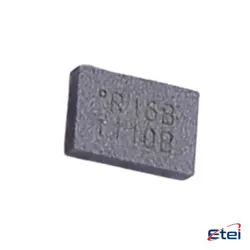
Abbildungen dienen nur als Referenz
M34E02-FMC6TG
+StücklisteIC EEPROM 2KBIT I2C 8UFDFPN
-
HerstellerSTMikroelektronik
-
Herstellerteil #M34E02-FMC6TG
-
Datenblatt M34E02-FMC6TG DataSheet
-
Auf Lager4611
365 Tage Qualitätsgarantie
7*24 Stunden-Servicegarantie
90-Tage Kundendienstgarantie
Originalproduktgarantie
Spezifikationen
| Attribut | Wert |
| Part Status | Active |
| Digi Key Programmable | Not Verified |
| Memory Type | Non-Volatile |
| Memory Format | EEPROM |
| Technology | EEPROM |
| Memory Size | 2Kbit |
| Memory Organization | 256 x 8 |
| Memory Interface | I2C |
| Write Cycle Time - Word, Page | 5ms |
| Voltage - Supply | 1.7V ~ 5.5V |
| Operating Temperature | -40°C ~ 85°C (TA) |
| Mounting Type | Surface Mount |
| Package / Case | 8-UFDFN Exposed Pad |
| Supplier Device Package | 8-UFDFPN (2x3) |
| Base Product Number | M34E02 |
| Clock Frequency | 400 kHz |
| Access Time | 900 ns |
Übersicht
Description
Typically, an introduction to such a subject would cover the following aspects:
1. Overview: A brief description of what M34E02-FMC6TG is and its purpose.
2. Specifications: Key technical details and features that define its capabilities.
3. Applications: Areas or industries where this component or system is primarily used.
4. Benefits: Advantages it offers over similar products or technologies.
5. Integration: Basic guidelines on how it fits into larger systems or frameworks.
For precise details, one would usually refer to the manufacturer's datasheet or product manual, which provides comprehensive technical information and usage guidelines.
Equivalent
1. Microchip 24LC02B
2. Atmel/Microchip AT24C02
3. ON Semiconductor CAT24C02
4. ROHM BR24G02
Ensure compatibility by comparing detailed specifications before substituting.
Features
1. Memory Organization: 256 x 8 bits, organized into 2 blocks of 128 bytes each.
2. I2C Interface: Supports standard (100 kHz), fast (400 kHz), and fast-plus (1 MHz) modes.
3. Operating Voltage: Operates at a supply voltage range of 1.7V to 5.5V, making it suitable for various applications.
4. Data Retention: Data retention period is guaranteed for 40 years.
5. Write Cycle: Byte- and page-write (up to 16 bytes) capability with a typical write time of 5 ms.
6. Security Features: Includes a hardware write-protection feature for the upper half of memory.
7. Endurance: Supports up to 4 million write cycles per byte for high endurance.
8. Temperature Range: Operates effectively within a temperature range of -40°C to +85°C.
9. Package: Available in a standard TSSOP-8 package.
These features make the M34E02-FMC6TG suited for applications requiring reliable non-volatile memory storage with endurance and data security.
Pinout
Pin Count and Functions:
1. VCC - Power Supply: This pin supplies the power to the device.
2. GND - Ground: This is the ground reference for the power supply.
3. SDA - Serial Data: This pin is used for data input/output in the I2C communication protocol.
4. SCL - Serial Clock: This pin is used to provide the clock signal for the I2C communication protocol.
5. WC - Write Control: This pin is used to enable or disable writing to the memory. A logic high level on this pin prevents write operations to the memory, providing hardware write protection.
The package type typically determines the number of pins, but the common package for such EEPROMs would be an 8-pin configuration. The M34E02 is suitable for use in applications requiring storage of small amounts of data, such as settings or configurations.
Manufacturer
STMicroelectronics is known for its innovation and expertise in providing advanced semiconductor solutions that enable smarter driving, smarter factories, smarter cities, and the Internet of Things (IoT). The company has a strong focus on research and development, continuously investing in new technologies to address current and future market needs. As a major player in the semiconductor industry, STMicroelectronics is committed to sustainability and environmentally friendly practices, aiming to reduce the carbon footprint of its operations and products.
Application
1. Consumer Electronics: Used for storing small amounts of data such as configuration settings and user preferences.
2. Industrial Automation: Employed in equipment that requires robust and non-volatile memory.
3. Automotive: Utilized for data logging, calibration, and system settings due to its reliability in harsh environments.
4. Medical Devices: Suitable for storing critical operational parameters.
5. Networking: Used in routers and switches for storing configuration data.
Its features, like high endurance, data retention, and security provisions, make it versatile across these applications.