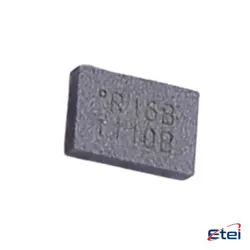
Abbildungen dienen nur als Referenz
M95M01-RDW6TP
+StücklisteIC EEPROM 1MBIT SPI 16MHZ 8TSSOP
-
HerstellerSTMikroelektronik
-
Herstellerteil #M95M01-RDW6TP
-
Datenblatt M95M01-RDW6TP DataSheet
-
Auf Lager5370
365 Tage Qualitätsgarantie
7*24 Stunden-Servicegarantie
90-Tage Kundendienstgarantie
Originalproduktgarantie
Spezifikationen
| Attribut | Wert |
| Part Status | Active |
| Base Product Number | M95M01 |
| Digi Key Programmable | Not Verified |
| Memory Type | Non-Volatile |
| Memory Format | EEPROM |
| Technology | EEPROM |
| Memory Size | 1Mbit |
| Memory Organization | 128K x 8 |
| Memory Interface | SPI |
| Clock Frequency | 16 MHz |
| Write Cycle Time - Word, Page | 5ms |
| Voltage - Supply | 1.8V ~ 5.5V |
| Operating Temperature | -40°C ~ 85°C (TA) |
| Mounting Type | Surface Mount |
| Package / Case | 8-TSSOP (0.173", 4.40mm Width) |
| Supplier Device Package | 8-TSSOP |
| Packaging | Cut Tape (CT), Tape & Reel (TR) |
Übersicht
Description
The M95M01-RDW6TP includes features like a wide operating voltage range, low power consumption, and high endurance for read/write cycles, making it versatile and efficient for energy-sensitive applications. The device is packaged in a compact, space-saving form factor, catering to designs where space constraints are critical.
Security features may include write protection and data integrity mechanisms to ensure reliability over the device's lifespan. Typical use cases include data logging, configuration storage, and settings retention in various electronic devices. This EEPROM is valued for its robustness and reliability, essential for applications requiring secure and permanent data storage.
Equivalent
1. AT25M01 from Microchip Technology
2. 25AA1024 from Microchip Technology
3. CAT25M01 from ON Semiconductor
Always check the datasheets for pin compatibility and electrical specifications before substituting.
Features
1. Memory Capacity: Offers 1 Mbit (128 Kbytes) of EEPROM memory, organized in 128-byte pages.
2. Interface: Utilizes an SPI (Serial Peripheral Interface) bus for communication, supporting high-speed data transfers.
3. Voltage Range: Operates within a voltage range of 1.8V to 5.5V, making it adaptable to various automotive environments.
4. Temperature Range: Designed to function reliably in a wide temperature range, typically from -40°C to +125°C.
5. Data Retention: Ensures data retention for up to 40 years and supports at least 4 million write/erase cycles per byte.
6. Security Features: Includes hardware write protection and a software data protection mode to prevent accidental data corruption.
7. Package: Available in a small, compact package suitable for space-constrained applications.
8. Compatibility: Compliant with AEC-Q100 standards, ensuring high reliability and quality for automotive use.
These features make it suitable for use in automotive control systems, infotainment systems, and other applications requiring durable and secure data storage.
Pinout
Here is a brief summary of the pin functions:
1. Chip Select (S): This pin is used to select the device. When it is low, the device is selected, and communication can occur.
2. Serial Data Input (D): This pin is used to input data into the device.
3. Serial Data Output (Q): This pin is used to output data from the device.
4. Serial Clock (C): This pin provides the clock signal required for the SPI communication.
5. Write Protect (W): This pin is used to enable or disable write protection.
6. Hold (HOLD): This pin is used to pause any serial communication without resetting the serial sequence.
7. VCC: Supply voltage pin.
8. VSS: Ground pin.
These functions allow for data storage and retrieval via SPI, with additional controls for write protection and communication hold.
Manufacturer
Application
1. Consumer Electronics: Used for storing firmware, configuration settings, and user preferences in devices like televisions, set-top boxes, and gaming consoles.
2. Automotive: Stores calibration data, diagnostic information, and user settings.
3. Industrial Control: Utilized in PLCs and HMIs for logging data and maintaining configuration settings.
4. Medical Devices: Stores critical calibration and operational data.
5. IoT Devices: Maintains device status, configuration, and firmware updates.
These applications exploit its reliability, low power consumption, and durability.