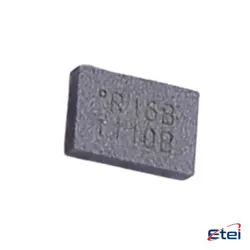
Abbildungen dienen nur als Referenz
MCP7940NT-I/MNY
+StücklisteIC RTC CLK/CALENDAR I2C 8TDFN
-
HerstellerMikrochip-Technologie
-
Herstellerteil #MCP7940NT-I/MNY
-
Auf Lager7385
365 Tage Qualitätsgarantie
7*24 Stunden-Servicegarantie
90-Tage Kundendienstgarantie
Originalproduktgarantie
Spezifikationen
| Attribut | Wert |
| Part Status | Active |
| Base Product Number | MCP7940 |
| Digi Key Programmable | Not Verified |
| Type | Clock/Calendar |
| Features | Alarm, Leap Year, Square Wave Output, SRAM |
| Memory Size | 64B |
| Time Format | HH:MM:SS (12/24 hr) |
| Date Format | YY-MM-DD-dd |
| Interface | I2C, 2-Wire Serial |
| Voltage - Supply | 1.8V ~ 5.5V |
| Voltage - Supply, Battery | 1.3V ~ 5.5V |
| Current - Timekeeping (Max) | 1.2µA @ 3.3V |
| Operating Temperature | -40°C ~ 85°C |
| Mounting Type | Surface Mount |
| Package / Case | 8-WFDFN Exposed Pad |
| Supplier Device Package | 8-TDFN (2x3) |
| Packaging | Cut Tape (CT), Tape & Reel (TR) |
| Grade | Automotive |
| Qualification | AEC-Q100 |
Übersicht
Description
The MCP7940NT-I/MNY is a Real-Time Clock/Calendar (RTCC) module designed by Microchip Technology. It provides precise timekeeping functions with features such as a battery-backed SRAM, timestamping, and a programmable alarms system. This device operates on a low-voltage range, typically between 1.8V to 5.5V, making it suitable for battery-operated applications.
Key features include a digital oscillator that can be calibrated for accuracy and a unique ID that can be used for identifying specific devices. The MCP7940N offers both I2C communication interface for easy integration with microcontrollers and additional features like Leap Year compensation, multiple output options, and a programmable square-wave output.
This device is commonly used in applications requiring accurate timekeeping, such as data loggers, industrial automation systems, and electronic medical devices. Its compact size and power efficiency make it ideal for portable and embedded systems where space and battery life are critical considerations.
Key features include a digital oscillator that can be calibrated for accuracy and a unique ID that can be used for identifying specific devices. The MCP7940N offers both I2C communication interface for easy integration with microcontrollers and additional features like Leap Year compensation, multiple output options, and a programmable square-wave output.
This device is commonly used in applications requiring accurate timekeeping, such as data loggers, industrial automation systems, and electronic medical devices. Its compact size and power efficiency make it ideal for portable and embedded systems where space and battery life are critical considerations.
Equivalent
The MCP7940NT-I/MNY is a Real-Time Clock (RTC) with EEPROM and battery switchover from Microchip Technology. Equivalent products may include:
1. DS1307 from Maxim Integrated - Popular I2C RTC with similar features.
2. PCF8523 from NXP - Low-power RTC alternative.
3. RV-3028-C7 from Micro Crystal - High accuracy, low power RTC.
4. DS3231 from Maxim Integrated - High precision RTC with integrated crystal.
Ensure compatibility with your specific requirements before selecting an alternative.
1. DS1307 from Maxim Integrated - Popular I2C RTC with similar features.
2. PCF8523 from NXP - Low-power RTC alternative.
3. RV-3028-C7 from Micro Crystal - High accuracy, low power RTC.
4. DS3231 from Maxim Integrated - High precision RTC with integrated crystal.
Ensure compatibility with your specific requirements before selecting an alternative.
Features
The MCP7940NT-I/MNY is a highly versatile and accurate real-time clock/calendar (RTC) designed by Microchip Technology. Key features include:
1. Timekeeping: It provides a clock and calendar with seconds, minutes, hours, day of the week, date, month, and year, featuring automatic leap year compensation up to the year 2399.
2. Power Management: The device includes a battery switchover function, ensuring continued timekeeping during power outages.
3. Memory: It features 64 bytes of battery-backed SRAM for storing critical data during power losses, and 1 Kbit of EEPROM for non-volatile data storage.
4. Alarms: Two configurable alarms can trigger interrupts to wake up a host controller from sleep.
5. Oscillator: The MCP7940NT-I/MNY incorporates a programmable square wave output and operates with a standard 32.768 kHz crystal oscillator.
6. I2C Interface: It communicates via an I2C interface, supporting standard (100 kHz) and fast (400 kHz) modes.
7. Temperature Range: The device operates over an industrial temperature range of -40°C to +85°C.
These features make the MCP7940NT-I/MNY ideal for a wide range of applications requiring precise timekeeping and low-power consumption.
1. Timekeeping: It provides a clock and calendar with seconds, minutes, hours, day of the week, date, month, and year, featuring automatic leap year compensation up to the year 2399.
2. Power Management: The device includes a battery switchover function, ensuring continued timekeeping during power outages.
3. Memory: It features 64 bytes of battery-backed SRAM for storing critical data during power losses, and 1 Kbit of EEPROM for non-volatile data storage.
4. Alarms: Two configurable alarms can trigger interrupts to wake up a host controller from sleep.
5. Oscillator: The MCP7940NT-I/MNY incorporates a programmable square wave output and operates with a standard 32.768 kHz crystal oscillator.
6. I2C Interface: It communicates via an I2C interface, supporting standard (100 kHz) and fast (400 kHz) modes.
7. Temperature Range: The device operates over an industrial temperature range of -40°C to +85°C.
These features make the MCP7940NT-I/MNY ideal for a wide range of applications requiring precise timekeeping and low-power consumption.
Pinout
The MCP7940NT-I/MNY is a Real-Time Clock (RTC) module by Microchip Technology. It features an 8-pin configuration. The pins and their functions are typically as follows:
1. VCC: Power supply pin.
2. VBAT: Backup battery input.
3. SDA: Serial Data line for I2C communication.
4. SCL: Serial Clock line for I2C communication.
5. MFP (Multi-Function Pin): Can be configured for various functions such as alarm outputs, square wave output, or general-purpose output.
6. GND: Ground pin.
7. NC (No Connect): This pin is not connected internally.
8. CLKOUT: Optional clock output pin.
This RTC module is used for keeping track of time and date, even when the main device is powered off, thanks to its backup battery input. It interfaces with a microcontroller via I2C protocol, using the SDA and SCL lines. The MCP7940NT provides features such as alarms, timestamps, and a programmable clock output.
1. VCC: Power supply pin.
2. VBAT: Backup battery input.
3. SDA: Serial Data line for I2C communication.
4. SCL: Serial Clock line for I2C communication.
5. MFP (Multi-Function Pin): Can be configured for various functions such as alarm outputs, square wave output, or general-purpose output.
6. GND: Ground pin.
7. NC (No Connect): This pin is not connected internally.
8. CLKOUT: Optional clock output pin.
This RTC module is used for keeping track of time and date, even when the main device is powered off, thanks to its backup battery input. It interfaces with a microcontroller via I2C protocol, using the SDA and SCL lines. The MCP7940NT provides features such as alarms, timestamps, and a programmable clock output.
Manufacturer
The MCP7940NT-I/MNY is manufactured by Microchip Technology Inc. Microchip is an American corporation that specializes in the production of microcontroller, mixed-signal, analog, and Flash-IP integrated circuits. It is well-known for providing embedded control solutions and serves a wide range of applications across various industries. The company focuses on delivering cost-effective, high-performance products and is a significant player in the semiconductor industry.
Application
The MCP7940NT-I/MNY is a real-time clock/calendar (RTC) module used in applications requiring timekeeping and calendar functionalities. Key application areas include:
1. Consumer Electronics: Used in devices like digital cameras, smartphones, and smart appliances for time-stamping and scheduling.
2. Industrial Equipment: Employed in automation systems and monitoring equipment for accurate timekeeping.
3. Computing Devices: Utilized in computers and servers for system clocks and event scheduling.
4. Portable Devices: Integrated into GPS units and health monitoring devices for precise time tracking.
5. Smart Energy Systems: Implemented in smart meters and energy management systems for timestamping energy usage data.
Its low power consumption and battery backup feature make it suitable for applications requiring sustained timekeeping during power loss.
1. Consumer Electronics: Used in devices like digital cameras, smartphones, and smart appliances for time-stamping and scheduling.
2. Industrial Equipment: Employed in automation systems and monitoring equipment for accurate timekeeping.
3. Computing Devices: Utilized in computers and servers for system clocks and event scheduling.
4. Portable Devices: Integrated into GPS units and health monitoring devices for precise time tracking.
5. Smart Energy Systems: Implemented in smart meters and energy management systems for timestamping energy usage data.
Its low power consumption and battery backup feature make it suitable for applications requiring sustained timekeeping during power loss.
Package
The MCP7940NT-I/MNY is a real-time clock IC from Microchip Technology, typically available in an 8-pin TSSOP (Thin Shrink Small Outline Package) form factor.