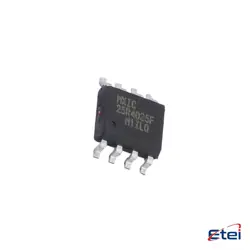
Abbildungen dienen nur als Referenz
MD4F
+StücklisteBRIDGE RECT GLASS 400V 1A MD-F
-
HerstellerRectron USA
-
Herstellerteil #MD4F
-
Paket 4-SMD, Gull Wing
-
Auf Lager4675
365 Tage Qualitätsgarantie
7*24 Stunden-Servicegarantie
90-Tage Kundendienstgarantie
Originalproduktgarantie
Spezifikationen
| Attribut | Wert |
| Supplier | Rectron USA |
| Package / Case | Tape & Reel (TR) |
| Part Status | Active |
| Diode Type | Single Phase |
| Technology | Standard |
| Voltage - Peak Reverse(Max) | 400 V |
| Current - Average Rectified(Io) | 1 A |
| Voltage - Forward (Vf) (Max) @ If | 1 V @ 500 mA |
| Current - Reverse Leakage @ Vr | 1 µA @ 400 V |
| Operating Temperature | -55°C ~ 150°C (TJ) |
| Mounting Type | Surface Mount |
Übersicht
Description
Key components of MD4F include data integration, where disparate data sources are combined; dimensional analysis, which examines data from multiple perspectives; and decision support, which involves generating recommendations based on data insights. The framework is applicable in various industries such as finance, healthcare, and logistics, where data complexity and volume are significant.
MD4F enhances decision-making by providing a structured, data-centric approach that reduces uncertainty and supports strategic planning. Its ability to process and analyze multi-dimensional data swiftly makes it a valuable tool for organizations aiming to maintain a competitive edge in a data-driven world.
Equivalent
Features
1. Model-Centric Approach: Emphasizes the use of models throughout the development lifecycle for design, simulation, and verification.
2. Flexibility: Allows for easy modifications and updates to models, accommodating changes in requirements or design specifications.
3. Reusability: Facilitates the reuse of models and components across different projects, improving efficiency and reducing development time.
4. Integration: Supports integration with various tools and platforms, enabling seamless workflow and data exchange.
5. Scalability: Capable of handling projects of varying sizes and complexities, from small components to large systems.
6. Collaboration: Promotes team collaboration through shared models and standardized processes.
7. Efficiency: Streamlines the design process by automating routine tasks and providing predictive insights.
8. Error Reduction: Helps in early detection and correction of design errors, minimizing costly rework.
These features collectively enhance the ability to adapt to changes while maintaining high-quality and efficient design processes.
Manufacturer
Application
1. Software Design: Automating the creation of software architecture models.
2. System Validation: Enhancing system validation through model verification techniques.
3. Code Generation: Automating code generation from high-level models to reduce manual coding errors.
4. Interoperability: Facilitating the integration of different software systems by standardizing models.
5. Maintenance: Simplifying software maintenance through model updates and refinements.
6. Simulation and Testing: Enabling virtual simulations and testing environments for complex systems.
These applications help streamline the software development process and improve system quality and reliability.