Description
The course MMA25312BT1 likely refers to a specific module or class code offered at an educational institution, focusing on a particular subject area. Without additional context, it is challenging to provide detailed content about the course, as course codes vary between institutions. However, "MMA" could indicate a focus on topics such as Mixed Martial Arts, Mathematics, or a specific engineering or technical subject, depending on the institution's designation system. The course might cover foundational concepts, introduce key methodologies, or provide practical skills related to its field. The "BT1" might suggest a beginner or introductory level, targeting students new to the subject matter. For precise details, it would be best to consult the course syllabus or contact the institution offering the course.
Equivalent
The MMA25312BT1 is an accelerometer sensor. Equivalent products generally include similar accelerometers such as the ADXL335 from Analog Devices, the MPU-6050 from InvenSense, and the LIS3DH from STMicroelectronics. These alternatives offer similar functionalities like multi-axis measurement, low power consumption, and compact size, but specifics such as range, sensitivity, and interface might vary. Always check the datasheet for precise specifications to ensure compatibility.
Features
The MMA25312BT1 is a 3-axis accelerometer designed for various applications requiring motion detection and measurement. Key features include:
1. 3-Axis Sensing: It provides acceleration data for X, Y, and Z axes, enabling comprehensive motion analysis.
2. Digital Output: Utilizes an I2C interface for easy integration with microcontrollers or other digital systems.
3. Low Power Consumption: Designed to operate with minimal power, making it suitable for battery-powered devices.
4. High Sensitivity: Capable of detecting minute changes in acceleration, useful for precise motion detection.
5. Compact Design: Its small form factor allows for use in space-constrained applications.
6. Wide Range of Applications: Suitable for consumer electronics, automotive systems, and industrial equipment.
These features make the MMA25312BT1 a versatile and efficient choice for projects requiring accurate motion sensing.
Pinout
The MMA25312BT1 is a 3-axis accelerometer. It typically comes in a surface-mount package, and has a pin count of 16. The primary function of the MMA25312BT1 is to measure acceleration along three axes: X, Y, and Z. It is used in various applications such as motion sensing, tilt detection, and vibration monitoring. The device provides digital output signals and includes features like selectable sensitivity, low power consumption, and built-in self-test capabilities. It interfaces with microcontrollers or other digital devices through standard communication protocols, often using I2C or SPI.
Manufacturer
The MMA25312BT1 is manufactured by NXP Semiconductors. NXP is a global semiconductor company that specializes in providing high-performance mixed-signal solutions. The company focuses on various sectors, including automotive, industrial & IoT, mobile, and communication infrastructure. NXP Semiconductors is known for its expertise in secure connectivity solutions, microcontrollers, sensors, and analog devices, among other technologies.
Application
The MMA25312BT1 is a type of accelerometer used in various applications. Its primary application areas include automotive systems for airbag deployment and vehicle stability control, consumer electronics for motion sensing in devices like smartphones and gaming controllers, industrial equipment for vibration monitoring and machinery health, and medical devices for tracking and motion analysis. Its precision and reliability make it suitable for environments requiring accurate motion detection and responsiveness.
Package
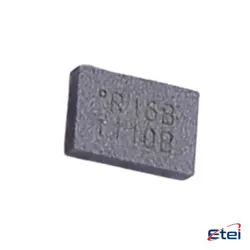
The MMA25312BT1 is typically available in a surface-mount package type, specifically the LGA (Land Grid Array) package. This compact form factor is designed for integration into circuit boards, making it suitable for various applications where space is limited.