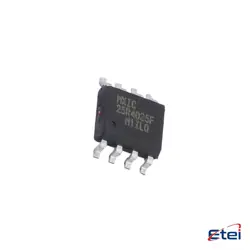
Abbildungen dienen nur als Referenz
N25Q128A11E1240E
+StücklisteIC FLASH 128MBIT SPI 24TPBGA
-
HerstellerMicron Technology Inc.
-
Herstellerteil #N25Q128A11E1240E
-
Paket T-PBGA-24
-
Auf Lager7097
365 Tage Qualitätsgarantie
7*24 Stunden-Servicegarantie
90-Tage Kundendienstgarantie
Originalproduktgarantie
Spezifikationen
| Attribut | Wert |
| Package / Case | Tray |
| Part Status | Obsolete |
| Memory Type | Non-Volatile |
| Memory Format | FLASH |
| Technology | FLASH - NOR |
| Memory Size | 128Mb (32M x 4) |
| Memory Interface | SPI |
| Clock Frequency | 108 MHz |
| Write Cycle Time - Word Page | 8ms, 5ms |
| Voltage - Supply | 1.7V ~ 2V |
| Operating Temperature | -40°C ~ 85°C (TA) |
| Mounting Type | Surface Mount |
Übersicht
Description
Key attributes of the N25Q128A11E1240E include its high-speed performance, low power consumption, and extended endurance, making it suitable for a variety of applications, including embedded systems, consumer electronics, and industrial automation. The device supports advanced features like dual and quad SPI modes for enhanced data throughput and includes security measures such as block protection and write-protection mechanisms to ensure data integrity.
Additionally, the N25Q128A11E1240E features uniform 4KB sectors and 64KB blocks, facilitating flexible data management and storage. Its compact form factor and reliability make it ideal for space-constrained environments, where efficient and durable non-volatile memory solutions are critical.
Equivalent
1. Micron MT25QL128 series, which offers similar performance and specifications.
2. Winbond W25Q128 series, providing comparable features and usage.
3. Cypress S25FL128 series, which also aligns closely in application.
These alternatives generally have equivalent storage capacity, interface types, and operational characteristics suitable for similar applications. Always verify the specific requirements and compatibility for your application.
Features
1. Operating Voltages: Supports a wide voltage range from 2.7V to 3.6V for flexible integration into various systems.
2. Data Transfer Rates: Capable of both standard and dual/quad I/O operations, enhancing data transfer speeds.
3. Sector Architecture: Incorporates uniform 4 KB sectors, 64 KB blocks, and a 128 KB OTP (One-Time Programmable) area for diverse data management options.
4. Security Features: Includes hardware-based write protection and password protection for secure data handling.
5. Endurance and Retention: Offers up to 100,000 program/erase cycles per sector and data retention of 20 years, ensuring long-term reliability.
6. Low Power Consumption: Optimized for low power consumption in both active and standby modes, making it suitable for battery-operated devices.
7. Package Options: Available in various packages like WSON and SOIC, supporting different physical integration needs.
These features make it suitable for applications requiring reliable and fast data storage, such as consumer electronics, automotive, and industrial devices.
Pinout
The 8 pins on the chip are typically used in the following configuration:
1. CS# (Chip Select): Activates the device.
2. SO/SIO1 (Serial Output / Data Input/Output): Data output and input.
3. WP# (Write Protect): Hardware write protection.
4. VSS (Ground): Ground reference.
5. SI/SIO0 (Serial Input / Data Input/Output): Data input and output.
6. SCK (Serial Clock): Provides the clock signal for data transfers.
7. HOLD#: Pauses communication.
8. VCC (Power Supply): Power supply input.
These pins enable the device to operate in SPI (Serial Peripheral Interface) mode, facilitating data read and write operations essential for various applications like code shadowing in embedded systems and data storage in consumer electronics.
Manufacturer
Application
1. Consumer Electronics: For firmware and software storage in devices like smartphones, tablets, and smart TVs.
2. Industrial Automation: Used in control systems, data logging, and configuration storage.
3. Automotive: Supports infotainment systems, dashboards, and ECUs requiring reliable memory.
4. Networking Equipment: Utilized in routers, switches, and other communication devices for configuration data.
5. IoT Devices: Provides non-volatile storage for settings and firmware in connected devices.
6. Medical Devices: Stores critical data and software in diagnostic and monitoring equipment.
These applications leverage the chip's reliability, speed, and compact size.