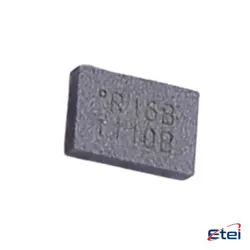
Abbildungen dienen nur als Referenz
NCV7344MW3R2G
+StücklisteIC TRANSCEIVER HALF 1/1 8DFN
-
HerstellerOnsemi
-
Herstellerteil #NCV7344MW3R2G
-
Auf Lager9569
365 Tage Qualitätsgarantie
7*24 Stunden-Servicegarantie
90-Tage Kundendienstgarantie
Originalproduktgarantie
Spezifikationen
| Attribut | Wert |
| Part Status | Active |
| Type | Transceiver |
| Protocol | CANbus |
| Number of Drivers / Receivers | 1/1 |
| Duplex | Half |
| Data Rate | 5Mbps |
| Voltage - Supply | 4.75V ~ 5.25V |
| Operating Temperature | -40°C ~ 150°C |
| Grade | Automotive |
| Qualification | AEC-Q100 |
| Mounting Type | Surface Mount |
| Package / Case | 8-VDFN Exposed Pad |
| Supplier Device Package | 8-DFN (3x3) |
| Base Product Number | NCV7344 |
Übersicht
Description
The NCV7344MW3R2G is a high-speed CAN (Controller Area Network) transceiver designed for automotive and industrial applications. It facilitates communication between microcontrollers and CAN networks, adhering to the ISO 11898-2 standard for high-speed CAN. Key features include low electromagnetic emissions, high electromagnetic immunity, and thermal protection. It operates at voltages from 3V to 5.5V, making it flexible for various power supply environments. The transceiver has low current consumption in standby mode, which is beneficial for battery-operated systems. It includes a fail-safe mechanism to ensure reliable communication even in fault conditions. The NCV7344MW3R2G is typically used in applications like in-vehicle networking, industrial automation, and any system requiring robust data communication over a CAN bus. Its compact package makes it suitable for space-constrained designs.
Equivalent
The NCV7344MW3R2G is a high-speed CAN transceiver. Equivalent products include:
1. TJA1040 by NXP Semiconductors
2. MCP2551 by Microchip Technology
3. SN65HVD230 by Texas Instruments
4. ATA6560 by Microchip Technology
These alternatives offer similar functionalities for CAN bus communication systems and can typically replace the NCV7344MW3R2G in appropriate applications. Always check the specific datasheet and ensure compatibility with your design requirements before substituting components.
1. TJA1040 by NXP Semiconductors
2. MCP2551 by Microchip Technology
3. SN65HVD230 by Texas Instruments
4. ATA6560 by Microchip Technology
These alternatives offer similar functionalities for CAN bus communication systems and can typically replace the NCV7344MW3R2G in appropriate applications. Always check the specific datasheet and ensure compatibility with your design requirements before substituting components.
Features
The NCV7344MW3R2G is a high-speed CAN transceiver designed for automotive and industrial applications. It features compatibility with the ISO 11898-2 standard, ensuring reliable communication in Controller Area Network (CAN) systems. The transceiver supports a baud rate of up to 1 Mbps.
Key features include:
1. Low Power Consumption: It offers low current consumption in standby mode, making it suitable for battery-powered applications.
2. Wide Operating Voltage Range: The device operates over a wide voltage range, enhancing its versatility in various power supply conditions.
3. EMI Performance: The transceiver is optimized for electromagnetic interference (EMI) performance, reducing emissions in sensitive environments.
4. Protection Features: It includes various protection mechanisms such as thermal shutdown, bus line short-circuit protection, and protection against transients.
5. Robust Design: The transceiver is designed to withstand harsh environmental conditions, featuring automotive-grade qualification and operating temperature range.
The NCV7344MW3R2G is housed in a compact package, facilitating ease of integration into space-constrained designs. It is ideal for use in automotive systems, industrial controls, and other CAN-based applications.
Key features include:
1. Low Power Consumption: It offers low current consumption in standby mode, making it suitable for battery-powered applications.
2. Wide Operating Voltage Range: The device operates over a wide voltage range, enhancing its versatility in various power supply conditions.
3. EMI Performance: The transceiver is optimized for electromagnetic interference (EMI) performance, reducing emissions in sensitive environments.
4. Protection Features: It includes various protection mechanisms such as thermal shutdown, bus line short-circuit protection, and protection against transients.
5. Robust Design: The transceiver is designed to withstand harsh environmental conditions, featuring automotive-grade qualification and operating temperature range.
The NCV7344MW3R2G is housed in a compact package, facilitating ease of integration into space-constrained designs. It is ideal for use in automotive systems, industrial controls, and other CAN-based applications.
Pinout
The NCV7344MW3R2G is an automotive high-speed CAN transceiver with a pin count of 8. It is typically used in applications that require the interface between the CAN protocol controller and the physical bus in a vehicle. Below is a brief description of each pin function:
1. VCC (Pin 1): Power supply input for the transceiver.
2. TxD (Pin 2): Transmit data input; it receives the data from the CAN controller.
3. GND (Pin 3): Ground connection.
4. RxD (Pin 4): Receive data output; provides the data output to the CAN controller.
5. VIO (Pin 5): I/O voltage input for interfacing with microcontrollers at different logic levels.
6. CANH (Pin 6): CAN high-level voltage bus line.
7. CANL (Pin 7): CAN low-level voltage bus line.
8. STB (Pin 8): Standby control input; used to place the device in standby mode to reduce power consumption.
This transceiver is compliant with the ISO 11898-2 standard and is used to implement bidirectional data communication on a single line, with automatic collision detection and retransmission of corrupted messages.
1. VCC (Pin 1): Power supply input for the transceiver.
2. TxD (Pin 2): Transmit data input; it receives the data from the CAN controller.
3. GND (Pin 3): Ground connection.
4. RxD (Pin 4): Receive data output; provides the data output to the CAN controller.
5. VIO (Pin 5): I/O voltage input for interfacing with microcontrollers at different logic levels.
6. CANH (Pin 6): CAN high-level voltage bus line.
7. CANL (Pin 7): CAN low-level voltage bus line.
8. STB (Pin 8): Standby control input; used to place the device in standby mode to reduce power consumption.
This transceiver is compliant with the ISO 11898-2 standard and is used to implement bidirectional data communication on a single line, with automatic collision detection and retransmission of corrupted messages.
Manufacturer
The NCV7344MW3R2G is manufactured by ON Semiconductor, a company that specializes in the design and manufacture of semiconductor components. ON Semiconductor, now known as onsemi, is a leading supplier in the electronics industry, providing a wide range of products, including power and signal management, logic, discrete, and custom devices for various applications. The company's products are used in automotive, industrial, cloud power, and IoT markets, among others. Onsemi is known for its focus on energy-efficient innovations and solutions that help electronic designers address their unique design challenges in a more sustainable way.
Application
The NCV7344MW3R2G is a high-speed CAN transceiver commonly used in automotive applications. It is designed for in-vehicle networking, providing reliable communication between various electronic control units (ECUs) within a vehicle. Additionally, it is used in industrial automation systems, where robust communication is essential. The transceiver's wide temperature range and high electromagnetic compatibility make it suitable for harsh environments. Its low power consumption and standby modes also make it ideal for battery-operated systems. Overall, the NCV7344MW3R2G is used in applications requiring efficient, high-speed data communication and robust performance under stringent conditions.
Package
The NCV7344MW3R2G is housed in a SOT-23-5 package, which is a small outline transistor package with three pins on one side and two on the other, typically used for surface-mount applications in electronic circuits.