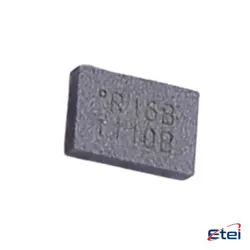
Abbildungen dienen nur als Referenz
NRF52820-QDAA-R
+StücklisteBLE/ANT/ 802.15.4/THREAD/ZIGBEE
-
HerstellerNordic Semiconductor ASA
-
Herstellerteil #NRF52820-QDAA-R
-
Paket QFN-40
-
Auf Lager5271
365 Tage Qualitätsgarantie
7*24 Stunden-Servicegarantie
90-Tage Kundendienstgarantie
Originalproduktgarantie
Spezifikationen
| Attribut | Wert |
| Package / Case | Tape & Reel (TR),Cut Tape (CT) |
| Series | nRF52 |
| Part Status | Active |
| Type | TxRx + MCU |
| RF Family / Standard | 802.15.4, Bluetooth |
| Protocol | Bluetooth v5.3, Thread, Zigbee® |
| Frequency | 2.4GHz |
| Data Rate (Max) | 2Mbps |
| Power - Output | 8dBm |
| Sensitivity | -95dBm |
| Memory Size | 256kB Flash, 32kB RAM |
| Serial Interfaces | GPIO, I²S, SPI, UART, USB |
| GPIO | 18 |
| Voltage - Supply | 1.7V ~ 5.5V |
| Current - Receiving | 4.7mA |
| Current - Transmitting | 4.9mA |
| Operating Temperature | -40°C ~ 105°C |
| Mounting Type | Surface Mount |
Übersicht
Description
Key features include a wide operating voltage range of 1.7 V to 5.5 V, which allows compatibility with rechargeable battery solutions and USB. The NRF52820-QDAA-R supports high-speed USB, up to 12 Mbps, and integrates a full-speed USB 2.0 controller. It also offers a range of digital interfaces like UART, I2C, SPI, and GPIO, enhancing its versatility in various applications. Furthermore, the device supports hardware security features such as AES-128 encryption. Overall, the NRF52820-QDAA-R is engineered for consumer electronics, industrial, and IoT applications that require reliable wireless connectivity and efficient power management.
Equivalent
1. Nordic Semiconductor: nRF52810, nRF52811
2. Texas Instruments: CC2640R2F
3. Silicon Labs: EFR32BG22
4. Dialog Semiconductor (Renesas): DA14531
5. Microchip: ATSAMB11
These alternatives offer similar low-power Bluetooth connectivity and computational capabilities for IoT applications. Always verify specific features and compatibility with your project requirements.
Features
1. Processor: ARM Cortex-M4 CPU with a floating-point unit, operating at 64 MHz.
2. Memory: Equipped with 256 KB Flash and 32 KB RAM, suitable for complex applications.
3. Radio: 2.4 GHz transceiver supporting BLE, Thread, Zigbee, and other 2.4 GHz proprietary protocols.
4. Connectivity: Offers USB 2.0 full-speed support, making it versatile for USB-enabled applications.
5. I/O Interfaces: Includes SPI, UART, TWI, QDEC, PDM, and PWM interfaces for various peripheral connections.
6. Power Management: Incorporates a flexible power management system for prolonged battery life in wearable and portable devices.
7. Operating Range: Voltage range from 1.7 V to 5.5 V, supporting a wide array of power sources.
8. Package: Available in a compact QFN package, suitable for space-constrained applications.
9. Temperature Range: Operates efficiently in -40°C to 85°C environments, making it ideal for industrial applications.
This blend of features makes the NRF52820-QDAA-R a robust choice for developing advanced wireless communication solutions.
Pinout
Key functions of the nRF52820 include:
- Integrated 2.4 GHz transceiver supporting Bluetooth Low Energy (BLE), including features like Long Range, High Throughput 2 Mbps, and Advertising Extensions.
- Support for proprietary 2.4 GHz protocols.
- An Arm Cortex-M4 processor with FPU running at 64 MHz for efficient processing.
- 256 KB Flash and 32 KB RAM for application and data storage.
- A range of digital and analog interfaces including SPI, UART, TWI, and ADC.
- USB 2.0 full-speed support for direct USB connections.
- A variety of GPIOs for versatile connectivity.
This makes the nRF52820 suitable for a range of applications, including beacons, wearables, and other compact, low-power IoT devices.
Manufacturer
Application
1. Wearable Devices: Due to its small size and energy efficiency, it's ideal for fitness trackers and smartwatches.
2. Healthcare Devices: Used in medical monitoring devices that require wireless connectivity.
3. IoT Devices: Suited for smart home devices and industrial IoT applications needing reliable BLE communication.
4. Computer Peripherals: Utilized in wireless keyboards, mice, and other peripherals.
5. Beacons and Proximity Devices: Employed in location-based services and asset tracking.
6. Remote Controls: Applicable in TV and multimedia remote controls.
Its versatility makes it suitable for any application requiring robust BLE connectivity.