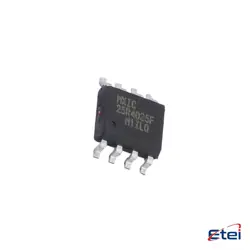
Abbildungen dienen nur als Referenz
OPA2350UA
+Stückliste-
HerstellerBurr Brown
-
Herstellerteil #OPA2350UA
-
Datenblatt OPA2350UA DataSheet
-
Auf Lager5464
365 Tage Qualitätsgarantie
7*24 Stunden-Servicegarantie
90-Tage Kundendienstgarantie
Originalproduktgarantie
Spezifikationen
| Attribut | Wert |
| Package / Case | Bulk |
| Series | MicroAmplifier™ |
| Part Status | Active |
| Amplifier Type | CMOS |
| Number of Circuits | 2 |
| Output Type | Rail-to-Rail |
| Slew Rate | 22V/µs |
| Gain Bandwidth Product | 38 MHz |
| Current - Input Bias | 0.5 pA |
| Voltage - Input Offset | 150 µV |
| Supply Current | 5.2mA (x2 Channels) |
| Current - Output / Channel | 40 mA |
| Voltage - Supply Span(Min) | 2.7 V |
| Voltage - Supply Span(Max) | 5.5 V |
| Operating Temperature | -40°C ~ 85°C |
| Mounting Type | Surface Mount |
Übersicht
Description
The amplifier offers a high open-loop gain and a wide bandwidth, which ensure stability and accuracy in various circuit configurations. Its rail-to-rail input and output capabilities enhance its performance in low-voltage applications. The device comes in an 8-pin SOIC package, providing ease of integration into existing designs.
Typical applications for the OPA2350UA include instrumentation, medical equipment, and data acquisition systems, where high precision and low power consumption are crucial. Its small size, combined with its robust performance characteristics, makes it an ideal choice for designers looking to optimize space without sacrificing functionality.
Equivalent
1. AD8606 by Analog Devices
2. MCP6022 by Microchip Technology
3. TLV2452 by Texas Instruments
4. LMV358 by Texas Instruments
These alternatives may vary in specific parameters, so it's important to review datasheets to ensure compatibility for your application.
Features
1. Low Noise: The amplifier offers a low input noise voltage of 5.5 nV/√Hz, making it suitable for high-precision applications where noise minimization is critical.
2. Wide Bandwidth: With a bandwidth of 38 MHz, this op-amp is capable of handling high-speed signals effectively.
3. High Slew Rate: It has a slew rate of 22 V/µs, providing rapid response to input changes.
4. Low Offset Voltage: This device features a low offset voltage of 250 µV, enabling accurate signal amplification.
5. Rail-to-Rail Output: The OPA2350UA supports rail-to-rail output, enhancing the dynamic range and allowing for more flexibility in signal processing.
6. Low Quiescent Current: It consumes a low quiescent current of 5.5 mA, making it energy-efficient.
7. Voltage Range: Operates over a wide supply voltage range from 2.7V to 5.5V, adding versatility across different applications.
8. Package Type: Available in a SOIC-8 package, which is compact and suitable for space-constrained designs.
These features make the OPA2350UA ideal for use in portable devices, sensor interfaces, and other applications demanding precise and efficient signal processing.
Pinout
1. Pin 1 (OUT A): Output of the first operational amplifier.
2. Pin 2 (IN– A): Inverting input of the first operational amplifier.
3. Pin 3 (IN+ A): Non-inverting input of the first operational amplifier.
4. Pin 4 (V–): Negative power supply (also known as ground in a single-supply configuration).
5. Pin 5 (IN+ B): Non-inverting input of the second operational amplifier.
6. Pin 6 (IN– B): Inverting input of the second operational amplifier.
7. Pin 7 (OUT B): Output of the second operational amplifier.
8. Pin 8 (V+): Positive power supply.
The OPA2350UA is designed for precision applications with low noise, low offset voltage, and a wide bandwidth, making it suitable for various applications such as sensor amplification and analog signal processing.
Manufacturer
Application
1. Data Acquisition: It is used in analog-to-digital conversion systems for accurate signal processing.
2. Sensor Interfaces: Provides amplification for various sensors, such as temperature and pressure sensors.
3. Portable Instruments: Utilized in battery-powered devices due to its low power consumption.
4. Medical Equipment: Assists in precise signal amplification in diagnostic devices.
5. Communication Systems: Improves signal integrity in RF and other communication applications.
6. Active Filters and Signal Conditioning: Used in designing active filter circuits for effective signal manipulation.
Its versatility makes it suitable for a wide range of precision and high-speed applications.