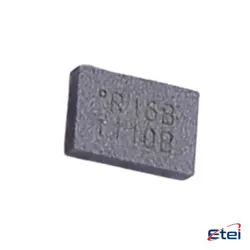
Abbildungen dienen nur als Referenz
PIC16F1705-E/ST
+StücklisteIC MCU 8BIT 14KB FLASH 14TSSOP
-
HerstellerMikrochip-Technologie
-
Herstellerteil #PIC16F1705-E/ST
-
Datenblatt PIC16F1705-E/ST DataSheet
-
Auf Lager6069
365 Tage Qualitätsgarantie
7*24 Stunden-Servicegarantie
90-Tage Kundendienstgarantie
Originalproduktgarantie
Spezifikationen
| Attribut | Wert |
| Series | PIC® XLP™ 16F |
| Part Status | Active |
| DigiKey Programmable | Not Verified |
| Core Processor | PIC |
| Core Size | 8-Bit |
| Speed | 32MHz |
| Connectivity | I2C, LINbus, SPI, UART/USART |
| Peripherals | Brown-out Detect/Reset, POR, PWM, WDT |
| Number of I/O | 12 |
| Program Memory Size | 14KB (8K x 14) |
| Program Memory Type | FLASH |
| RAM Size | 1K x 8 |
| Voltage - Supply (Vcc/Vdd) | 2.3V ~ 5.5V |
| Data Converters | A/D 8x10b; D/A 1x8b |
| Oscillator Type | Internal |
| Operating Temperature | -40°C ~ 125°C (TA) |
| Mounting Type | Surface Mount |
| Supplier Device Package | 14-TSSOP |
| Package / Case | 14-TSSOP (0.173", 4.40mm Width) |
| Base Product Number | PIC16F1705 |
Übersicht
Description
One of its key features is the integrated 10-bit Analog-to-Digital Converter (ADC) with up to 12 channels, making it suitable for applications that require sensor interfacing. It also supports various communication protocols, including I2C, SPI, and UART, enhancing connectivity options.
The device has multiple general-purpose I/O pins, timers, and a versatile peripheral set, making it ideal for applications in automotive, industrial control, and consumer electronics. The PIC16F1705 is available in different package types, facilitating easy integration into various designs. Overall, it's a robust choice for cost-effective and efficient microcontroller-based projects.
Equivalent
Features
1. Memory: 4KB Flash program memory, 256 bytes of RAM, and 128 bytes of EEPROM.
2. CPU: Enhanced Mid-Range architecture with a 14-bit instruction set.
3. I/O Ports: 12 GPIO pins with multiple functions for digital input/output.
4. Timers: Includes up to 3 timers (1x 8-bit, 2x 16-bit) for various timing applications.
5. Communication Interfaces: Supports I2C, SPI, and USART protocols for versatile connectivity.
6. Analog Features: Integrated 10-bit ADC (up to 8 channels) and comparators.
7. Operating Voltage: Wide voltage range of 1.8V to 5.5V.
8. Low Power Modes: Designed for low power consumption, ideal for battery-operated devices.
9. Integrated Oscillator: Internal oscillator with selectable frequencies up to 32 MHz.
10. Development Support: Compatible with MPLAB X IDE and XC8 compiler for ease of development.
These features make the PIC16F1705 suitable for various embedded applications.
Pinout
1. GPIO (General Purpose Input/Output): Configurable pins for digital input and output.
2. Analog Inputs: Up to 5 analog channels (AN0-AN4) for interfacing with sensors and other analog devices.
3. PWM (Pulse Width Modulation): Outputs for controlling motors and other devices.
4. I2C/SPI Communication: Serial communication for interfacing with other devices.
5. Timers: Multiple timers for various timing functions and event counting.
6. External Interrupts: Pins that can trigger interrupts from external sources.
7. VDD and VSS: Power supply pins.
The device is suitable for a variety of applications, including embedded systems, automation, and control tasks, leveraging its integrated peripherals and low-power consumption features.
Manufacturer
The company is known for its focus on embedded control applications and offers a broad range of products that enable customers to develop innovative and efficient designs. Microchip also provides a variety of development tools, software libraries, and technical support to assist engineers in creating their applications. Its commitment to quality and reliability has made Microchip a prominent player in the semiconductor industry, with a strong emphasis on customer satisfaction and long-term relationships.
Application
1. Consumer Electronics: Home appliances, remote controls, and smart devices.
2. Industrial Automation: Control systems, sensors, and data acquisition.
3. Automotive: Engine control units, dashboard displays, and lighting systems.
4. Medical Devices: Portable patient monitoring and diagnostic equipment.
5. Internet of Things (IoT): Smart home applications, connected sensors, and wearables.
6. Robotics: Motor control and sensor integration.
7. Communication: Signal processing and data transmission systems.
Its versatility and low power consumption make it suitable for diverse embedded system applications.