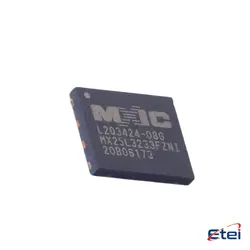
Abbildungen dienen nur als Referenz
PIC16F886-I/SS
+StücklisteIC MCU 8BIT 14KB FLASH 28SSOP
-
HerstellerMikrochip-Technologie
-
Herstellerteil #PIC16F886-I/SS
-
Datenblatt PIC16F886-I/SS DataSheet
-
Paket SSOP-28
-
Auf Lager5919
365 Tage Qualitätsgarantie
7*24 Stunden-Servicegarantie
90-Tage Kundendienstgarantie
Originalproduktgarantie
Spezifikationen
| Attribut | Wert |
| Package | Tube |
| Series | PIC® 16F |
| ProductStatus | Active |
| CoreProcessor | PIC |
| CoreSize | 8-Bit |
| Speed | 20MHz |
| Connectivity | I²C, SPI, UART/USART |
| Peripherals | Brown-out Detect/Reset, POR, PWM, WDT |
| NumberofI/O | 24 |
| ProgramMemorySize | 14KB (8K x 14) |
| ProgramMemoryType | FLASH |
| EEPROMSize | 256 x 8 |
| RAMSize | 368 x 8 |
| Voltage-Supply(Vcc/Vdd) | 2V ~ 5.5V |
| DataConverters | A/D 11x10b |
| OscillatorType | Internal |
| OperatingTemperature | -40°C ~ 85°C (TA) |
| MountingType | Surface Mount |
| Package/Case | 28-SSOP (0.209, 5.30mm Width) |
Übersicht
Description
Key features include 256 bytes of EEPROM, 368 bytes of RAM, and 14 KB of flash memory for program storage. It operates at a maximum frequency of 20 MHz. The PIC16F886-I/SS supports 35 I/O ports, allowing for versatile interfacing options. It also includes peripherals like Analog-to-Digital Converters (ADCs), comparators, and hardware USART for serial communication.
The device is notable for its low power consumption and features several power-saving modes. It supports In-Circuit Serial Programming (ICSP), enabling easy updates without removing it from the circuit. The wide operating voltage range (2.0V to 5.5V) enhances its flexibility for different applications. This microcontroller is ideal for use in consumer electronics, automotive, industrial automation, and more.
Equivalent
1. PIC16F887: Similar in feature set but with slight variations in pin count and peripherals.
2. Atmel/Microchip ATmega328: Comparable in performance and memory, popular in Arduino boards.
3. STMicroelectronics STM8S103: Offers a similar 8-bit architecture with equivalent features.
4. NXP LPC810: Compact and cost-effective ARM Cortex-M0+ alternative for simple applications.
Ensure to compare the specific requirements like pin count and peripheral needs when selecting an equivalent.
Features
Pinout
Pin Count and Key Functions:
1. I/O Pins: It has 25 General Purpose I/O pins.
2. Oscillator Pins: It includes pins for external oscillator connections, supporting various oscillator modes.
3. Analog Pins: It has 11 channels of 10-bit Analog-to-Digital Converter (ADC).
4. PWM Outputs: There are 2 PWM outputs for tasks like motor control.
5. USART: Supports serial communication via EUSART (Enhanced Universal Synchronous Asynchronous Receiver Transmitter).
6. SPI/I2C: Provides Master Synchronous Serial Port (MSSP) for SPI and I2C communication.
7. Timers: Equipped with multiple 8-bit and 16-bit timers.
8. Interrupts: Several interrupt sources for handling asynchronous events.
9. Special Pins: Includes power, ground, reset, and programming pins.
This microcontroller is suitable for embedded control applications, offering a balance of performance, power efficiency, and functionality.
Manufacturer
Microchip Technology is known for providing comprehensive solutions that include not only hardware but also software, development tools, and technical support, helping engineers and developers to design products efficiently. The company focuses on innovation and quality, ensuring that their products meet the evolving needs of the technology market. The PIC series microcontrollers, like the PIC16F886, are particularly popular for their versatility and ease of use in embedded system design, making them a staple in many electronic applications.
Application
1. Consumer Electronics: Used in appliances and gadgets for control tasks.
2. Automotive: Applied in control systems and sensor interfacing.
3. Industrial Automation: Employed for process control and monitoring.
4. Home Automation: Powers smart devices and IoT applications.
5. Medical Devices: Utilized in portable and non-critical medical equipment.
6. Communication Systems: Supports basic communication protocols.
7. Educational Projects: Popular in learning environments for developing embedded systems skills.
Its features like ADC, PWM, and serial communication make it suitable for diverse applications.