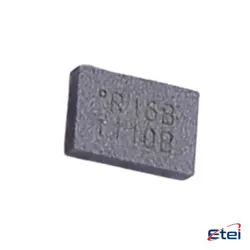
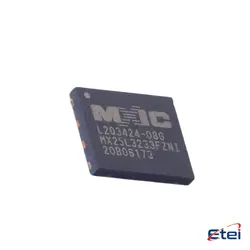
Abbildungen dienen nur als Referenz
PIC18F2520-I/SO
+StücklisteIC MCU 8BIT 32KB FLASH 28SOIC
-
HerstellerMikrochip-Technologie
-
Herstellerteil #PIC18F2520-I/SO
-
Datenblatt PIC18F2520-I/SO DataSheet
-
Paket SOIC-28
-
Auf Lager7442
365 Tage Qualitätsgarantie
7*24 Stunden-Servicegarantie
90-Tage Kundendienstgarantie
Originalproduktgarantie
Spezifikationen
| Attribut | Wert |
| Package | Tube |
| Series | PIC® 18F |
| ProductStatus | Active |
| CoreProcessor | PIC |
| CoreSize | 8-Bit |
| Speed | 40MHz |
| Connectivity | I²C, SPI, UART/USART |
| Peripherals | Brown-out Detect/Reset, HLVD, POR, PWM, WDT |
| NumberofI/O | 25 |
| ProgramMemorySize | 32KB (16K x 16) |
| ProgramMemoryType | FLASH |
| EEPROMSize | 256 x 8 |
| RAMSize | 1.5K x 8 |
| Voltage-Supply(Vcc/Vdd) | 4.2V ~ 5.5V |
| DataConverters | A/D 10x10b |
| OscillatorType | Internal |
| OperatingTemperature | -40°C ~ 85°C (TA) |
| MountingType | Surface Mount |
| Package/Case | 28-SOIC (0.295, 7.50mm Width) |
Übersicht
Description
- Core: 8-bit PIC architecture with 32 KB of Flash memory, 1.5 KB of RAM, and 256 bytes of EEPROM.
- Performance: Operates at speeds up to 40 MHz, allowing for efficient processing.
- Peripherals: Includes three timers/counters, an enhanced capture/compare/PWM (ECCP) module, and a 10-bit Analog-to-Digital Converter (ADC) with up to 13 channels.
- Communication Interfaces: Supports standard communication protocols such as I2C, SPI, and enhanced USART for serial communication.
- Operating Voltage: Typically operates from 2.0V to 5.5V, making it versatile for different power supply levels.
- Packaging: The 'I/SO' designation refers to its industrial temperature range and SOIC packaging.
The PIC18F2520 is ideal for embedded systems requiring robust performance and low power consumption. It is often used in consumer electronics, automotive, industrial control, and communication devices.
Equivalent
1. Atmel ATmega328 - Widely used in Arduino boards with similar features.
2. NXP LPC1114 - ARM Cortex-M0 based microcontroller.
3. STMicroelectronics STM32F030 - ARM Cortex-M0 based MCU.
These alternatives may differ in architecture and peripherals, so it's important to verify specific requirements and compatibility for your application.
Features
The microcontroller supports advanced communication protocols with one Enhanced Universal Synchronous Asynchronous Receiver Transmitter (EUSART), one Master Synchronous Serial Port (MSSP) supporting both SPI and I^2C modes, and one Capture/Compare/PWM (CCP) module. It also provides 10-bit Analog-to-Digital Converter (ADC) with up to 10 channels. Additional features include a two-stage Watchdog Timer, programmable brown-out reset, and an In-Circuit Serial Programming (ICSP) capability for easy development and debugging. The SO suffix indicates the device comes in a Small Outline (SO) package, suitable for space-constrained applications.
Pinout
- Pin Count: 28 pins
- Architecture: 8-bit
- Operating Frequency: Up to 40 MHz
- Program Memory: 32 KB Flash
- Data Memory: 1536 Bytes RAM
- EEPROM: 256 Bytes
Key Pin Functions:
- I/O Pins: Configurable digital input/output pins.
- Analog Inputs: Includes analog-to-digital converter (ADC) inputs.
- PWM Outputs: Supports pulse-width modulation.
- Communication Interfaces: Supports SPI, I2C, and USART for serial communications.
- Interrupts: External interrupts for responsive control.
- Timers/Counters: Several 8-bit and 16-bit timers.
This microcontroller is used in various applications requiring reliable and efficient embedded systems, offering a good balance of processing power and peripheral features.
Manufacturer
Application
1. Embedded Systems: Ideal for general-purpose embedded applications requiring low power and efficient processing.
2. Automotive: Used in control systems due to its reliability and extended temperature range.
3. Consumer Electronics: Powers devices like remote controls and appliances.
4. Industrial Automation: Suitable for control and automation tasks in factories.
5. IoT Devices: Used in IoT applications for efficient data processing and connectivity.
6. Robotics: Provides control for robotic systems and sensors.
7. Communication Systems: Employed in systems requiring serial communication, like modems and network interfaces.
These applications leverage its 10-bit ADC, Flash memory, and flexible I/O options.