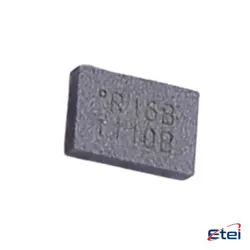
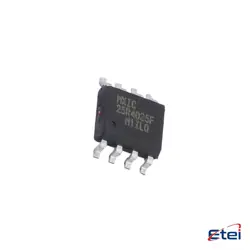
Abbildungen dienen nur als Referenz
RMBA19500
+StücklisteIC AMP CDMA 1.93-1.99GHZ 12SMD
-
HerstellerOnsemi
-
Herstellerteil #RMBA19500
-
Datenblatt RMBA19500 DataSheet
-
Paket 12-SMD Module
-
Auf Lager3594
365 Tage Qualitätsgarantie
7*24 Stunden-Servicegarantie
90-Tage Kundendienstgarantie
Originalproduktgarantie
Spezifikationen
| Attribut | Wert |
| Supplier | onsemi |
| Package / Case | Tape & Reel (TR) |
| Part Status | Obsolete |
| Frequency | 1.93GHz ~ 1.99GHz |
| Gain | 30dB |
| Noise Figure | 6dB |
| RF Type | CDMA, PCS |
| Voltage - Supply | 7V |
| Supply Current | 180mA |
| Mounting Type | Surface Mount |
Übersicht
Description
The course might also introduce students to strategic thinking and decision-making skills necessary for effective leadership in business environments. Students can expect a combination of lectures, case studies, group discussions, and projects to facilitate learning. The emphasis is usually on understanding the core business concepts and applying them to real-world scenarios.
If you are referring to a specific institution's course, it's best to consult the university's official course catalog or website for detailed information, as course content and focus can vary by institution.
Equivalent
Features
1. Cell Monitoring: It provides real-time monitoring of individual cell voltages to ensure balanced charging and discharging, enhancing battery life and performance.
2. Temperature Management: The system includes temperature sensors to monitor battery temperature, preventing overheating and ensuring optimal operating conditions.
3. State of Charge (SoC) and State of Health (SoH) Estimation: The BMS accurately calculates the battery's charge level and health status, providing critical data for efficient energy management.
4. Protection Features: It offers over-voltage, under-voltage, over-current, and short-circuit protection, safeguarding the battery and connected devices.
5. Communication Interface: The system supports various communication protocols such as CAN, I2C, or UART, facilitating integration with other systems and devices.
6. Modular Design: Its modular architecture allows easy scalability and customization to meet specific application requirements.
These features collectively enhance the safety, efficiency, and longevity of lithium-ion battery systems.
Pinout
1. Pin 1 (Input): This is where the RF input signal is supplied to the amplifier.
2. Pin 2 (Ground): This pin is connected to the ground and is often tied to the metal back of the device for heat dissipation.
3. Pin 3 (Output/Power Supply): This pin serves a dual purpose. It is used both as the RF output and for supplying DC power to the amplifier.
The RMBA19500 is used for amplification in various RF applications due to its broadband capabilities, low noise, and high linearity. Always refer to the manufacturer's specific datasheet for precise details and pin configuration, as they may vary with different versions or suppliers.