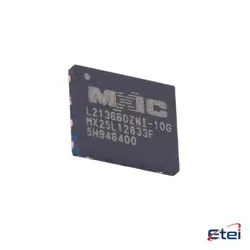
Abbildungen dienen nur als Referenz
SI4438-B1C-FMR
+StücklisteIC RF TXRX ISM<1GHZ 20QFN
-
HerstellerSilicon Labs
-
Herstellerteil #SI4438-B1C-FMR
-
Datenblatt SI4438-B1C-FMR DataSheet
-
Auf Lager6697
365 Tage Qualitätsgarantie
7*24 Stunden-Servicegarantie
90-Tage Kundendienstgarantie
Originalproduktgarantie
Spezifikationen
| Attribut | Wert |
| Part Status | Not For New Designs |
| Base Product Number | SI4438 |
| Digi Key Programmable | Not Verified |
| Type | TxRx Only |
| RF Family / Standard | General ISM < 1GHz |
| Modulation | FSK, GFSK, GMSK, OOK |
| Frequency | 425MHz ~ 525MHz |
| Data Rate (Max) | 500kbps |
| Power - Output | 20dBm (Max) |
| Sensitivity | -124dBm |
| Serial Interfaces | SPI |
| Voltage - Supply | 1.8V ~ 3.6V |
| Current - Receiving | 14mA |
| Current - Transmitting | 75mA |
| Operating Temperature | -40°C ~ 85°C |
| Mounting Type | Surface Mount |
| Package / Case | 20-VFQFN Exposed Pad |
| Supplier Device Package | 20-QFN (4x4) |
| Packaging | Cut Tape (CT), Tape & Reel (TR) |
| GPIO | 4 |
Übersicht
Description
Key features of the SI4438-B1C-FMR include its low power consumption, making it ideal for battery-operated devices, and its high level of integration, reducing the need for external components and simplifying design. It includes an onboard regulator, temperature sensor, and packet handling capabilities, enhancing its ease of use and functionality. Additionally, the device supports various modulation schemes such as FSK, GFSK, and OOK.
Overall, the SI4438-B1C-FMR is suitable for applications requiring reliable, long-range wireless communication, such as industrial control, home automation, and remote monitoring systems.
Equivalent
1. Semtech SX1276/77/78/79 - LoRa-based transceivers with similar frequency ranges.
2. Texas Instruments CC1101 - Sub-1 GHz transceiver with comparable performance.
3. Nordic Semiconductor nRF905 - Multiband RF transceiver for similar applications.
4. HopeRF RFM69 - ISM band transceiver module with similar specs.
These alternatives vary in features, so it's important to compare specific requirements.
Features
1. Frequency Range: Operates in the 425-525 MHz range, suitable for various regional standards.
2. Modulation: Supports multiple modulation schemes such as FSK, GFSK, and OOK, providing flexibility for different applications.
3. Data Rates: Offers programmable data rates up to 500 kbps, allowing for efficient data transmission.
4. Output Power: Delivers an adjustable output power up to +20 dBm, ensuring robust signal coverage.
5. Sensitivity: High receiver sensitivity down to -121 dBm, enhancing signal detection capabilities even in low-signal environments.
6. Low Power Consumption: Designed for low power usage, extending battery life in portable applications.
7. Built-in Features: Includes a built-in packet handler, FIFO, and AES-128 encryption for secure communication and simplified data management.
8. Interface: SPI interface for easy integration with microcontrollers and other devices.
9. Applications: Suitable for remote control, home automation, industrial monitoring, and more due to its reliable wireless communication capabilities.
These features make the SI4438-B1C-FMR versatile and efficient for various wireless transmission needs.
Pinout
The primary function of the SI4438-B1C-FMR is to provide a highly integrated, low-power, multi-band radio transceiver solution. It supports digital modulation schemes such as FSK, GFSK, and OOK, and operates in the sub-GHz frequency bands, making it suitable for use in applications like remote controls, security systems, and sensor networks.
The pin configuration includes connections for power supply, RF input/output, digital interface (SPI), and various control and configuration settings. Note that the exact pin assignment details should be verified with the official datasheet provided by Silicon Labs or through their website for accurate design implementation in any application.
Manufacturer
Application
1. Remote Control Systems: Facilitating wireless communication for remote-controlled devices.
2. Home Automation: Enabling smart home devices to communicate wirelessly.
3. Industrial Monitoring: Supporting wireless data transmission in industrial settings.
4. Security Systems: Used in wireless alarm and surveillance systems.
5. Wireless Sensor Networks: Integrating into sensor nodes for data collection and transmission.
6. Telemetry Applications: Transmitting data over distances for monitoring and control.
7. IoT Devices: Connecting various Internet of Things devices for seamless communication.
Its robust performance in sub-GHz frequencies makes it suitable for long-range communication in diverse environments.