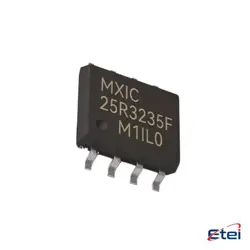
Abbildungen dienen nur als Referenz
SN74LVC16245ADGVR
+StücklisteIC TXRX NON-INVERT 3.6V 48-TVSOP
-
HerstellerTexas Instruments
-
Herstellerteil #SN74LVC16245ADGVR
-
Datenblatt SN74LVC16245ADGVR DataSheet
-
Auf Lager8463
365 Tage Qualitätsgarantie
7*24 Stunden-Servicegarantie
90-Tage Kundendienstgarantie
Originalproduktgarantie
Spezifikationen
| Attribut | Wert |
| Series | 74LVC |
| Part Status | Active |
| Base Product Number | 74LVC16245 |
| Logic Type | Transceiver, Non-Inverting |
| Number of Elements | 2 |
| Number of Bits per Element | 8 |
| Output Type | 3-State |
| Current - Output High, Low | 24mA, 24mA |
| Voltage - Supply | 1.65V ~ 3.6V |
| Operating Temperature | -40°C ~ 125°C (TA) |
| Mounting Type | Surface Mount |
| Package / Case | 48-TFSOP (0.173", 4.40mm Width) |
| Supplier Device Package | 48-TVSOP |
| Packaging | Cut Tape (CT), Tape & Reel (TR) |
Übersicht
Description
Key features include:
- High-speed operation with low power consumption.
- 3-state outputs for bus-oriented applications.
- Supports mixed-mode voltage operation on all ports.
- Overvoltage tolerant inputs, allowing for interfacing with 5V systems.
The SN74LVC16245ADGVR is commonly used in applications like data communication systems, memory interfacing, and microprocessor systems where efficient and robust data transfer is required. It is packaged in a TSSOP-48, which provides a compact footprint ideal for space-constrained designs.
Equivalent
1. SN74LVT16245 - Texas Instruments: Similar voltage range and functionality.
2. 74ALVC16245 - Nexperia: Offers low-voltage compatibility.
3. 74HC16245 - Nexperia/ON Semiconductor: High-speed CMOS alternative.
4. MC74LCX16245 - ON Semiconductor: Low-voltage CMOS variant.
Ensure voltage levels, pin compatibility, and other specifications match for your application.
Features
1. Voltage Range: Operates with a supply voltage from 1.65 V to 3.6 V, making it suitable for both 3.3 V and 5 V systems.
2. Bidirectional Data Flow: Supports direction control, allowing data transmission in both A-to-B and B-to-A directions.
3. High-Speed Operation: Provides high-speed data transfer capabilities, with typical data rates of 100 Mbps.
4. Low Power Consumption: Designed for low power consumption, featuring a partial power-down mode to conserve energy.
5. 3-State Outputs: Features three-state outputs for bus-oriented applications, allowing for multiplexed data communication.
6. Latch-Up Performance: Designed to handle up to 250 mA under latch-up conditions, enhancing reliability.
7. ESD Protection: Provides electrostatic discharge protection exceeding 2000 V per the JESD 22 standard.
8. Compact Package: Available in a space-saving TSSOP package, suitable for applications with limited PCB space.
These features make the SN74LVC16245ADGVR ideal for applications requiring efficient data management across multiple bus systems.
Pinout
The device comes in a TSSOP-48 package, which means it has 48 pins. Key functions of the pins include:
- Data I/O pins (A1-A16 and B1-B16): These are the input/output pins for the two buses (A and B).
- DIR (Direction Control): Determines the direction of data flow. When DIR is high, data is transferred from A to B; when DIR is low, data is transferred from B to A.
- OE (Output Enable): When low, the outputs are enabled; when high, the outputs are in a high-impedance state, effectively disconnecting the buses.
This device is widely used in various applications, including memory interfacing and data buffering, due to its flexibility and efficient design.
Manufacturer
Application
1. Data Communication Systems: Used for buffering and transferring data between different system components.
2. Memory and Microprocessor Interfaces: Facilitates communication between CPUs and peripheral devices.
3. Industrial and Consumer Electronics: Suitable for use in industrial equipment, smart home devices, and other consumer electronics requiring efficient data transfer.
4. Embedded Systems: Acts as an interface in embedded applications to bridge different logic levels.
5. Automotive Electronics: Enhances communication within automotive control units.
These applications benefit from its low-voltage operation, bidirectional data flow, and high drive capability.