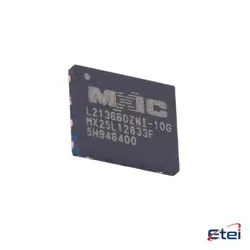
Abbildungen dienen nur als Referenz
STM32F100VET6B
+StücklisteIC MCU 32BIT 512KB FLASH 100LQFP
-
HerstellerSTMikroelektronik
-
Herstellerteil #STM32F100VET6B
-
Datenblatt STM32F100VET6B DataSheet
-
Auf Lager2676
365 Tage Qualitätsgarantie
7*24 Stunden-Servicegarantie
90-Tage Kundendienstgarantie
Originalproduktgarantie
Spezifikationen
| Attribut | Wert |
| Series | STM32F1 |
| Part Status | Active |
| Base Product Number | STM32F100 |
| DigiKey Programmable | Not Verified |
| Core Processor | ARM® Cortex®-M3 |
| Core Size | 32-Bit |
| Speed | 24MHz |
| Connectivity | I2C, IrDA, LINbus, SPI, UART/USART |
| Peripherals | DMA, PDR, POR, PVD, PWM, Temp Sensor, WDT |
| Number of I/O | 80 |
| Program Memory Size | 512KB (512K x 8) |
| Program Memory Type | FLASH |
| RAM Size | 32K x 8 |
| Voltage - Supply (Vcc/Vdd) | 2V ~ 3.6V |
| Data Converters | A/D 16x12b; D/A 2x12b |
| Oscillator Type | Internal |
| Operating Temperature | -40°C ~ 85°C (TA) |
| Mounting Type | Surface Mount |
| Supplier Device Package | 100-LQFP (14x14) |
| Package | 100-LQFP |
| Packaging | Tray |
Übersicht
Description
Key features of the STM32F100VET6B include:
1. Core and Performance: It features a 32-bit ARM Cortex-M3 CPU, operating at a frequency of up to 24 MHz, offering a balance of performance and efficiency.
2. Memory: The microcontroller includes 512 KB of Flash memory and 64 KB of SRAM, allowing for the storage of code and data.
3. Peripherals: It supports a range of peripherals such as timers, ADCs, DACs, and communication interfaces like UART, I2C, SPI, and CAN.
4. Operating Voltage: It operates at a voltage range of 2.0 to 3.6 volts, suitable for battery-powered applications.
5. Package: Available in an LQFP100 package, making it suitable for various form-factor requirements.
6. Development Support: Supported by the STM32 development ecosystem, including STM32Cube software and development boards, facilitating easier prototyping and development.
This microcontroller is suitable for applications in industrial controls, medical equipment, and consumer electronics.
Equivalent
Features
- Flash Memory: 512 KB for code storage.
- RAM: 64 KB SRAM for data handling.
- Peripherals: Includes multiple I/O ports, timers, USART, SPI, I2C, CAN, and ADCs for interfacing.
- Timers: 16-bit and 32-bit timers for precise time measurement.
- ADC: 12-bit Analog-to-Digital Converter with up to 16 channels.
- Communication Interfaces: Supports USART, SPI, I2C, and CAN for flexible connectivity.
- Operating Voltage: 2.0 to 3.6 V, suitable for low-power applications.
- Temperature Range: Typically -40°C to +85°C, making it suitable for industrial environments.
- Package: LQFP100, which includes 100 pins for robust connections.
- Low-Power Modes: Features various modes to reduce power consumption.
This microcontroller is part of the STM32F1 series, known for its balance of performance, power efficiency, and peripheral integration.
Pinout
Key functionalities include:
- CPU: ARM Cortex-M3 core running at a maximum frequency of 24 MHz.
- Memory: Up to 512 KB of Flash memory and 48 KB of SRAM.
- GPIOs: Multiple general-purpose input/output pins.
- Timers: Multiple timers for advanced control capabilities.
- Communication Interfaces: Includes USART, SPI, and I2C interfaces for connecting with other devices.
- Analog: Features ADCs for analog-to-digital conversion.
- Power Supply: Operates at 2.0 to 3.6 V.
The STM32F100VET6B is suitable for a wide range of applications including industrial control, consumer electronics, and many others due to its balance of performance, power efficiency, and cost.
Manufacturer
STMicroelectronics operates in a variety of markets, including industrial, automotive, personal electronics, and communication equipment. It is headquartered in Geneva, Switzerland, and has a strong presence in Europe as well as operations across the Americas and Asia. The company is noted for its innovation in semiconductor technology and its commitment to sustainability and energy efficiency in its products.
Application
1. Consumer Electronics: Used in home appliances and personal gadgets.
2. Industrial Automation: Plays a role in control systems, motor drives, and monitoring solutions.
3. Automotive: Suitable for non-critical vehicle systems, such as infotainment and interior controls.
4. Medical Devices: Utilized in portable medical equipment for monitoring and diagnostics.
5. Communication Systems: Supports protocols and interfaces for data exchange.
Its versatile IOs and peripheral options make it suitable for various embedded applications.