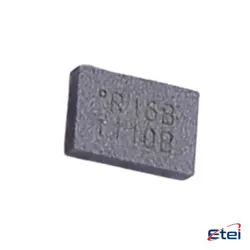
Abbildungen dienen nur als Referenz
STM32F103RCY6TR
+StücklisteIC MCU 32BIT 256KB FLASH 64WLCSP
-
HerstellerSTMikroelektronik
-
Herstellerteil #STM32F103RCY6TR
-
Datenblatt STM32F103RCY6TR DataSheet
-
Paket UFBGA-64
-
Auf Lager5105
365 Tage Qualitätsgarantie
7*24 Stunden-Servicegarantie
90-Tage Kundendienstgarantie
Originalproduktgarantie
Spezifikationen
| Attribut | Wert |
| Package | Tape & Reel (TR),Cut Tape (CT) |
| Series | STM32F1 |
| ProductStatus | Active |
| CoreProcessor | ARM® Cortex®-M3 |
| CoreSize | 32-Bit Single-Core |
| Speed | 72MHz |
| Connectivity | CANbus, I²C, IrDA, LINbus, SPI, UART/USART, USB |
| Peripherals | DMA, Motor Control PWM, PDR, POR, PVD, PWM, Temp Sensor, WDT |
| NumberofI/O | 51 |
| ProgramMemorySize | 256KB (256K x 8) |
| ProgramMemoryType | FLASH |
| RAMSize | 48K x 8 |
| Voltage-Supply(Vcc/Vdd) | 2V ~ 3.6V |
| DataConverters | A/D 16x12b; D/A 2x12b |
| OscillatorType | Internal |
| OperatingTemperature | -40°C ~ 85°C (TA) |
| MountingType | Surface Mount |
| Package/Case | 64-UFBGA, WLCSP |
Übersicht
Description
The STM32F103RCY6TR is equipped with a range of peripherals, including multiple USARTs, SPI, I2C, and CAN interfaces, along with ADCs and timers, making it versatile for various applications. It supports advanced connectivity and real-time control, making it suitable for industrial automation, consumer electronics, and communication systems.
Housed in a compact LQFP-64 package, the STM32F103RCY6TR is ideal for space-constrained designs. Its development is supported by STM32Cube software and tools, offering an integrated environment for application development. This microcontroller strikes a balance between performance, cost, and power efficiency, making it a popular choice for embedded systems designers.
Equivalent
1. NXP LPC1768 - Similar ARM Cortex-M3 microcontroller.
2. Microchip ATSAM3X8E - ARM Cortex-M3 based, similar features.
3. TI TM4C123GH6PM - ARM Cortex-M4 with similar specifications.
4. Silicon Labs EFM32GG230 - Another ARM Cortex-M3 microcontroller.
These alternatives offer comparable processing power and peripheral support. Always check specific requirements to ensure compatibility.
Features
1. Core: ARM Cortex-M3 32-bit RISC core, operating at up to 72 MHz.
2. Memory: 256 KB of Flash memory and 48 KB of SRAM.
3. Peripherals:
- 3 x USART interfaces
- 2 x SPI interfaces
- 2 x I2C interfaces
- 1 x CAN interface
- 1 x USB 2.0 full-speed interface
4. Timers: 4 general-purpose 16-bit timers, with PWM support, and 2 watchdog timers.
5. ADC/DAC: 12-bit ADC with up to 16 channels.
6. GPIOs: 51 I/O pins.
7. Operating Voltage: 2.0V to 3.6V.
8. Temperature Range: -40°C to 85°C.
9. Packages: LQFP-64 and others.
10. Low-power modes: Sleep, Stop, and Standby for power efficiency.
These features make it suitable for a wide range of applications in consumer electronics, industrial controls, and communication systems.
Pinout
Key features and functions of the STM32F103RCY6TR include:
- Core: ARM Cortex-M3, running at up to 72 MHz.
- Flash Memory: 256 KB.
- SRAM: 48 KB.
- GPIOs: Multiple general-purpose I/O pins for interfacing.
- Timers: Advanced-control timers, general-purpose timers, and basic timers.
- Communication Interfaces: USARTs, SPI, I2C, CAN, and USB.
- Analog Features: 12-bit ADCs, DACs.
- Power Supply: 2.0 to 3.6 V operating voltage.
- Operating Temperature Range: -40°C to +85°C.
This microcontroller is often used in applications requiring a balance of performance and power consumption, including industrial automation, consumer electronics, and more.
Manufacturer
Application
1. Industrial Automation: Used in control systems, PLCs, and motor control applications.
2. Consumer Electronics: Powers devices like home appliances, audio systems, and gaming peripherals.
3. Automotive: Utilized in dashboard instruments, infotainment systems, and sensor modules.
4. Healthcare: Incorporated into medical devices for patient monitoring and diagnostics.
5. IoT Devices: Acts as a core processor in smart sensors and IoT gateways.
6. Embedded Systems: Supports custom hardware projects and prototyping.
These applications benefit from its efficient processing, low power consumption, and wide range of peripheral interfaces.