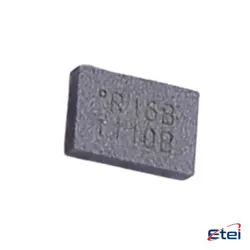
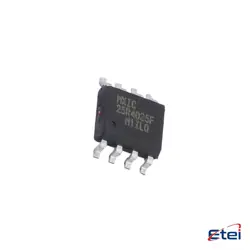
Abbildungen dienen nur als Referenz
STM32F723ZET6
+StücklisteIC MCU 32BIT 512KB FLASH 144LQFP
-
HerstellerSTMikroelektronik
-
Herstellerteil #STM32F723ZET6
-
Datenblatt STM32F723ZET6 DataSheet
-
Paket LQFP-144
-
Auf Lager1457
365 Tage Qualitätsgarantie
7*24 Stunden-Servicegarantie
90-Tage Kundendienstgarantie
Originalproduktgarantie
Spezifikationen
| Attribut | Wert |
| Package | Tray |
| Series | STM32F7 |
| ProductStatus | Active |
| CoreProcessor | ARM® Cortex®-M7 |
| CoreSize | 32-Bit Single-Core |
| Speed | 216MHz |
| Connectivity | CANbus, EBI/EMI, I²C, IrDA, LINbus, MMC/SD, QSPI, SAI, SPI, UART/USART, USB |
| Peripherals | Brown-out Detect/Reset, DMA, I²S, POR, PWM, WDT |
| NumberofI/O | 112 |
| ProgramMemorySize | 512KB (512K x 8) |
| ProgramMemoryType | FLASH |
| RAMSize | 256K x 8 |
| Voltage-Supply(Vcc/Vdd) | 1.7V ~ 3.6V |
| DataConverters | A/D 24x12b; D/A 2x12b |
| OscillatorType | Internal |
| OperatingTemperature | -40°C ~ 85°C (TA) |
| MountingType | Surface Mount |
| Package/Case | 144-LQFP |
Übersicht
Description
Key features of the STM32F723ZET6 include a 32-bit core running at up to 216 MHz, integrated floating-point unit (FPU), and DSP instructions. It comes with 512 KB of Flash memory and 256 KB of SRAM, supporting extensive program and data storage. The microcontroller offers a range of connectivity options, including multiple USARTs, SPIs, I2Cs, and an Ethernet MAC for networking capabilities.
Additional peripherals include USB OTG, CAN, and a digital camera interface, making it versatile for multimedia and communication applications. The device supports advanced control applications with a motor control timer and analog interfaces like ADCs and DACs. Its LQFP-144 package offers sufficient I/O pins for diverse application needs. Ideal for embedded systems, it is used in applications like industrial control, consumer electronics, and IoT devices.
Equivalent
1. NXP i.MX RT1050 – Also a Cortex-M7 based microcontroller with similar performance.
2. Microchip ATSAME70Q21 – A Cortex-M7 microcontroller offering comparable features.
3. Renesas RA6M4 – Another Cortex-M33 based microcontroller for similar applications.
4. Texas Instruments TMS570LC4357 – A Cortex-R5 based microcontroller for higher safety requirements.
These alternatives are selected based on core performance, peripheral set, and application needs.
Features
1. Connectivity: Ethernet, USB 2.0 OTG (full-speed and high-speed), CAN, and USART/UARTs.
2. Analog: Three 12-bit ADCs, two 12-bit DACs, and a low-power RTC.
3. Timers: 17 timers, including general-purpose, advanced control, and basic timers.
4. Digital Interfaces: I2C, SPI, SDIO, and I2S.
5. Security: AES hardware encryption, true random number generator (TRNG).
6. DMA: 16-channel DMA controller for efficient data handling.
7. Low Power: Multiple low-power modes and a power-saving approach for flexible battery-operated designs.
Its package is LQFP144, making it suitable for applications in industrial control, consumer electronics, and communication devices, where performance and connectivity are crucial.
Pinout
Key features and functions include:
- Up to 512 KB of Flash memory and 256 KB of SRAM.
- Rich set of peripherals including USB On-The-Go, Ethernet, and camera interface.
- Multiple timers, including general-purpose, basic, and advanced-control timers.
- Analog peripherals like 3 ADCs (Analog-to-Digital Converters), 2 DACs (Digital-to-Analog Converters).
- Communication interfaces such as USART, SPI, I2C, CAN, and more.
- Security features like a hardware cryptographic accelerator.
- Extensive GPIOs for interfacing with external devices.
This microcontroller is suitable for applications requiring high processing performance, such as industrial control, consumer electronics, and communications.
Manufacturer
Application
1. Industrial Automation: For control and monitoring systems, thanks to its real-time performance and communication interfaces.
2. Consumer Electronics: In audio processing and media devices, benefiting from its DSP capabilities.
3. IoT Devices: For edge computing and connectivity solutions.
4. Medical Devices: Used in equipment requiring precision and reliability.
5. Home Appliances: For smart control systems.
6. Robotics: In control systems and sensor interfacing.
7. Automotive: For infotainment systems and body control modules.
These applications leverage the chip's processing power, connectivity options, and peripheral integration.