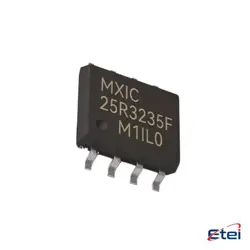
Abbildungen dienen nur als Referenz
STM32F745IEK6
+StücklisteIC MCU 32BIT 512KB FLSH 176UFBGA
-
HerstellerSTMikroelektronik
-
Herstellerteil #STM32F745IEK6
-
Datenblatt STM32F745IEK6 DataSheet
-
Paket UFBGA-176
-
Auf Lager2895
365 Tage Qualitätsgarantie
7*24 Stunden-Servicegarantie
90-Tage Kundendienstgarantie
Originalproduktgarantie
Spezifikationen
| Attribut | Wert |
| Package | Tray |
| Series | STM32F7 |
| ProductStatus | Active |
| CoreProcessor | ARM® Cortex®-M7 |
| CoreSize | 32-Bit Single-Core |
| Speed | 216MHz |
| Connectivity | CANbus, EBI/EMI, Ethernet, I²C, IrDA, LINbus, SAI, SD, SPDIF-Rx, SPI, UART/USART, USB OTG |
| Peripherals | Brown-out Detect/Reset, DMA, I²S, POR, PWM, WDT |
| NumberofI/O | 140 |
| ProgramMemorySize | 512KB (512K x 8) |
| ProgramMemoryType | FLASH |
| RAMSize | 320K x 8 |
| Voltage-Supply(Vcc/Vdd) | 1.7V ~ 3.6V |
| DataConverters | A/D 24x12b; D/A 2x12b |
| OscillatorType | Internal |
| OperatingTemperature | -40°C ~ 85°C (TA) |
| MountingType | Surface Mount |
| Package/Case | 201-UFBGA |
Übersicht
Description
Key features include 512 KB of Flash memory and 256 KB of SRAM, which support complex applications and data processing. It offers a wide range of peripherals such as USB, Ethernet, and CAN interfaces, alongside numerous GPIOs, timers, and ADCs for versatile connectivity and control options.
The STM32F745IEK6 is designed for demanding applications requiring high computational power and real-time processing, such as industrial automation, consumer electronics, and IoT devices. It supports advanced graphics processing with its Chrom-ART Accelerator™ and has capabilities for enhanced audio performance. Its power management features make it suitable for energy-efficient applications.
Developers can leverage STM32Cube software tools and libraries to streamline development, offering a comprehensive ecosystem for rapid prototyping and deployment.
Equivalent
1. NXP i.MX RT1050 - Offers similar high-performance capabilities suitable for real-time applications.
2. Microchip ATSAME70Q21 - A 32-bit ARM Cortex-M7 microcontroller with comparable features.
3. Texas Instruments TM4C129XNCZAD - Another ARM Cortex-M4-based microcontroller, offering high processing power and connectivity.
These alternatives provide similar processing power, peripherals, and memory configurations.
Features
1. Core: ARM Cortex-M7 32-bit RISC core, operating at up to 216 MHz.
2. Memory: 512 KB Flash memory and 256 KB SRAM.
3. Performance: DSP instructions, FPU, and L1 cache for both instructions and data.
4. Connectivity: Multiple interfaces including USART, UART, I2C, SPI, CAN, and USB OTG (Full Speed and High Speed).
5. Timers: 16-bit and 32-bit timers, including general-purpose, basic, and advanced-control timers.
6. Analog: 3x 12-bit ADCs, 2x 12-bit DACs, and temperature sensor.
7. Digital: GPIOs with external interrupt capability.
8. Security: JTAG and SWD debugging support.
9. Power Management: Low-power modes for energy efficiency.
10. Operating Temperature: -40°C to +85°C.
This microcontroller is suitable for applications requiring high processing power, real-time performance, and extensive connectivity, such as industrial control, medical equipment, and consumer electronics.
Pinout
Key features include:
- ARM Cortex-M7 core operating at up to 216 MHz.
- 1 MB of Flash memory and 320 KB of SRAM.
- A rich set of I/O capabilities, including multiple GPIOs, USARTs, I2C, SPI, CAN, and USB interfaces.
- Advanced peripherals like ADCs, DACs, timers, and PWM.
- Support for Ethernet, camera interface, and LCD-TFT display controllers.
- On-chip security features and cryptographic acceleration.
It's important to refer to the official datasheet or reference manual from STMicroelectronics for detailed pin functions and configurations, as they provide comprehensive information on electrical characteristics and peripheral mapping.
Manufacturer
Application
1. Industrial Automation: Used in PLCs, motor control, and industrial gateways for precise control and connectivity.
2. Consumer Electronics: Powers smart home devices, wearables, and IoT gadgets requiring efficient processing and connectivity.
3. Automotive: Implements in infotainment systems, advanced driver-assistance systems (ADAS), and electronic control units (ECUs).
4. Medical Devices: Supports portable medical instruments and diagnostic equipment with real-time processing needs.
5. Communication Systems: Facilitates routers, modems, and other networking equipment for reliable data transfer.
6. Aerospace and Defense: Utilized in avionics and tactical communication systems requiring robust performance.