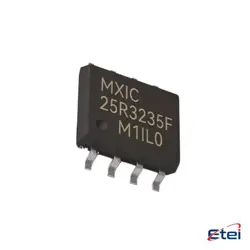
Abbildungen dienen nur als Referenz
TLC274CD
+StücklisteIC OPAMP GP 4 CIRCUIT 14SOIC
-
HerstellerTexas Instruments
-
Herstellerteil #TLC274CD
-
Paket SSOP-14
-
Auf Lager2688
365 Tage Qualitätsgarantie
7*24 Stunden-Servicegarantie
90-Tage Kundendienstgarantie
Originalproduktgarantie
Spezifikationen
| Attribut | Wert |
| Package / Case | Tube |
| Part Status | Active |
| Amplifier Type | General Purpose |
| Number of Circuits | 4 |
| Slew Rate | 3.6V/µs |
| Gain Bandwidth Product | 2.2 MHz |
| Current - Input Bias | 0.6 pA |
| Voltage - Input Offset | 1.1 mV |
| Supply Current | 2.7mA (x4 Channels) |
| Current - Output / Channel | 30 mA |
| Voltage - Supply Span(Min) | 3 V |
| Voltage - Supply Span(Max) | 16 V |
| Operating Temperature | 0°C ~ 70°C |
| Mounting Type | Surface Mount |
Übersicht
Description
Key features include a bandwidth of approximately 1.7 MHz and a slew rate of 3.6 V/µs, enabling it to handle moderate-speed applications effectively. The TLC274CD is also known for its low power consumption, with a quiescent current of around 200 µA per amplifier, making it ideal for battery-powered or energy-sensitive designs. It is often used in applications such as audio amplification, active filters, and sensor interfacing. The device is packaged in a standard SOIC-14 form factor, which facilitates easy integration into various electronic systems.
Equivalent
1. LM324 series from Texas Instruments and other manufacturers.
2. TL074 series from Texas Instruments.
3. MC33074 series from ON Semiconductor.
4. NJM2904 series from NJR.
5. LT1014 from Analog Devices.
These alternatives share similar specifications, though you should check the datasheets for exact compatibility with your application's requirements.
Features
1. Low Power Consumption: It is designed for battery-powered applications, ensuring efficient energy use.
2. Wide Supply Voltage Range: Operates from ±1.5V to ±16V, making it versatile for various applications.
3. Low Noise: Ensures high-quality performance in signal processing.
4. Rail-to-Rail Output: Provides a wide dynamic range and improved performance.
5. Wide Common-Mode Range: Extends to the negative supply, enhancing signal handling capability.
6. High Input Impedance: Ensures minimal loading of the input signal source.
7. Stable Performance: Unity-gain stable for easy application in various circuit designs.
8. Temperature Range: Operates effectively from 0°C to 70°C, suitable for commercial environments.
9. Package: Available in a standard SOIC-14 package, facilitating easy integration into circuits.
These features make the TLC274CD suitable for applications requiring reliable and efficient operational amplifiers, such as audio processing, sensor signal conditioning, and general-purpose amplification.
Pinout
1. Pin 1 (1OUT): Output of the first op-amp.
2. Pin 2 (1IN-): Inverting input of the first op-amp.
3. Pin 3 (1IN+): Non-inverting input of the first op-amp.
4. Pin 4 (VDD-): Negative power supply (ground in single supply configuration).
5. Pin 5 (2IN+): Non-inverting input of the second op-amp.
6. Pin 6 (2IN-): Inverting input of the second op-amp.
7. Pin 7 (2OUT): Output of the second op-amp.
8. Pin 8 (3OUT): Output of the third op-amp.
9. Pin 9 (3IN-): Inverting input of the third op-amp.
10. Pin 10 (3IN+): Non-inverting input of the third op-amp.
11. Pin 11 (VDD+): Positive power supply.
12. Pin 12 (4IN+): Non-inverting input of the fourth op-amp.
13. Pin 13 (4IN-): Inverting input of the fourth op-amp.
14. Pin 14 (4OUT): Output of the fourth op-amp.
These op-amps are used in various applications like signal conditioning, filtering, and amplification.
Manufacturer
Application
1. Signal Conditioning: Used in sensor signal amplification and filtering.
2. Data Acquisition Systems: Helps in processing signals from multiple input channels.
3. Active Filters: Useful in implementing low-pass, high-pass, band-pass, and band-stop filters.
4. Instrumentation: Employed in precision measurement instruments due to its low noise and high input impedance.
5. Analog Computing: Involved in mathematical operations like addition, subtraction, integration, and differentiation.
6. Audio Processing: Used in audio mixers and preamplifiers.
Its versatility and stability make it suitable for both commercial and industrial electronic applications.