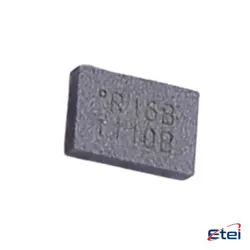
Abbildungen dienen nur als Referenz
TLV9061SQDBVRQ1
+Stückliste-
HerstellerTexas Instruments
-
Herstellerteil #TLV9061SQDBVRQ1
-
Auf Lager6325
365 Tage Qualitätsgarantie
7*24 Stunden-Servicegarantie
90-Tage Kundendienstgarantie
Originalproduktgarantie
Spezifikationen
| Attribut | Wert |
| Package / Case | Tape & Reel (TR),Cut Tape (CT) |
| Series | Automotive, AEC-Q100 |
| Part Status | Active |
| Amplifier Type | CMOS |
| Number of Circuits | 1 |
| Output Type | Rail-to-Rail |
| Slew Rate | 6.5V/µs |
| Gain Bandwidth Product | 10 MHz |
| Current - Input Bias | 5 pA |
| Voltage - Input Offset | 300 µV |
| Supply Current | 538µA |
| Current - Output / Channel | 50 mA |
| Voltage - Supply Span(Min) | 1.8 V |
| Voltage - Supply Span(Max) | 5.5 V |
| Operating Temperature | -40°C ~ 125°C (TA) |
| Mounting Type | Surface Mount |
Übersicht
Description
The TLV9061SQDBVRQ1 is a single general-purpose operational amplifier designed for automotive and industrial applications. It is part of Texas Instruments' TLV9061 series, known for its combination of low power consumption and wide bandwidth. The device operates at a low voltage, typically within a supply range of 1.8 V to 5.5 V, making it suitable for battery-powered applications. With a rail-to-rail input and output, it ensures maximum signal swing. The amplifier features a low quiescent current of around 335 µA and a gain bandwidth product of 10 MHz, providing a good balance between performance and power efficiency.
The TLV9061SQDBVRQ1 is housed in a small SOT-23 package, which is ideal for space-constrained applications. It complies with automotive standards, ensuring high reliability and robustness in harsh environments. Key applications include sensor signal conditioning, active filters, level shifting, and buffering. Its wide temperature range and AEC-Q100 qualification make it an ideal choice for automotive systems, industrial controls, and other applications demanding stringent quality and reliability standards.
The TLV9061SQDBVRQ1 is housed in a small SOT-23 package, which is ideal for space-constrained applications. It complies with automotive standards, ensuring high reliability and robustness in harsh environments. Key applications include sensor signal conditioning, active filters, level shifting, and buffering. Its wide temperature range and AEC-Q100 qualification make it an ideal choice for automotive systems, industrial controls, and other applications demanding stringent quality and reliability standards.
Equivalent
The TLV9061SQDBVRQ1 is a single-channel, low-power, CMOS operational amplifier designed by Texas Instruments. Equivalent products may include:
1. LMV651 from Texas Instruments
2. MCP601 from Microchip Technology
3. TSU101 from STMicroelectronics
4. OPA376 from Texas Instruments
These alternatives should be checked for exact specifications, as operational amplifiers can vary in parameters like voltage range, bandwidth, and package type. Always ensure compatibility with your specific application requirements.
1. LMV651 from Texas Instruments
2. MCP601 from Microchip Technology
3. TSU101 from STMicroelectronics
4. OPA376 from Texas Instruments
These alternatives should be checked for exact specifications, as operational amplifiers can vary in parameters like voltage range, bandwidth, and package type. Always ensure compatibility with your specific application requirements.
Features
The TLV9061SQDBVRQ1 is an automotive-grade operational amplifier from Texas Instruments, designed for high-performance applications. Key features include:
1. Single-Channel: This op-amp features a single-channel configuration, suitable for space-constrained applications.
2. Rail-to-Rail Input/Output: It supports a rail-to-rail input and output, allowing for maximum dynamic range and enhanced versatility in various designs.
3. Low Quiescent Current: The op-amp operates with a low quiescent current, making it energy-efficient and suitable for battery-powered devices.
4. Wide Supply Range: It operates over a wide supply voltage range of 1.8V to 5.5V, providing flexibility in various power supply conditions.
5. High Slew Rate: With a high slew rate, it ensures fast signal processing, which is ideal for high-speed applications.
6. Low Offset Voltage: It features a low offset voltage, enhancing precision in analog signal amplification.
7. Automotive Qualified: The device is AEC-Q100 qualified, ensuring reliability in automotive environments.
8. Small Package: Available in a compact SOT-23 package, facilitating easy integration into space-limited designs.
These features make the TLV9061SQDBVRQ1 suitable for precision amplification in automotive and other demanding electronic systems.
1. Single-Channel: This op-amp features a single-channel configuration, suitable for space-constrained applications.
2. Rail-to-Rail Input/Output: It supports a rail-to-rail input and output, allowing for maximum dynamic range and enhanced versatility in various designs.
3. Low Quiescent Current: The op-amp operates with a low quiescent current, making it energy-efficient and suitable for battery-powered devices.
4. Wide Supply Range: It operates over a wide supply voltage range of 1.8V to 5.5V, providing flexibility in various power supply conditions.
5. High Slew Rate: With a high slew rate, it ensures fast signal processing, which is ideal for high-speed applications.
6. Low Offset Voltage: It features a low offset voltage, enhancing precision in analog signal amplification.
7. Automotive Qualified: The device is AEC-Q100 qualified, ensuring reliability in automotive environments.
8. Small Package: Available in a compact SOT-23 package, facilitating easy integration into space-limited designs.
These features make the TLV9061SQDBVRQ1 suitable for precision amplification in automotive and other demanding electronic systems.
Pinout
The TLV9061SQDBVRQ1 is a single-channel operational amplifier (op-amp) with a 5-pin configuration. It is part of Texas Instruments' TLV906x family, designed for automotive applications. The op-amp is housed in a SOT-23 package, which is compact and suitable for space-constrained designs.
The pin functions are as follows:
- Pin 1 (OUT): This is the output pin where the amplified signal is delivered.
- Pin 2 (V- or GND): This pin serves as the negative power supply or ground.
- Pin 3 (IN+): The non-inverting input, where the signal that needs to be amplified is applied.
- Pin 4 (IN-): The inverting input, which can be used for feedback in various amplifier configurations.
- Pin 5 (V+): This is the positive power supply pin.
The TLV9061SQDBVRQ1 is known for its low power consumption, wide bandwidth, and high slew rate, making it suitable for precision signal processing in automotive and other high-performance applications.
The pin functions are as follows:
- Pin 1 (OUT): This is the output pin where the amplified signal is delivered.
- Pin 2 (V- or GND): This pin serves as the negative power supply or ground.
- Pin 3 (IN+): The non-inverting input, where the signal that needs to be amplified is applied.
- Pin 4 (IN-): The inverting input, which can be used for feedback in various amplifier configurations.
- Pin 5 (V+): This is the positive power supply pin.
The TLV9061SQDBVRQ1 is known for its low power consumption, wide bandwidth, and high slew rate, making it suitable for precision signal processing in automotive and other high-performance applications.
Manufacturer
The TLV9061SQDBVRQ1 is manufactured by Texas Instruments (TI). Texas Instruments is a global semiconductor design and manufacturing company that develops analog and embedded processing chips. TI produces a diverse range of products used in various applications, including industrial, automotive, personal electronics, communications equipment, and enterprise systems. The company is known for its innovations in electronic design and its focus on producing energy-efficient and high-performance products.
Application
The TLV9061SQDBVRQ1 is a high-performance operational amplifier designed for automotive applications. Key application areas include:
1. Automotive Sensing: Used in sensor signal conditioning for vehicle systems like braking, steering, and climate control.
2. Infotainment Systems: Enhancing audio signal processing and noise filtering in car multimedia systems.
3. Powertrain Systems: Contributes to accurate measurements and controls in engine and transmission management.
4. Body Electronics: Supports various electronic control units (ECUs) for lighting, seating, and window functionalities.
5. ADAS (Advanced Driver Assistance Systems): Contributes to the processing of sensor data for systems like collision avoidance and lane-keeping assistance.
Its qualifications for automotive standards make it suitable for environments requiring high reliability.
1. Automotive Sensing: Used in sensor signal conditioning for vehicle systems like braking, steering, and climate control.
2. Infotainment Systems: Enhancing audio signal processing and noise filtering in car multimedia systems.
3. Powertrain Systems: Contributes to accurate measurements and controls in engine and transmission management.
4. Body Electronics: Supports various electronic control units (ECUs) for lighting, seating, and window functionalities.
5. ADAS (Advanced Driver Assistance Systems): Contributes to the processing of sensor data for systems like collision avoidance and lane-keeping assistance.
Its qualifications for automotive standards make it suitable for environments requiring high reliability.
Package
The TLV9061SQDBVRQ1 is packaged in a SOT-23-6 (Small Outline Transistor) package, which is a small and surface-mount type designed for space-efficient applications.