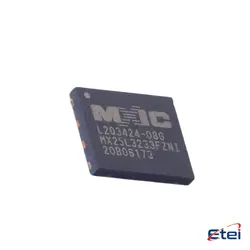
Abbildungen dienen nur als Referenz
TM4C123GH6PMI
+StücklisteIC MCU 32BIT 256KB FLASH 64LQFP
-
HerstellerTexas Instruments
-
Herstellerteil #TM4C123GH6PMI
-
Paket LQFP-64
-
Auf Lager5344
365 Tage Qualitätsgarantie
7*24 Stunden-Servicegarantie
90-Tage Kundendienstgarantie
Originalproduktgarantie
Spezifikationen
| Attribut | Wert |
| Package | Bulk,Tray |
| Series | Tiva™ C |
| ProductStatus | Active |
| CoreProcessor | ARM® Cortex®-M4F |
| CoreSize | 32-Bit Single-Core |
| Speed | 80MHz |
| Connectivity | CANbus, I²C, IrDA, Microwire, QEI, SPI, SSI, UART/USART, USB OTG |
| Peripherals | Brown-out Detect/Reset, DMA, Motion PWM, POR, WDT |
| NumberofI/O | 43 |
| ProgramMemorySize | 256KB (256K x 8) |
| ProgramMemoryType | FLASH |
| EEPROMSize | 2K x 8 |
| RAMSize | 32K x 8 |
| Voltage-Supply(Vcc/Vdd) | 1.08V ~ 3.63V |
| DataConverters | A/D 12x12b |
| OscillatorType | Internal |
| OperatingTemperature | -40°C ~ 85°C (TA) |
| MountingType | Surface Mount |
| Package/Case | 64-LQFP |
Übersicht
Description
Key features include a wide range of connectivity options: USB 2.0, UART, I2C, SPI, and CAN, facilitating versatile communication in various applications. It supports up to 43 GPIO pins for interfacing with external devices. The TM4C123GH6PMI also offers advanced timer capabilities, PWM outputs, and a 12-bit ADC, enhancing its application in motor control, sensor data acquisition, and real-time systems.
The device is supported by Texas Instruments' robust software ecosystem, including the TivaWare library, which simplifies development with pre-written drivers and examples. This makes the TM4C123GH6PMI a popular choice for educational purposes and industrial projects.
Equivalent
1. STMicroelectronics: STM32F103 series
2. Microchip Technology: PIC32MX series
3. NXP Semiconductors: LPC1768
4. Atmel (Microchip): ATSAM3X8E
These alternatives offer similar functionality, including ARM Cortex-M cores, comparable memory, and peripheral sets. Always check specific requirements like pin count and peripherals for suitability.
Features
1. Core: ARM Cortex-M4F, operating at up to 80 MHz.
2. Memory: 256 KB Flash, 32 KB SRAM.
3. Peripherals:
- ADC: Two 12-bit ADC modules with 12 input channels.
- Timers: Six 32-bit/16-bit general-purpose timers.
- GPIO: 43 programmable input/output pins.
- Communication: USB 2.0, UARTs, I2C, SPI, CAN.
4. PWM: Two PWM modules, each with four PWM outputs.
5. Floating Point Unit (FPU): Supports single-precision operations.
6. Debugging: JTAG and SWD interfaces.
7. Operating Voltage: 3.3V.
8. Temperature Range: -40°C to 85°C (industrial).
The TM4C123GH6PMI offers powerful processing capabilities with a wide range of peripherals, making it suitable for embedded applications requiring efficient performance and connectivity.
Pinout
Key functions and features include:
1. Processor Core: ARM Cortex-M4F CPU with floating-point unit.
2. Clock Speed: Up to 80 MHz.
3. Memory: 256 KB of Flash memory, 32 KB of SRAM.
4. GPIO Pins: 43 programmable input/output pins.
5. Timers: Six 32-bit timers and six 64-bit timers.
6. Communication Interfaces:
- 8 UARTs
- 4 SPI
- 4 I2C
- 1 USB (2.0 Full-Speed)
7. Analog: 12-bit ADC with 24 channels.
8. PWM: PWM generator blocks for motor control.
9. Other Features: QEI (Quadrature Encoder Interface), CAN controller, and on-chip temperature sensor.
This microcontroller is widely used in applications such as industrial automation, consumer electronics, and automotive systems due to its rich set of peripherals and processing capabilities.
Manufacturer
Application
1. Embedded Systems: Suitable for developing general-purpose embedded applications.
2. Industrial Automation: Used in control systems, data acquisition, and monitoring.
3. Consumer Electronics: Powers devices like home appliances and personal gadgets.
4. Automotive: Employed in infotainment systems and vehicle control units.
5. IoT Devices: Facilitates connectivity and data processing in IoT applications.
6. Robotics: Controls motors and sensors in robotic systems.
7. Educational Tools: Widely used in academic projects and learning platforms.
These applications leverage its ARM Cortex-M4 architecture, integrated peripherals, and connectivity options.