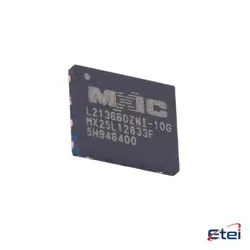
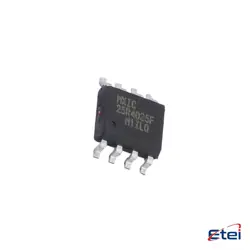
Abbildungen dienen nur als Referenz
TM4C1294NCPDTI3R
+StücklisteIC MCU 32BIT 1MB FLASH 128TQFP
-
HerstellerTexas Instruments
-
Herstellerteil #TM4C1294NCPDTI3R
-
Paket TQFP-128
-
Auf Lager2766
365 Tage Qualitätsgarantie
7*24 Stunden-Servicegarantie
90-Tage Kundendienstgarantie
Originalproduktgarantie
Spezifikationen
| Attribut | Wert |
| Package / Case | Tape & Reel (TR),Cut Tape (CT) |
| Series | Tiva™ C |
| Part Status | Active |
| Core Processor | ARM® Cortex®-M4F |
| Core Size | 32-Bit Single-Core |
| Speed | 120MHz |
| Connectivity | CANbus, EBI/EMI, Ethernet, I²C, IrDA, QEI, SPI, SSI, UART/USART, USB OTG |
| Peripherals | Brown-out Detect/Reset, DMA, Motion Control PWM, POR, PWM, WDT |
| Number of I/O | 90 |
| Program Memory Size | 1MB (1M x 8) |
| Program Memory Type | FLASH |
| EEPROM Size | 6K x 8 |
| RAM Size | 256K x 8 |
| Voltage - Supply (Vcc/Vdd) | 2.97V ~ 3.63V |
| Data Converters | A/D 20x12b |
| Oscillator Type | Internal |
| Operating Temperature | -40°C ~ 85°C (TA) |
| Mounting Type | Surface Mount |
Übersicht
Description
Key features include 1 MB of Flash memory, 256 KB of SRAM, and a wide range of peripherals such as Ethernet MAC+PHY, USB 2.0, and multiple communication interfaces like UART, I2C, and SPI. It also includes a rich set of timers, PWM modules, and ADC units, making it versatile for various applications, from industrial automation to IoT devices.
Its advanced connectivity options, including both wired (Ethernet) and wireless capabilities (via external modules), facilitate seamless integration into networked systems. The TM4C1294NCPDTI3R is supported by Texas Instruments' development tools and a comprehensive software library, making it a robust choice for developers looking to build high-performance, connected applications.
Equivalent
1. Microchip's PIC32 series microcontrollers.
2. STMicroelectronics' STM32F4 series.
3. NXP's Kinetis K64 series.
4. Renesas' RX600 series.
These alternatives offer similar ARM Cortex-M cores and comparable features like Ethernet support, various interfaces, and peripherals. Always verify exact specifications and compatibility for your specific application needs.
Features
1. Processor: ARM Cortex-M4F with a floating-point unit, operating at up to 120 MHz.
2. Memory: 1 MB of Flash memory, 256 KB of SRAM.
3. Connectivity: Integrated Ethernet MAC and PHY, USB 2.0 (host, device, and OTG), CAN, UART, I2C, and SSI/SPI.
4. GPIO: 90 GPIO pins with programmable function capabilities.
5. Timers: Six 32-bit timers, two watchdog timers, and a real-time clock.
6. Analog: Two 12-bit ADC modules with 24 input channels.
7. PWM: Eight PWM outputs with a dead-band generator.
8. Security: Cryptographic hardware acceleration for AES, DES, and SHA.
9. Development Support: JTAG and SWD for debugging, supported by TI's Code Composer Studio.
These features make it suitable for a wide range of applications, including industrial automation, smart grid infrastructure, and networking solutions.
Pinout
1. CPU: ARM Cortex-M4F with a floating-point unit, operating up to 120 MHz.
2. Memory: 1MB of Flash memory and 256KB of SRAM.
3. Connectivity: Integrated Ethernet MAC+PHY, USB 2.0 OTG/Host/Device, and multiple UART, I2C, SPI, and CAN interfaces.
4. GPIO: Extensive GPIO support with programmable drive strength and slew rate.
5. Timers and PWM: General-purpose timers, PWM modules, and quadrature encoder inputs.
6. ADC/DAC: 12-bit ADC with multiple channels and two analog comparators.
7. Other Features: Hardware cryptographic acceleration and built-in hibernation module for low-power operation.
This microcontroller is ideal for applications requiring rich connectivity and high processing capability, such as industrial automation, home automation, and advanced consumer electronics.
Manufacturer
The company is headquartered in Dallas, Texas, and has a long history dating back to its founding in 1930. Texas Instruments serves numerous markets, including automotive, industrial, consumer electronics, communications equipment, and enterprise systems. Its products are integral to various technological advances and innovations, making TI a key player in the electronics and semiconductor industries.
Application
1. Industrial Automation: Due to its robust processing capabilities and various communication interfaces.
2. Internet of Things (IoT): It supports Ethernet, which is ideal for IoT devices requiring network connectivity.
3. Embedded Systems: Offers a rich set of peripherals for diverse embedded applications.
4. Consumer Electronics: Used in smart devices for efficient processing and connectivity.
5. Automotive: Suitable for non-safety-critical automotive applications where networking is required.
6. Home Automation: Enables control and monitoring in smart home systems.
These applications benefit from its integrated features like Ethernet, USB, and extensive GPIOs.