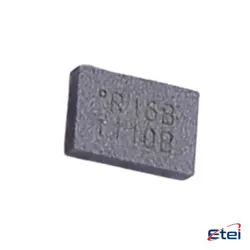
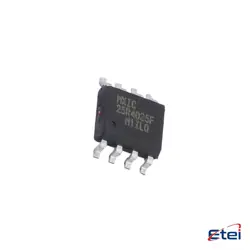
Abbildungen dienen nur als Referenz
TMS320TCI6614CCMS
+Stückliste-
HerstellerTexas Instruments
-
Herstellerteil #TMS320TCI6614CCMS
-
Auf Lager8719
365 Tage Qualitätsgarantie
7*24 Stunden-Servicegarantie
90-Tage Kundendienstgarantie
Originalproduktgarantie
Spezifikationen
| Attribut | Wert |
| Brand | Texas Instruments |
| Factory Pack Quantity | 44 |
Übersicht
Description
The TMS320TCI6614CCMS is a high-performance digital signal processor (DSP) from Texas Instruments, designed for advanced telecommunications and data processing applications. Part of the TMS320C66x family, it features a dual-core architecture, with each core optimized for high-speed processing and low-latency operations.
Key characteristics include support for multi-core processing, enhanced floating-point performance, and integrated hardware accelerators for tasks like video processing and networking. The device operates on a scalable architecture, allowing for efficient handling of complex algorithms and real-time data streams.
It also supports various interfaces, including Ethernet, PCIe, and high-speed SerDes, which facilitate connectivity and data transfer in sophisticated systems. The TCI6614 is often used in applications such as base station infrastructure, radar systems, and multimedia processing, making it suitable for both commercial and military use.
Overall, the TMS320TCI6614CCMS combines high computational capability with flexible connectivity, making it a powerful choice for developers working in high-performance signal processing and telecommunications.
Key characteristics include support for multi-core processing, enhanced floating-point performance, and integrated hardware accelerators for tasks like video processing and networking. The device operates on a scalable architecture, allowing for efficient handling of complex algorithms and real-time data streams.
It also supports various interfaces, including Ethernet, PCIe, and high-speed SerDes, which facilitate connectivity and data transfer in sophisticated systems. The TCI6614 is often used in applications such as base station infrastructure, radar systems, and multimedia processing, making it suitable for both commercial and military use.
Overall, the TMS320TCI6614CCMS combines high computational capability with flexible connectivity, making it a powerful choice for developers working in high-performance signal processing and telecommunications.
Equivalent
The TMS320TCI6614CCMS chip is part of Texas Instruments' TMS320 series and is primarily used for digital signal processing applications. Equivalent products include the Texas Instruments TMS320C66x series, particularly the TMS320C6678, which offers similar processing capabilities and is also optimized for high-performance DSP applications. Additionally, other alternatives from competing brands may include products from the Analog Devices SHARC series or NXP's Hummingbird DSPs, depending on specific application requirements.
Features
The TMS320TCI6614CCMS is a high-performance digital signal processor (DSP) designed for communications and signal processing applications. Key features include:
1. Architecture: A multi-core architecture with up to four DSP cores, enabling parallel processing for enhanced performance.
2. Performance: Capable of delivering up to 1 GHz clock speed, facilitating high-throughput processing.
3. Memory: Includes on-chip memory, including L1 and L2 cache, and support for external memory interfaces, optimizing data access speeds.
4. Connectivity: Features multiple high-speed interfaces such as Ethernet, PCIe, and Serial RapidIO for versatile communication options.
5. DSP Capabilities: Optimized for intensive signal-processing tasks, ideal for applications in telecommunications, video processing, and radar systems.
6. Power Efficiency: Designed for low power consumption while maintaining high performance, suitable for embedded systems.
7. Development Support: Compatibility with TI’s software development tools, including C/C++ compilers and real-time operating systems.
These features make the TMS320TCI6614CCMS suitable for advanced applications in networking and signal processing.
1. Architecture: A multi-core architecture with up to four DSP cores, enabling parallel processing for enhanced performance.
2. Performance: Capable of delivering up to 1 GHz clock speed, facilitating high-throughput processing.
3. Memory: Includes on-chip memory, including L1 and L2 cache, and support for external memory interfaces, optimizing data access speeds.
4. Connectivity: Features multiple high-speed interfaces such as Ethernet, PCIe, and Serial RapidIO for versatile communication options.
5. DSP Capabilities: Optimized for intensive signal-processing tasks, ideal for applications in telecommunications, video processing, and radar systems.
6. Power Efficiency: Designed for low power consumption while maintaining high performance, suitable for embedded systems.
7. Development Support: Compatibility with TI’s software development tools, including C/C++ compilers and real-time operating systems.
These features make the TMS320TCI6614CCMS suitable for advanced applications in networking and signal processing.
Pinout
The TMS320TCI6614CCMS is a digital signal processor (DSP) from Texas Instruments, specifically designed for high-performance applications in communications and multimedia. It features a total of 208 pins.
Key functions of the pins include:
1. Power Supply: VDD and VSS pins for power input and ground.
2. Clock Input: A pin for an external clock signal.
3. I/O Ports: Multiple general-purpose input/output (GPIO) pins for interfacing with other components.
4. Serial Interfaces: Pins for SPI, I2C, and UART communication, enabling connectivity to other devices.
5. Memory Interfaces: Connections for external memory, including data and address buses.
6. Interrupt Inputs: Dedicated pins for handling interrupts.
7. Debugging: Pins for JTAG interface, allowing for programming and debugging.
The TMS320TCI6614CCMS is optimized for high efficiency and low power consumption, making it suitable for demanding processing tasks.
Key functions of the pins include:
1. Power Supply: VDD and VSS pins for power input and ground.
2. Clock Input: A pin for an external clock signal.
3. I/O Ports: Multiple general-purpose input/output (GPIO) pins for interfacing with other components.
4. Serial Interfaces: Pins for SPI, I2C, and UART communication, enabling connectivity to other devices.
5. Memory Interfaces: Connections for external memory, including data and address buses.
6. Interrupt Inputs: Dedicated pins for handling interrupts.
7. Debugging: Pins for JTAG interface, allowing for programming and debugging.
The TMS320TCI6614CCMS is optimized for high efficiency and low power consumption, making it suitable for demanding processing tasks.
Manufacturer
The TMS320TCI6614CCMS is manufactured by Texas Instruments (TI), a prominent technology company known for designing and producing semiconductors and various integrated circuits. Texas Instruments is headquartered in Dallas, Texas, and has a rich history in the electronics industry, dating back to its founding in 1930.
Primarily recognized for its innovations in analog and embedded processing, TI is a key player in sectors such as automotive, industrial, communication, and consumer electronics. The TMS320TCI6614 is part of the TMS320 series of digital signal processors (DSPs), designed for high-performance signal processing applications, particularly in the fields of telecommunications and data communications.
TI focuses on providing a wide range of products, including microcontrollers, processors, sensors, and amplifiers, and is dedicated to advancing technology solutions that improve efficiency and performance across various industries. The company is also known for its commitment to sustainability and responsible business practices.
Primarily recognized for its innovations in analog and embedded processing, TI is a key player in sectors such as automotive, industrial, communication, and consumer electronics. The TMS320TCI6614 is part of the TMS320 series of digital signal processors (DSPs), designed for high-performance signal processing applications, particularly in the fields of telecommunications and data communications.
TI focuses on providing a wide range of products, including microcontrollers, processors, sensors, and amplifiers, and is dedicated to advancing technology solutions that improve efficiency and performance across various industries. The company is also known for its commitment to sustainability and responsible business practices.
Application
The TMS320TCI6614CCMS is a digital signal processor (DSP) primarily used in telecommunications and networking applications. Key areas include:
1. Baseband Processing: For wireless communication systems, enabling advanced modulation and demodulation techniques.
2. Voice over IP (VoIP): Handling audio processing and compression for high-quality voice transmission.
3. Video Processing: Supporting video encoding and decoding in multimedia applications.
4. Industrial Automation: Implementing real-time control and monitoring systems.
5. Machine Learning: Facilitating edge computing tasks and inference in IoT devices.
Its robust architecture supports high-performance computations necessary for these applications.
1. Baseband Processing: For wireless communication systems, enabling advanced modulation and demodulation techniques.
2. Voice over IP (VoIP): Handling audio processing and compression for high-quality voice transmission.
3. Video Processing: Supporting video encoding and decoding in multimedia applications.
4. Industrial Automation: Implementing real-time control and monitoring systems.
5. Machine Learning: Facilitating edge computing tasks and inference in IoT devices.
Its robust architecture supports high-performance computations necessary for these applications.
Package
The TMS320TCI6614CCMS is packaged in a FCLGA (Fine Pitch Ball Grid Array) form factor. This packaging type offers a compact design with a high pin count, suitable for advanced processing applications.