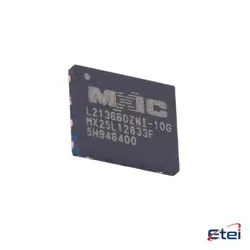
Abbildungen dienen nur als Referenz
TSZ124IPT
+StücklisteIC OPAMP ZER-DRIFT 4CIRC 14TSSOP
-
HerstellerSTMikroelektronik
-
Herstellerteil #TSZ124IPT
-
Datenblatt TSZ124IPT DataSheet
-
Paket TSSOP-14
-
Auf Lager6447
365 Tage Qualitätsgarantie
7*24 Stunden-Servicegarantie
90-Tage Kundendienstgarantie
Originalproduktgarantie
Spezifikationen
| Attribut | Wert |
| Package | Tape & Reel (TR),Cut Tape (CT) |
| Series | Automotive, AEC-Q100 |
| ProductStatus | Active |
| AmplifierType | Zero-Drift |
| NumberofCircuits | 4 |
| OutputType | Rail-to-Rail |
| SlewRate | 0.19V/µs |
| GainBandwidthProduct | 400 kHz |
| Current-InputBias | 70 pA |
| Voltage-InputOffset | 1 µV |
| Current-Supply | 31µA (x4 Channels) |
| Current-Output/Channel | 18 mA |
| Voltage-SupplySpan(Min) | 1.8 V |
| Voltage-SupplySpan(Max) | 5.5 V |
| OperatingTemperature | -40°C ~ 125°C |
| MountingType | Surface Mount |
| Package/Case | 14-TSSOP (0.173, 4.40mm Width) |
Übersicht
Description
Key features include:
1. Low Offset Voltage: Ensures high precision in signal processing tasks.
2. Low Noise: Suitable for applications where signal integrity is crucial.
3. Rail-to-Rail Input/Output: Allows the input and output voltages to swing very close to the power supply rails, maximizing dynamic range.
4. Wide Supply Voltage Range: Enhances flexibility in different power supply scenarios.
5. Low Power Consumption: Ideal for battery-operated devices and applications.
The TSZ124IPT is commonly used in sensor interfaces, precision data acquisition systems, and portable medical devices. Its robustness and reliability make it a popular choice for engineers seeking precision and efficiency in analog designs.
Equivalent
1. OPA4277 by Texas Instruments
2. MCP6024 by Microchip Technology
3. LTC6078 by Analog Devices
4. LM4140 by Texas Instruments
These equivalents may vary slightly in specifications, so it is important to verify parameters such as supply voltage, bandwidth, and package type to ensure compatibility with your application.
Features
1. Low Offset Voltage: This op-amp offers a low input offset voltage, typically around 200 µV, which ensures high accuracy in signal processing applications.
2. Low Input Bias Current: With a low input bias current of around 1 pA, the TSZ124IPT is suitable for interfacing with high-impedance sources.
3. Rail-to-Rail Input and Output: The device supports rail-to-rail input and output, maximizing the dynamic range and performance, especially in low-voltage applications.
4. Low Noise: It exhibits low noise characteristics, making it ideal for applications requiring high signal fidelity.
5. Wide Supply Voltage Range: The op-amp operates over a wide supply voltage range, from 2.2 V to 5.5 V, providing flexibility for various power supply configurations.
6. Low Power Consumption: It features low power consumption, critical for battery-operated devices.
These features make the TSZ124IPT suitable for precision instrumentation, sensor interfacing, and other applications requiring accurate analog signal amplification.
Pinout
Here’s a breakdown of the pin functions for the TSZ124IPT:
1. Pins 1, 7, 8, 14: Output of each op-amp.
2. Pins 2, 6, 9, 13: Inverting input of each op-amp.
3. Pins 3, 5, 10, 12: Non-inverting input of each op-amp.
4. Pin 4: Negative power supply (V-).
5. Pin 11: Positive power supply (V+).
The TSZ124IPT is designed for precision applications requiring low input bias current, low offset voltage, and low noise, making it suitable for high-performance analog signal processing.
Manufacturer
Application
1. Sensor Signal Conditioning: Enhances accuracy in sensor outputs.
2. Medical Equipment: Utilized in devices requiring precise signal amplification.
3. Industrial Control Systems: Offers reliable performance in harsh environments.
4. Battery-Powered Devices: Extends battery life due to low power usage.
5. Data Acquisition Systems: Ensures accurate data capture and processing.
6. Portable Instrumentation: Provides stable performance in compact devices.
Its versatility and precision make it ideal for applications where signal fidelity and low power are critical.